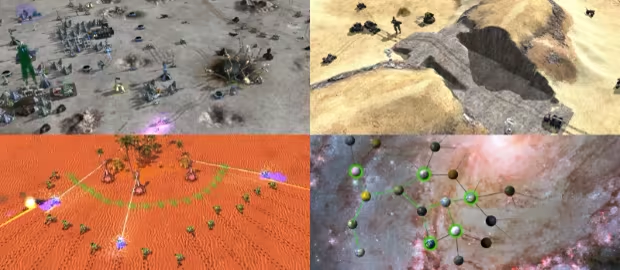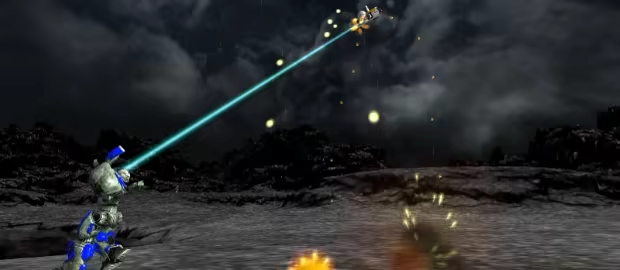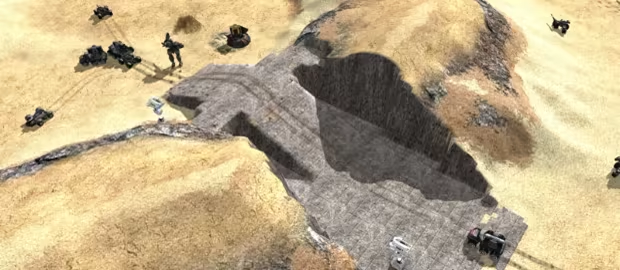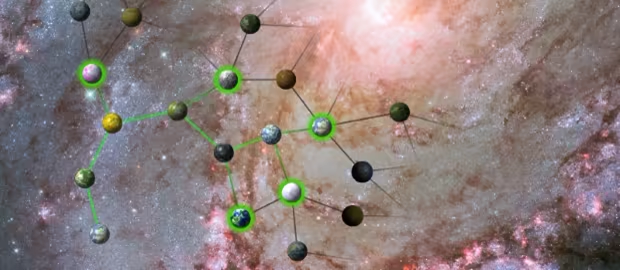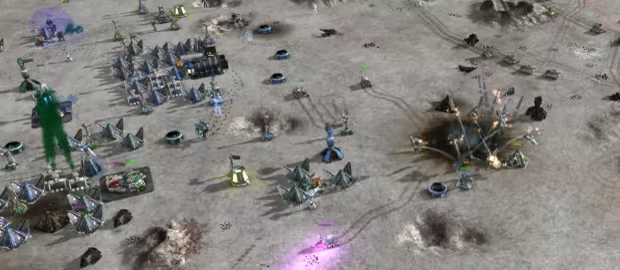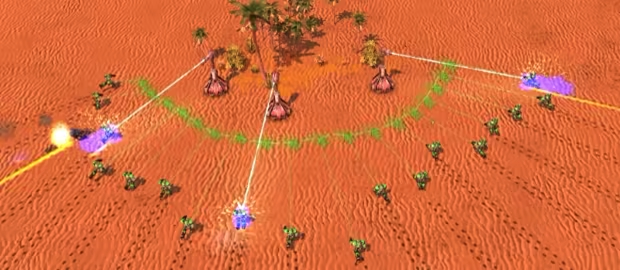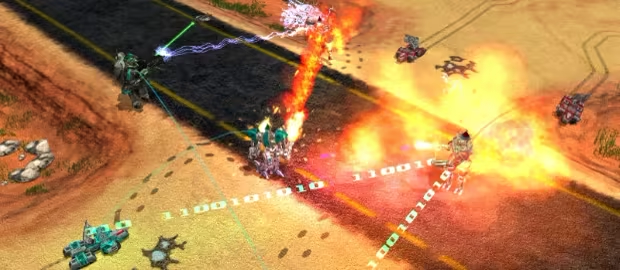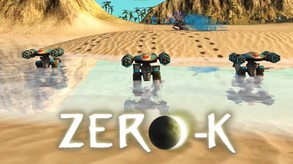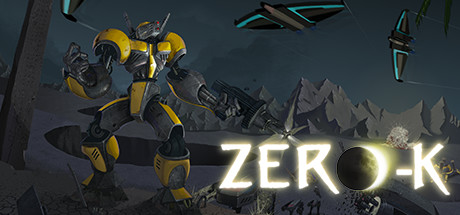
With 100+ truly unique units, Zero-K is an RTS of freedom and creativity, tempered by a decade of refinement. Sculpt land into a castle and throw invaders off it with a Jugglenaut. Explore a massive campaign, solo or co-op. Hop online for epic 32 player battles or fast paced 1v1, on 100s of maps.
Revenue comes from in-game items and microtransactions, which our price-based model doesn't estimate. The player count below is how many people own it, not what they spent.
About


Genres
Stats
Languages: English**languages with full audio support
Engagement
Reviews
Themes across 108 recent reviews and how positive each mention is. A keyword signal, not full sentiment analysis.
Reviews
I've played many RTS games over the years, including the subsequent game "Beyond All Reason", and yet Zero-K has managed to remain my dominant pick for favourite real-time strategy of all time. It's easy to get into, with easy to understand unit production, budgeting and factories. And with so much to pick from, the formation and strategy is at a level almost unheard of in the RTS space. 10/10.
Zero-K is a remarkably deep real-time strategy game that emphasizes large-scale robotic warfare, tactical experimentation, and freedom of command. Developed and published by Zero-K Team, it takes the recognizable foundations of classic RTS games and expands them with simulated projectiles, terrain manipulation, sophisticated unit behavior, and an enormous collection of specialized combat machines. Rather than forcing players toward a narrow set of strategies, it provides a flexible battlefield where positioning, army composition, resource management, and creative problem-solving can be equally important. The extensive unit roster is one of the strongest aspects of the experience. More than 100 different units provide far more variety than simple upgrades from weak machines to stronger ones. Individual units are designed for particular battlefield roles, and their abilities can include cloaking, shields, jumping, teleportation, EMP attacks, incendiary weapons, gravity manipulation, and other unconventional technologies. Because many units function as tactical tools rather than straightforward damage dealers, building the correct army often depends on understanding what the opponent is doing and responding with an appropriate combination of machines. Combat becomes especially interesting because projectiles interact with the battlefield instead of behaving entirely like guaranteed statistical attacks. Movement, distance, elevation, obstacles, and weapon characteristics can influence whether attacks connect with their targets. Faster units may evade certain incoming shots, while hills and terrain features can provide meaningful protection or interfere with firing lines. This gives positioning genuine importance and makes battles feel more dynamic than simply sending two groups of units toward one another and waiting for their statistics to determine the winner. Terrain itself can become part of a player's strategy. The ability to alter sections of the battlefield opens opportunities for constructing defensive positions, changing routes of attack, protecting valuable structures, or making enemy advances more difficult. Combined with the physics system, this creates opportunities for unusual tactics that would be impossible in a more restrictive RTS. The environment is therefore more than scenery; it can become another resource that skilled commanders exploit. The command system is similarly ambitious. Players can draw formations for groups of units instead of manually arranging every machine, while sophisticated movement behaviors can help units kite enemies, strafe targets, or avoid dangerous attacks. Construction priorities provide additional control over how resources and builders are used. These features are particularly useful during enormous battles because they reduce unnecessary micromanagement while still allowing experienced players to exercise detailed control when necessary. The camera is also highly flexible, making it easier to observe engagements from different perspectives. Players interested primarily in single-player or cooperative content have a substantial amount to explore. The campaign contains more than 70 missions across a larger galactic progression structure, gradually exposing players to different technologies, units, and tactical situations. Campaign missions can also be approached cooperatively, making the experience more appealing to players who enjoy working with friends instead of competing against them. Skirmish battles against AI provide another option, while the survival-oriented mode changes the rhythm by challenging players to endure waves of hostile creatures. Multiplayer is where the game's enormous strategic sandbox becomes particularly unpredictable. Competitive encounters can range from concentrated 1v1 matches to huge 16v16 battles. Smaller games reward scouting, efficient resource management, careful counters, and precise tactical decisions, while large team battles become sprawling wars involving artillery, defensive lines, enormous armies, specialized support units, and dramatic shifts in territorial control. Free-for-all options, tournaments, ladders, replays, spectator functionality, and a very large selection of maps further improve its longevity. Another major advantage is its genuinely accessible free-to-play structure. Competitive success is based primarily on knowledge and execution rather than purchasing stronger battlefield equipment. This matters because the game's appeal comes from discovering how its many interconnected systems work. Learning counters, mastering economic expansion, understanding weapon behavior, using terrain effectively, and coordinating different unit types provide a much more satisfying progression system than simply acquiring increasingly powerful equipment. The main obstacle is the considerable learning curve. Zero-K offers so many units, commands, mechanics, and tactical possibilities that the interface can initially appear intimidating. Its presentation is functional rather than visually extravagant, and massive engagements can become difficult to read when large numbers of machines, projectiles, explosions, and effects fill the screen. New players may need considerable time before they understand why particular strategies succeed or fail. However, those willing to experiment and learn are rewarded with an unusually sophisticated strategy sandbox. Steam Deck compatibility is officially categorized as Unsupported. The game may still be approachable through experimentation with control configurations, but its interface and command-heavy RTS design are naturally better suited to keyboard and mouse. Players purchasing or installing it specifically for handheld play should therefore expect possible control or usability compromises rather than a fully optimized Steam Deck experience. Overall, Zero-K succeeds because it gives players an extraordinary number of meaningful strategic tools without reducing warfare to simple unit production and numerical superiority. Its physics-driven combat, enormous unit selection, terrain manipulation, intelligent command features, substantial campaign, cooperative options, capable AI, and huge multiplayer battles create impressive long-term depth. The dated presentation and demanding learning curve prevent it from being universally approachable, but dedicated RTS players can discover an exceptionally flexible and rewarding experience beneath its modest exterior. Rating: 9/10
Media

Related
Related
Price dynamics, follower growth, revenue and sales trajectories with interactive tooltips
This and every other Pro feature is free until October 20, 2026. A free account is all it takes.
Hours played at review time, across 108 reviews with recorded playtime.
positive critical· bar length = how often the theme comes up
Игра с онлайном в 3 инвалидки, так еще и банят постоянных игроков, помойка, можно удалять
в меня прилетел шахед
This game has the most important feature to come from the ancient halls of SpringRTS and it's lineage. Simple framework, and ever advancing units of scale. On a surface level, this is amass waves of units and send them to fight and die. Defense tech needs some early work, as you can probably not build enough defenses against a early rush unless you have unit to unit counters for it. Number tuning will take forever or at very least some interesting compromises once the math is ground out in testing. I can assure though despite the shell, this game is a good breach back into Total Annihilation style RTS.
Great streaming-economy RTS with an awesome dev team and built around a really solid design ethos. Oh yeah, and it's free. If you liked Total Annihilation, check it out.
Great RTS game with deep complexity
A very deep, complex, fun RTS in the style of Supreme Commander. And it's fully free and still being actively update!
MACHT BOCK MIT FREUNDEN !!!!!!!
тимейты хуесосы
Active players
Estimated daily and monthly active players (DAU/MAU) modeled from peak concurrency.
Players by region
Where this game's players are, estimated from review languages.
Players also reviewed
The games this title's players most often review too — audience affinity.
Related
| Game | Estimated lifetime revenue | Reviews | Review score | Price |
|---|---|---|---|---|
| $11.4M | 14.7K | 84% | $29.99 | |
| $5M | 14.4K | 97% | $12.99 | |
| $4M | 3.3K | 82% | $29.99 | |
| $12.1M | 16.3K | 93% | $19.99 | |
| $1.3M | 1.8K | 83% | $24.99 | |
| $594.5K | 849 | 85% | $18.99 |