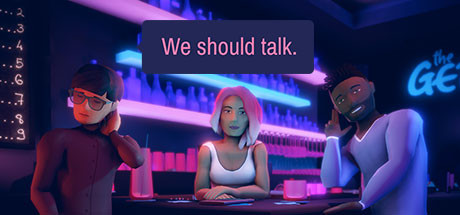
It's not what you say, it's how you say it. We should talk is a short-form narrative game that will make you think carefully about the words you choose. Can your relationship survive the night?
Modeled estimate, not a reported figure. How we estimate →
About


Genres
Stats
All-time low is the lowest price we've recorded for this game since we started tracking it.
Languages: English
Engagement
Hours played at review time, across 40 reviews with recorded playtime.
Reviews
Themes across 40 recent reviews and how positive each mention is. A keyword signal, not full sentiment analysis.
positive critical· bar length = how often the theme comes up
Reviews
Why create this modular dialogue system just to give you an illusion of choice? This is not some kind of meta commentary on it either. The game is just incompetent in so many levels. It's slow, the dialogues are boring, its main selling feature to give more choices still results completely irrelevant or the same path, game settings are not saved even in the same session, it's designed to be played multiple times yet there is zero QoL features to make the process less tedious and once you reach an ending, the game often freezes at the end of credits and you have to force-quit it. There is no charm, clever writing or well-made gameplay. It has no soul. The game feels like someone had a passion to create something out of a modular dialogue system, but got bored or lazy and quickly wrote some lazy stuff out to finish it out of contractual obligation.
We should talk. is a compact but emotionally intricate narrative experience developed by Insatiable Cycle and published by Whitethorn Games alongside the developer. Rather than relying on traditional gameplay systems, expansive environments, or complex mechanics, it narrows its focus to a single evening in a bar and the fragile state of a relationship hanging in the balance. The premise is deceptively simple: you are out at a local bar while your partner, Sam, remains at home, and throughout the night your conversations—both in person and via text—shape the future of your relationship. What unfolds is less about dramatic plot twists and more about the subtleties of communication, trust, insecurity, and intention. The defining feature of We should talk. is its innovative dialogue construction system. Instead of selecting from prewritten, fixed responses, players build sentences by choosing fragments from rotating word clusters. This design forces you to think carefully not just about what you want to say, but how you want to say it. Tone becomes everything. A slight adjustment in phrasing can transform a message from defensive to reassuring, flirtatious to distant, confrontational to vulnerable. The mechanic mirrors real-life communication in an unusually effective way, emphasizing that meaning often lies between the lines. By giving players control over nuance rather than simply offering binary dialogue options, the game creates a feeling of responsibility for every interaction. The narrative unfolds entirely within the cozy yet tension-filled confines of the bar, a setting that becomes both a social hub and an emotional battleground. Throughout the evening, you encounter a handful of distinct characters—friends, acquaintances, and strangers—each conversation subtly influencing your mindset and the way you respond to Sam’s messages. Flirtation, honesty, deflection, and self-reflection all compete for your attention. The game does not push you toward a single moral direction; instead, it allows your personality to emerge organically through repeated choices. The result is a story that can branch into multiple endings, each shaped by the emotional tone you’ve cultivated throughout the night. What makes the experience resonate is its grounded realism. The conflicts are intimate and recognizable rather than exaggerated. Discussions about jealousy, boundaries, and dissatisfaction feel authentic, capturing the awkward pauses and uncertain phrasing that characterize difficult conversations. The writing handles themes of identity and relationships with sensitivity, presenting characters who feel contemporary and relatable. Despite its brief runtime—often under an hour per playthrough—the emotional weight of the dialogue lingers because it reflects situations many players may have encountered in their own lives. Visually, We should talk. adopts a minimalist aesthetic that keeps attention firmly on the text and atmosphere. The bar setting is rendered with stylized lighting and subtle background details that evoke a late-night mood without distracting from the dialogue interface. Character portraits are expressive enough to convey personality without elaborate animation. The soundtrack enhances the ambience, adding a layer of warmth and melancholy that underscores the emotional undercurrents of the evening. The simplicity of the presentation is intentional, reinforcing the idea that the heart of the experience lies in words and tone rather than spectacle. Replayability stems from the branching endings, though revisiting scenes inevitably means encountering familiar conversations. Because the game’s structure remains constant across playthroughs, the sense of discovery gradually shifts from uncovering new plot events to experimenting with different communication styles. Trying to be open and honest in one run, evasive or reckless in another, reveals how dramatically tone can reshape outcomes. The relatively short runtime makes these repeated explorations accessible rather than tedious, though players seeking large-scale narrative variation may find the scope limited. Ultimately, We should talk. succeeds as a focused exploration of communication’s power and fragility. It is less a conventional game and more an interactive vignette about relationships and the weight of language. By transforming dialogue into its central mechanic, it captures something rare: the tension of choosing the right words when everything feels uncertain. For players drawn to introspective storytelling and emotionally nuanced experiences, it offers a brief but thought-provoking journey that demonstrates how small shifts in tone can change everything. Rating: 5/10
I played it while streaming with my girlfriend and I think it heightens the experience that way. Obviously we got the good ending, it feels pretty intuitive how to get it and there's no real stakes or issues of morality since the characters are all blank slates and pop out for a few seconds and are pretty much there so you can decide whether or not you want to be an ♥♥♥♥♥♥♥ to your gf or not. And besides wanting to test out different endings there's no real incentive to do so. Still, pretty short and made by 4 people so you won't be wasting time playing it.
Interesting dialogue system, allowing you to modify tone and content of answers independently. <30 min playthroughs encourage experimentation.
i didn't realize how short the game play was, but i actually kind of like it. lets me squeeze in a mini game session when needed. i've done a few play throughs and i'm excited to unlock all the endings! the way the dialogue is set up makes for a very replayable game, you don't have to repeat the same situations if you don't want to. hidden little gem!
gud edit: based as hell, fav ending nr 6 because, STEPH!!!
아직 모든 엔딩을 보지는 않았지만 재밌음 분위기도 맘에 든다
Can someone explain to me why we seem to hate our GF?
+1 有成就 没中文 《我们该谈谈了》 在《我们该谈谈了》中,你将通过 “句子转盘” 组合模块化语句,回应游戏中的角色。你需要谨慎选择措辞来表达自我:一边在短信里与游戏中的伴侣山姆探讨生活与感情中的现存问题,一边还要在常去的本地酒吧里和朋友、陌生人闲聊。 你选择的语句组合会影响对话走向、与伴侣建立连接的真诚度,以及这段关系能否撑过这个夜晚。如何回应全由你决定 —— 不同的沟通方式,将带你见证多种可能结局中的一种。 个性化选择 借助句子转盘,做出与你共鸣的选择。海量选项可供挑选 —— 你可以做自己,也可以扮演一个你从未想过的角色。 独特角色 酒吧夜生活因你遇到的各色人物而愈发有趣。你需要在与朋友聊天和回复家中伴侣的短信之间,找到健康的平衡。 多元路径 你的选择会极大影响他人对你的回应方式,让每场对话都走向多种不同路径中的一条。你会表现得随和、风趣、冷漠,还是介于这些状态之间? 多重结局 反复游玩以解锁全部 9 种可能结局。与许多传统叙事游戏不同,结局并非由特定路径决定,而是取决于你在整个游戏过程中回应所传递的语气。夜晚结束时,你的人际关系会呈现出怎样的面貌? 真实对话体验 感受真实对话中的各种情绪:和朋友互开玩笑的愉悦、收到沉重短信的焦虑,或是与讨厌的人周旋敏感话题的烦躁。尽你所能清晰表达自我,期盼对话对象能理解你的意思 —— 但始终存在一种风险:他们对你话语的解读,可能与你的本意大相径庭。 Start talking. - 开始对话 - 开启你的第一次游戏流程。 drunk cuties - 微醺可人儿 - 和山姆聊聊她的不安。 Where did we end? - 我们的结局是? - 达成你的第一个结局。 wat - 啥? - 向山姆隐瞒与前任见面的事。 Old Fashioned - 古典鸡尾酒 - 达成结局 9。 pump some iron with me baybee! - 宝贝儿陪我练个铁! - 和山姆聊聊去健身的事。 Mimosa - 含羞草鸡尾酒 - 达成结局 7。 Extra sugar in your drink. - 饮品多加糖 - 对斯蒂芬展现暧昧态度。 i'm feeling snuggly - 想贴贴 - 和山姆展开热烈对话。 Dark n' Stormy - 暗黑风暴鸡尾酒 - 达成结局 1。 i said some really mean things - 我说了些过分的话 - 了解山姆前任的事。 i'm such a trash monster - 我真是个邋遢鬼 - 和山姆聊聊打扫公寓的事。 was i not good enough? - 是我不够好吗? - 了解山姆父亲的事。 Sex On The Beach - 激情海滩鸡尾酒 - 达成结局 4。 do you ever think about the future? - 你有想过未来吗? - 和山姆聊聊你们的未来规划。 Paloma - 帕洛玛鸡尾酒 - 达成结局 8。 Salty Dog - 咸狗鸡尾酒 - 达成结局 3。 Playing With Fire - 玩火 - 达成结局 2。 Cosmopolitan - 大都会鸡尾酒 - 达成结局 6。 I'll hold you to that. - 我可记住这话了 - 和孤独的陌生人成为朋友。 Manhattan - 曼哈顿鸡尾酒 - 达成结局 5。 Almost there. - 就快完成了 - 达成 5 个结局。 Thanks for talking. - 谢谢你的坦诚 - 达成所有结局。 We talked. - 我们谈过了 - 获得所有成就。 ⢕⢕⢕⢕⢕⠅⢗⢕⠕⣠⠄⣗⢕⢕⠕⢕⢕⢕⠕⢠⣿⠐⢕⢕⢕⠑⢕⢕⠵⢕ ⢕⢕⢕⢕⠁⢜⠕⢁⣴⣿⡇⢓⢕⢵⢐⢕⢕⠕⢁⣾⢿⣧⠑⢕⢕⠄⢑⢕⠅⢕ ⢕⢕⠵⢁⠔⢁⣤⣤⣶⣶⣶⡐⣕⢽⠐⢕⠕⣡⣾⣶⣶⣶⣤⡁⢓⢕⠄⢑⢅⢑ ⠍⣧⠄⣶⣾⣿⣿⣿⣿⣿⣿⣷⣔⢕⢄⢡⣾⣿⣿⣿⣿⣿⣿⣿⣦⡑⢕⢤⠱⢐ ⢠⢕⠅⣾⣿⠋⢿⣿⣿⣿⠉⣿⣿⣷⣦⣶⣽⣿⣿⠈⣿⣿⣿⣿⠏⢹⣷⣷⡅⢐ ⣔⢕⢥⢻⣿⡀⠈⠛⠛⠁⢠⣿⣿⣿⣿⣿⣿⣿⣿⡀⠈⠛⠛⠁⠄⣼⣿⣿⡇⢔ ⢕⢕⢽⢸⢟⢟⢖⢖⢤⣶⡟⢻⣿⡿⠻⣿⣿⡟⢀⣿⣦⢤⢤⢔⢞⢿⢿⣿⠁⢕ ⢕⢕⠅⣐⢕⢕⢕⢕⢕⣿⣿⡄⠛⢀⣦⠈⠛⢁⣼⣿⢗⢕⢕⢕⢕⢕⢕⡏⣘⢕ ⢕⢕⠅⢓⣕⣕⣕⣕⣵⣿⣿⣿⣾⣿⣿⣿⣿⣿⣿⣿⣷⣕⢕⢕⢕⢕⡵⢀⢕⢕ ⢑⢕⠃⡈⢿⣿⣿⣿⣿⣿⣿⣿⣿⣿⣿⣿⣿⣿⣿⣿⣿⣿⣿⣿⣿⣿⢃⢕⢕⢕
i got this for 1 hole € on indiegala and still feel robbed
Related
Related
Trends
Modeled estimate over time, reconstructed from Steam's monthly review histogram.
Momentum
Pace estimated from the game's recent review growth (our daily snapshots) at its own sales-per-review ratio — a momentum signal, not booked sales.
Audience
Estimated from the language of this game's reviews — a proxy for where players are, not official Steam demographics.
Related
| Mahjong Club | $32.8K | 339 | 71% | $4.99 |
| The Apothecary of Trubiz | $32.8K | 517 | 94% | $3.99 |
| Bad Bots | $32.8K | 260 | 55% | $4.99 |
| File Destined | $32.8K | 440 | 87% | $3.99 |
| The Beast Within: A Gabriel Knight® Mystery | $32.8K | 308 | 92% | $5.99 |
| Time Lock VR 1 | $32.8K | 799 | 73% | $2.03 |