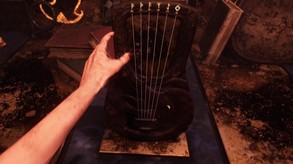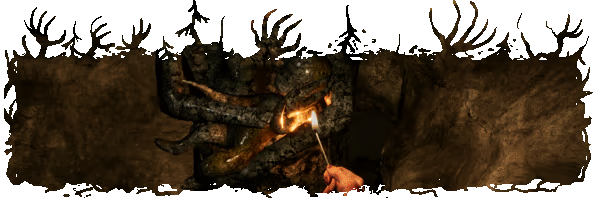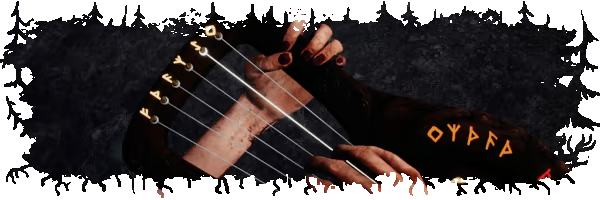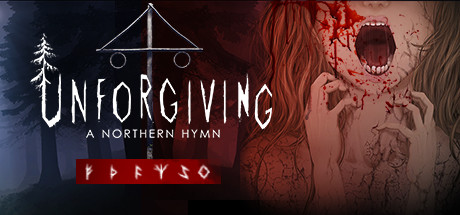
Unforgiving - A Northern Hymn is a first person horror game heavily inspired by Swedish folklore and the Nordic mythology to create the nightmares that's been haunting Swedish children for many generations.

Modeled estimate, not a reported figure. How we estimate →
Media

About


Stats
All-time low is the lowest price we've recorded for this game since we started tracking it.
Languages: English, French, Italian, Spanish - Spain, Simplified Chinese, Korean, Dutch, Russian, Swedish*, German, Portuguese - Brazil, Polish +2 more
Engagement
Hours played at review time, across 42 reviews with recorded playtime.
Reviews
Themes across 41 recent reviews and how positive each mention is. A keyword signal, not full sentiment analysis.
positive critical· bar length = how often the theme comes up
Reviews
Читая описания игры думалось, что ждёт нас интересных хоррор окутанный северным фольклором. На деле всё вышло несколько иначе.. Начало довольно бодрое. Есть тёмный лес, где скрипят деревья, слышны всяческие завывания и переодически раздаётся топот. Вот тебе спички, вот тебе заметки про мифических существ, вот тебе деревня - ходи и исследуй. Дальше ещё за тобой монстряка начнёт носиться, добавят новых проблемных участков и монстров подходящих. Но что-то как-то слабенько. Возможно разработчик хотел показать тёмную сторону какой-то зависимости (от которой вроде как нас вёз лечится брат) - тогда ещё худо-бедно сойдёт. Но если нет - то всё печально. Хоррора особо не чувствуется, связь с северным фольклором - минимальна. Как пример можно привести Through the Woods, где гораздо лучше передана атмосфера "Страшного" севера или Bramble: The Mountain King, но это на данным момент лучшее, что удалось пощупать в похожей тематике. Концовка в игре кстати тоже оставляет желать лучшего. Ощущение что автор просто ничего не смог придумать и ... закончил, как вышло. Вердикт: Unforgiving - A Northern Hymn - потраченного времени не стоит. Одна кружка пенного из пяти 🍺
Unforgiving - A Northern Hymn, developed and published by Angry Demon Studio, is a horror experience that distinguishes itself not through sheer intensity or constant jump scares, but through a deeply rooted sense of place and cultural identity. Drawing heavily from Swedish folklore, the game immerses players in a world that feels ancient, mysterious, and quietly hostile. From the outset, it becomes clear that this is not a typical survival horror setting—there are no overused monsters or predictable tropes, but instead a landscape shaped by myth, where creatures and spirits feel tied to the land itself. This commitment to authenticity gives the game a unique tone that lingers well beyond its relatively short runtime. The story follows a protagonist grappling with personal demons as much as external threats, and this duality is central to the experience. What begins as a grounded journey soon slips into something far more abstract and unsettling, blending reality with hallucination in ways that are not always clearly defined. Themes of regret, addiction, and guilt are explored through fragmented storytelling, environmental details, and symbolic encounters. The narrative rarely spells things out, instead trusting the player to piece together meaning from what they see and hear. While this approach adds depth and intrigue, it can also feel opaque at times, leaving certain elements open to interpretation rather than resolution. Gameplay is deliberately minimalistic, focusing on exploration, light puzzles, and avoidance rather than direct confrontation. The player is often left vulnerable, with limited tools to defend themselves, which reinforces the sense of helplessness that defines the experience. Light becomes a crucial resource, with matches and other temporary sources illuminating the darkness just enough to move forward. This mechanic works effectively to heighten tension, as every step into the unknown carries risk. Encounters with enemies are infrequent but impactful, designed to disrupt the player’s sense of safety rather than overwhelm them with constant danger. However, the simplicity of these systems can also be a drawback, as movement and stealth lack refinement, and some interactions feel more trial-and-error than skill-based. One of the game’s greatest strengths lies in its atmosphere. The environments, from dense forests to abandoned structures, are crafted with a strong sense of mood and cohesion. There is a persistent feeling of isolation, as if the world itself is watching or reacting to your presence. This is reinforced by the sound design, which plays a crucial role in maintaining tension. Subtle audio cues—distant noises, whispers, or sudden shifts in ambient sound—keep players on edge, often making them question whether a threat is real or imagined. Even in moments of relative calm, there is an underlying unease that never fully dissipates. Despite its strengths, the experience is not without limitations. The game’s linear progression becomes more apparent over time, and while the environments initially feel open and mysterious, the path forward is often more guided than it seems. Puzzle design is fairly straightforward, serving more as a means of pacing than as a significant challenge. Additionally, the overall length of the game means that it does not have much room to expand on its ideas, leaving some concepts feeling underdeveloped. These factors can reduce replay value, as much of the impact comes from the initial experience rather than long-term engagement. Ultimately, Unforgiving - A Northern Hymn succeeds as an atmospheric and culturally distinct horror title that prioritizes mood and narrative over mechanical complexity. Its use of Nordic folklore gives it a unique identity, and its focus on psychological themes adds a layer of depth that elevates it beyond more conventional entries in the genre. While its gameplay systems are relatively simple and occasionally uneven, the overall experience remains memorable due to its strong sense of atmosphere and emotional weight. It is best suited for players who appreciate slow-burning horror and are willing to engage with a story that is as much about interpretation as it is about fear. Rating: 8/10
-
依旧是买了快要十年的游戏,趁着小镇惊魂的手感一鼓作气通关。 这两天我发现一个人生经验,就是不管玩游戏还是生活,都要趁着劲头尽量多做一些,过了这个村就没有这个店了,激情这个东西就是这样,错过了等到下一次再玩就不知道什么时候了,愿君珍惜当下,不要把 想要做的事往后退,不谈因为自己的懒惰蹉跎了岁月,人的一生很短暂的,这一次懈怠错过了,一辈子就错过了。 再来讲讲游戏:音效占的恐怖比重很大,其实没几个怪,追逐战也很少,主要是氛围的刻画比较恐怖,周围环境一惊一乍的。 中文翻译是机翻,但理解起来没啥难度,选项里把“后退(back)”翻译成了“背部”。 很奇怪我记得若干年前第一次玩这个游戏时,过程体验很艰辛,两个半小时拿到琴却不知道该去哪,然后就没有再玩了,这么多年过去了,重新游玩游戏觉得没那么难玩,任务指引也还行,至少我这次没有迷路,很顺畅的就通关了,仅用了2.5个小时,或许我真的成长了吧。
This was a great first game for these developers and really just had a great story with super cool monsters that never really slowed down, it was truly a very good horror experience with mythlogy that I am not too familiar with, super scary to me at least 7/10
Me parece un muy buen survival horror, con una ambientacion brutal... Juego Completo : https://youtu.be/hk4Br1mmSOg
DU GAMLA DU FRIA DU FJÄLLHÖGA NORDDD
BÄSTA SPELET JAG HAR SPELAT. blev lite besviken att det va så kort men lätt värt pengarna
So far it lives up to the positive reviews, Unforgiving delivers on the promise of being scary, with unique mythological monsters, disturbing scenes and a well made world with classic design choices that lead to a fresh take on classic survival horror.
Related
Related
Trends
Modeled estimate over time, reconstructed from Steam's monthly review histogram.
Audience
Estimated from the language of this game's reviews — a proxy for where players are, not official Steam demographics.
Related
| Yakuza Kiwami 2 | $534.1K | 1.2K | 80% | $19.99 |
| EarthX | $533.6K | 913 | 88% | $19.99 |
| TerraScape | $534.6K | 2.2K | 89% | $7.49 |
| Broken Reality | $534.6K | 2.3K | 93% | $14.99 |
| Rogue Point | $534.7K | 1K | 70% | $19.99 |
| Rebel Galaxy | $533.4K | 8.4K | 85% | $1.99 |