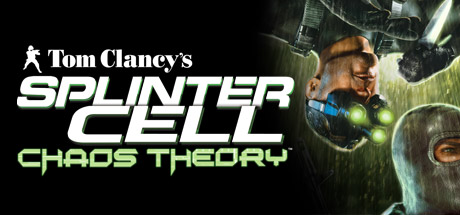
Experience one of the most critically acclaimed stealth-action games of all time. Uncover a conspiracy that hits close to home and stop World War III.
Modeled estimate, not a reported figure. How we estimate →
Prices
Each in the currency that store quoted — not converted: the gap between two rows is the publisher's pricing, not an exchange rate.
14 of 15 markets; the rest we haven't asked for this title, not markets where it is unavailable.
Availability
We put this game to every storefront we collect. A market that answered not sold has told us something about the game; a market we never asked has not, and the two are never drawn the same.
Discounts
Every price cut of more than 20% we have observed, in each market that quoted one, with this game's chart position on either side of it. These are episodes, not a model: a sale is one event, and one event cannot tell you what the next one will do.
For scale, across Steam · Top Sellers · Brazil over the last 30 days: the 26 chart moves that followed a price cut of more than 20% went a median of 7 places towards #1, and the 2,402 moves with no price cut behind them went 2 away. One store, one chart, one country — it is the only place we have enough observations to say even that.
Prices outside the United States have been collected since 6 August 2026 and chart positions since 19 July 2026, so a cut older than that has no market to compare and a market that joined later has no history yet. Nothing here is converted between currencies.
About
TENSE ESPIONAGE NARRATIVE
Play as Sam Fisher, Third Echelon’s elite operative, in one of the best stealth-action games of all time and the 2005 Game of the Year. Embark on a high-stakes, globe-trotting mission: from covert operations aboard a cargo ship in the Pacific, to the infamous bathhouse in Tokyo.
CUTTING-EDGE STEALTH MECHANICS
The tradition of using high-tech gadgets and signature techniques to remain unseen continues, with a full range of fluid moves, brutal takedowns, and experimental weapons.
COMPLETE IMMERSION
Face intelligent enemies with personal attributes and reactive behaviors. NPCs are aware of their surroundings and remember past events. Powered by an advanced physics engine, the open-ended level design offers a wealth of interactive opportunities to outwit your foes.
Please note: online features for this game are no longer supported. Multiplayer and co-op modes are no longer functional.
Genres
Updates
Build ids and update times come straight from Steam's PICS — the same source SteamDB reads. Patch history grows as we record new builds.
Engagement
Reviews
Themes across 137 recent reviews and how positive each mention is. A keyword signal, not full sentiment analysis.
Reviews
Best pure stealth game yet to be made? Yes, definetly. Sad to see the current state of ubisoft and the fact that this treasure of an IP may never see it's logical next evolution from THIS entry's mechanics using modern day hardware/technical advancements.
is this peak?
Meiner Meinung nach der beste Stealth-Action Teil aller Teile vor allem der SCCT - Versus Enhanced Modus !
Media

Related
Related
Price dynamics, follower growth, revenue and sales trajectories with interactive tooltips
This and every other Pro feature is free until October 20, 2026. A free account is all it takes.
14 on sale1 answered “not sold”0 we did not ask
The 1 “not sold” market is read from the Steam price pass of Sep 7: that day the store answered for this game elsewhere and gave no price there. The 14 priced markets are the same rows as the table above — each the latest price we hold, dated here when it is older than that pass. The 0 marked “not asked” were not put to this store at all — either it has no storefront there or we do not collect it yet, and neither is a statement about the game. A refusal is a refusal on one day; a store can list a title again tomorrow.
Stats
All-time low is the lowest price we've recorded for this game since we started tracking it.
Languages: English, French, German, Spanish - Spain, Italian
Hours played at review time, across 137 reviews with recorded playtime.
positive critical· bar length = how often the theme comes up
ดีมากๆ
perfect stealth game. PLAY IT
Too stealthy and quite....10/10
[h3][i]Stealth Action Redefined and Perfected[/i][/h3] Playing previous entries in series didn't make me a fan, but I have enjoyed the time spent: all that sneaking around, hiding in shadows, using gadgets, the need to be patient and thoughtful about next move was exciting, provided a great change of pace compared to many other games. At the same time, Splinter Cell felt a bit shallow, dated, simple, leading to me liking games but not considering them to be something great. I've expected the same from this part of the series: enjoyable experience for couple of evenings without much depth. Chaos Theory, however, surprised me immensely and turned out to be one of the best games I've ever played. New tools have been introduced, old - improved; enemies became smarter; levels gained in size and number of available paths and even objectives; plot started to make sense; number of dialogues increased. [h3][i]Equipped for any situation[/i][/h3] Like any respectable spy, Sam Fisher, the main character of the game, carries with himself all the necessary tools for the work in the field: - Special goggles allow him to zoom on targets, see in dark, identify thermal signatures and electromagnetic fields; - OPSAT, portable wrist-mounted computer, allows to read goals, collected data or study the 3D map; - Lockpick, can be used to bypass physical locks; - Hacking tool, for digital locks and locked computers; - Suppressed pistol that comes equipped with super-gadget that allows to temporarily disable any electronics without destroying them; - SC-20K, suppressed assault rifle, has great customizability: barrel can be switched to turn it into a sniper rifle, under barrel a shotgun or launcher can be attached. Launcher makes it possible to shoot different specialized projectiles, like shockers, gas grenades and simple yet effective airfoils (they hit enemies hard, knocking them down without killing); - Grenades, lethal and not; - Knife, used to break locks, cut wires, fabric and force enemies to cooperate. This equipment creates a huge arsenal of tools for each and any situation, giving great amounts of freedom to the player and an ability to deal with any present threat in numerous ways, rewarding creativity, experimentation and allowing for almost any desired play style. You can be discreet or loud; thorough or superficial; a nightmare or a ghost; or a mix of all of that depending on your preferences. [h3][i]Must have been the wind... But it doesn't hurt to check[/i][/h3] Sam Fisher encounters many enemies. Patrols of guerrillas, guards, regular troops, mercenaries, elite forces, auxiliary personnel and civilians - these are who Fisher faces. Simple goons, they are humans, and that means they possess an ability to see, hear and suddenly - rationalize. Even in previous installments of the series enemies could hear loud sounds, notice movement in the well-lit environments or get alarmed upon finding bodies. Chaos Theory expands their abilities, making them considerably smarter. Sound in the darkness? It's time to bring out the flashlight. A door left open? That's unusual and needs to be checked. Light is turned off? Well, turning it back on is not a problem. A lock was broken, a lamp - destroyed? Thorough search is on the way. Of course, any of that is a valid reason to notify all nearby guys, so that they would also start searching - all the while covering each other's backs, making sure that nothing happens to their buddies. And if something does happen while they turn their attention away - they react, freaking out and conducting a search to see if they can find their friends. If player is careless and leaves a big trace of destruction - guards might notice and follow the trail, in the end bumping into Fisher. Then they won't hesitate to shoot and raise alarm. But if player utilizes every tool in the arsenal to its fullest, disabling lamps instead of breaking them, lockpicking locks instead of bashing doors - then enemies won't have a clue that someone went through the area. Enemies also communicate constantly, voice out everything, so it's always known what and why they are going to do. But if you don't want to know that, perhaps so that you'd have more challenge - there is an option to make foes speak in their native languages. All of that makes enemies in Chaos Theory challenging and extremely satisfying to deal with, more so than in any other stealth games I've played so far. [h3][i]Dark alleyways all around the world[/i][/h3] Like before, Sam Fisher finds himself in different parts of the world. Jungles, industrial complexes, luxurious penthouses, military bases or ships in the sea - variety of locations is astounding, and each level brings new views and emotions. What is new in Chaos Theory is size: locations are big, layered and present many ways for the player to choose from. Every mission has several stories worth of rooms and open spaces, many of them have several doors, vents, hatches or pipes that player can use to circle around the enemies, ambush them or completely avoid. What stops player from doing exactly that, thus completing main objective as fast as possible? Nothing, really. You can become a ghost, sneak past every enemy, use most efficient routes only - and end the level in half an hour. But then you'll miss additional stuff: secondary and opportunity objectives. They are simple, something like interrogate that guy, collect delivery logs, hack local network in different places. It's the main incentive to explore the level and stray away from the most straightforward path and completing them usually requires visiting each corner of the map. Missing these objectives changes the next mission: if you've missed some secondary tasks previously - you'll have to complete similar later, gaining pretty much the same information through different means, which I think is really cool. If objectives are not enough of an incentive for exploration - you can find different curious information around, like personal emails or newsletters, as well as hear banter between guards (they can contain passwords, information about security measures, pinpoint location of main targets and etc.), or find ammunition. Considering all that, I confidently state that Chaos Theory is one of the games with most interesting levels out there, they are like big playgrounds for the spies. [h3][i]The Theory of Chaos[/i][/h3] Each event, action and counter-action has clear logical reasoning; all of what happens makes sense and is realistic. The story is pretty long and told through cutscenes, in-level dialogues, random emails on computers and even banter of enemies. It's deep, intriguing, surprising. If previous installments had the story of a spy-action fanfic, this here is like a proper, thought-out novel with several over-arching little stories, believable, complex characters and lots of interconnecting details. It left me extremely satisfied. [h3][i]The news from other provinces[/i][/h3] Dialogues in Chaos Theory are worthy of special mentioning. First, voice acting is top-notch, of every character, especially of interrogated enemies (they sound terrified, struggling and on the edge). Second, dialogues build and expand relations between characters, both main and random enemies, introducing different themes and referencing them here and there, leading to short but interesting conversations: personal goals and wishes, situation on site and in the world, doubts or confidence, rivalry - all of that can be found in them, adding depth to the characters and making them, and the world in which they live, more believable. [h3][i]Conclusion[/i][/h3] Chaos Theory is a great game and a must-play. I could talk about many more great details of it, but symbol limit is already angry at me, lol. So in short, it’s more than worth any gamer’s time!
She Splinter my Cell 'till I Chaos Theory.
I suppose this is THE Splinter Cell game that made go from a great franchise to amazing. Sadly it also turned out to also be the last to receive such praise. The game is so ridiculously overdesigned allowing you, unlike Pandora Tomorrow to actually complete objectives in more less the order you want. (Original games were a very linear affair and often frustrating in places as a result, forcing you to complete it the way developers intended which resulted often in a tedious trial and error gameplay) Chaos Theory fixes this, and also removed the three strike alarm state. The game actually even makes fun of this system. It is also the game which introduced Coop to the franchise, which plays as a separate story that ties in with the Single Player one. Spanning 7 additional missions. Two of which were DLC missions. The mode was extremely well made for it's time, forcing you to work together. Also Contains the same versus mode from Pandora Tomorrow, that today, PT has removed from it's current release. AI is significantly refined and no longer detects you on a whim, but they do see far more easily unless you are in pitch black darkness. But won't go into an alarm state immediately, instead they will investigate what they saw/heard. Sound design is significantly improved and limited to room to room now so, the enemy don't hear you if you make noise across the entire map. It is also focusing a lot more on giving you feedback for the sound you make with a brand new meter for it. Story is great too, Tom Clancy would have been proud. And probably was if he was ever aware of it. Released in 2005 and Clancy passed away in 2013, so it's possible. Though hardly think he was playing videogames or interested in them. Ubisoft bought the rights to have his label on them, beginning with Rainbow Six on PC, released 1998. He did consult on the very first Splinter Cell, and personally approved of the creation of the game's protagonist Sam Fisher. Clancy himself did not write Sam or any of the stories Ubisoft made in his name. However he did write Clark, the leader of Rainbow Six. Aka John Kelly, which is his real name. Clark's story begins in the novel Without Remorse (Highly recommend it) And the character and the story is very similar to Splinter Cell Conviction in a manner. In fact he will remind you quite a bit of Sam Fisher. Either way Chaos Theory's story also offers much more light hearted humour throughout. I mentioned overdesign and one of these things is that you can interrogate quite a few enemy combatants in the game. There are tons of dialogue here you will probably never hear if you play as intended, meaning not getting detected at all, the enemy is never supposed to know you are there. But it is incredibly fun to take them down just to see what they have to say. The game allows you however to play it more or less as you want to. And mistakes aren't as damning as they were in the two previous games. Fortunately you do have quick saving so, a mistake and trial and error is still not much of a chore. And for once, actually fun to play around with. The game never get's tedious. And Michael Ironside's voice acting is top notch here. Ah, and Sam can for once actually hit what he aims at. Most of the time. But punishes you far more for not aiming accurately, the guns will bloom much more than they ever did in the first two games. I suppose the shotgun attachment is by far the most fun addition to this one. But I rarely used them, the sniper attachment I never even tested. They are also a bit odd to swap between them as there is no menu for this. So you have to cycle through them and it's not something you want to do in a fight. So plan your approach. This is also the one that introduced the knife. Which allows you to be lethal in a manner the previous games did not. Also allows you to cut new paths in certain places to progress. Graphics: Chaos Theory upgraded the Unreal Engine to 2,5 and this shows as well, in stark contrast in fidelity compared to the original two games, that was using a heavily modified Unreal Engine 2. It was amazing how they messed around with light in the original games but Chaos Theory blew everything we thought was possible with shadows out of the water back then. It does have some weird character design issues. And bad textures for the enemy combatants faces. It's hilarious during the interrogations but it's something one can live with. Mainly for the fun factor. But they are badly done, I will not deny this. On PC, the game allows a secondary shader version 3.0, which is a bit glitchy if you don't download the widescreen fix for it. But with this fix it also works flawlessly in Ultrawide 32:9 ratio. I honestly didn't notice that much of a difference between 1.1 and 3.0. Graphics does feel a bit aged for sure, but certainly playable. Few games from this time can say the same. There is one design I really don't like that much and it's the new OPSAT system. It was better in Pandora Tomorrow, even though it was licensed by Sony Ericsson instead of Palm from the first game. But the map is better, now in full 3D and also now shows where your general objectives are. Other than this, the game still does NOT hold your hand and you still need to figure out how to get where you need to be pretty much on your own. And also allows for scenarios to play out based on your actions that you are never instructed to do. 9 out of 10. Due to bad visual character design, annoying non user friendly OPSAT. It's clear the game was designed for playing with a controller but this support is missing on PC, unless you download the Widescreen fix that implements it. But it still doesn't do it as well as it was on console. The previous two games menu design was better optimized for PC.
I love this game, including the original Splinter Cell
Active players
Estimated daily and monthly active players (DAU/MAU) modeled from peak concurrency.
Players by region
Where this game's players are, estimated from review languages.
Players also reviewed
The games this title's players most often review too — audience affinity.
Related
| Game | Estimated lifetime revenue | Reviews | Review score | Price |
|---|---|---|---|---|
| $2.4M | 21.7K | 79% | $4.99 | |
| $227.1K | 3.8K | 88% | $2.49 | |
| $2.6M | 63.7K | 93% | $1.99 | |
| $8.1M | 18.3K | 85% | $19.99 | |
| $687.9K | 6.2K | 71% | $4.99 | |
| $317.3K | 5.4K | 85% | $2.49 |
Related
| Game | Estimated lifetime revenue | Reviews | Review score | Price |
|---|---|---|---|---|
| $344.2K | 2K | 96% | $14.99 | |
| $344.3K | 725 | 74% | $19.99 | |
| $344.1K | 913 | 80% | $39.99 | |
| $344.1K | 760 | 83% | $19.99 | |
| $344K | 966 | 85% | $14.99 | |
| $344.4K | 1.9K | 92% | $9.99 |