Three Kingdoms Classic
Lead a Three Kingdoms warlord in a turn-based grand strategy simulation focused on logistics, diplomacy, officer management, and large-scale warfare.
Estimated lifetime revenueMedium confidence
$64.1Kgross
$28.9Klow → high range$141K
Net to developer$42.6K
Modeled estimate, not a reported figure. How we estimate →
Est. copies sold
5.2K
mid estimate
About
About the game
Dynasties fall. A single order reshapes the map.
Three Kingdoms Classic is a turn-based grand strategy game based on the historical records of the late Han dynasty and the Three Kingdoms era. Through cities, officers, diplomacy, supply lines, and battlefield commands, you will guide a faction through an age of chaos.
The front line does not move by the sword alone. Deciding which city to relieve, which officer to trust with logistics, and whether to fight or hold your ground can gradually redraw the borders of the realm. You can take command of a faction and aim for unification, or watch the wars and diplomacy of AI-controlled factions unfold in Observer Mode.
Choose from multiple eras of conflict.
The realm did not split into three kingdoms overnight. From the Anti-Dong Zhuo Coalition and the rise of regional warlords to Guandu, the aftermath of Chibi, Liu Bei as King of Hanzhong, Wuzhang Plains, and the fall of Shu Han, each scenario offers a different balance of factions, officer deployments, front-line pressure, and historical events.
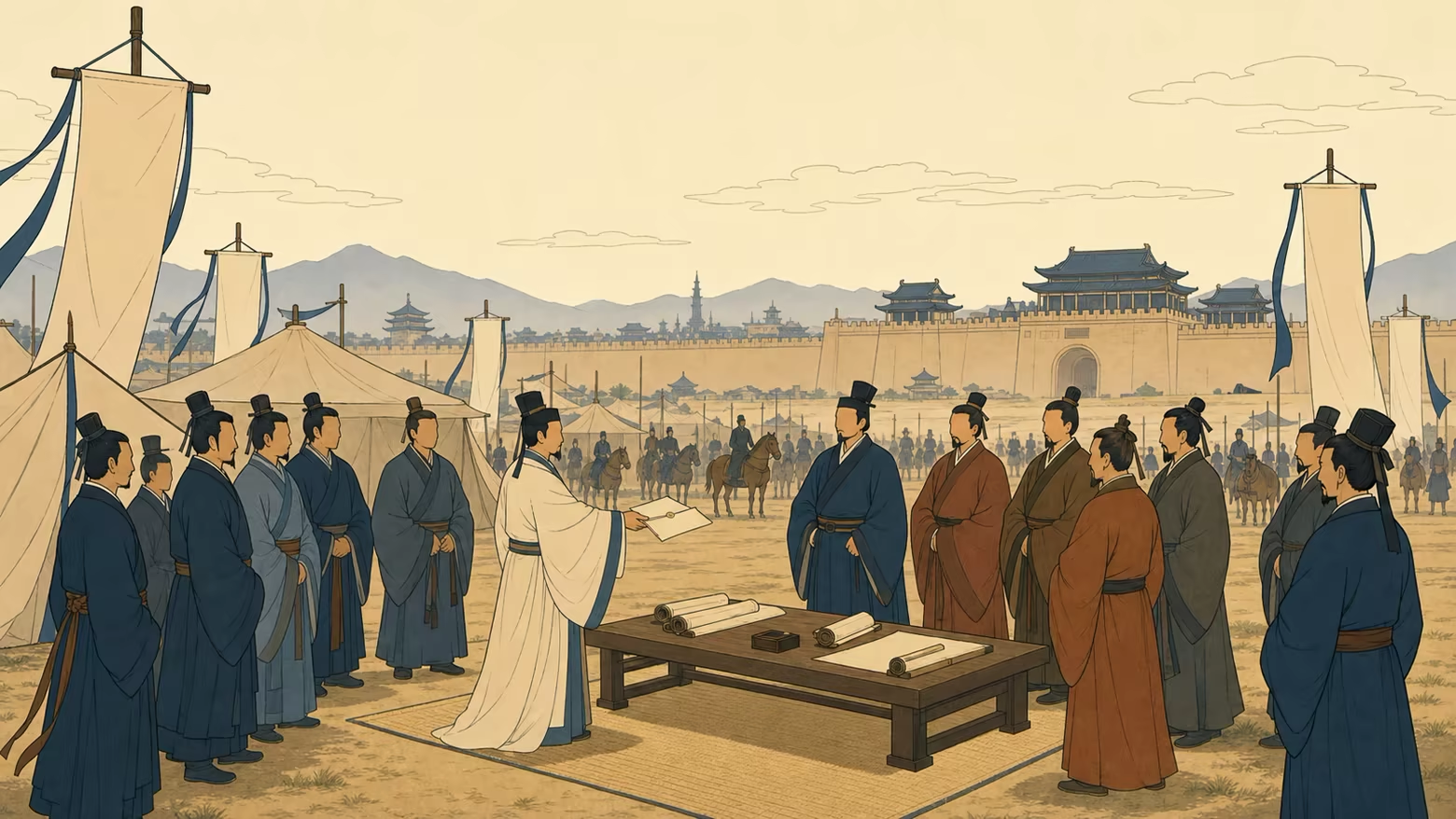
The passage of time is reflected in both the map and its people.
Three Kingdoms Classic represents each era with names, roles, and faction structures suited to that point in history. The same region may appear under a different name depending on the scenario, just as Yufu later became Yong’an, and Moling became Jianye.
Officers are also designed around their recorded deeds and historical roles rather than only their familiar popular images. Xiahou Dun excels as a commander who supports rear-area stability and logistics, while Zhang He shines through mobility and battlefield judgment. Historical grounding is reflected not only in background text, but also in city names, officer roles, abilities, and strategic use.
Cities are the foundation of war.
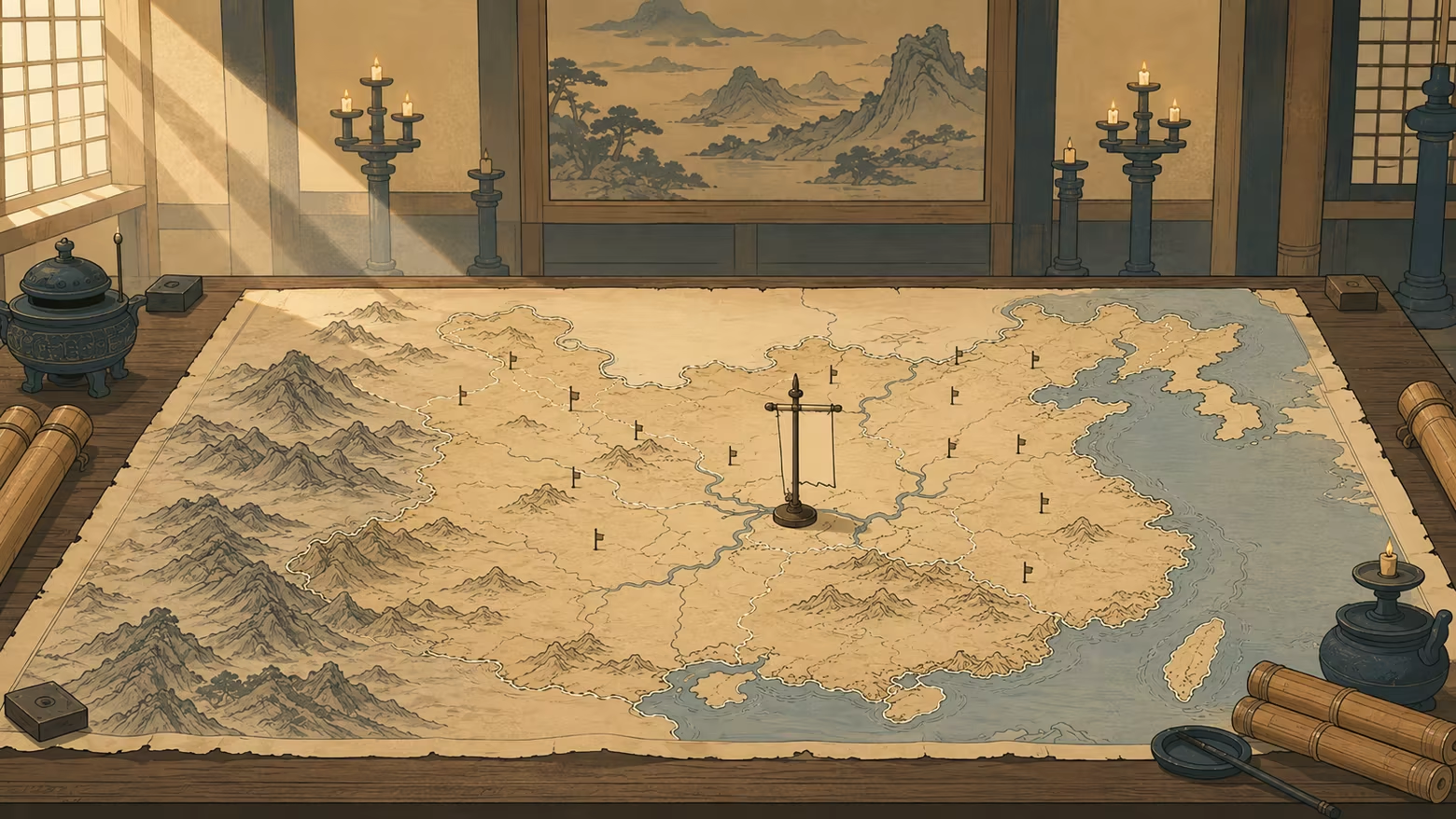
Cities on the map are more than territories to occupy. Population, gold, food, troops, public order, economy, agriculture, and logistics determine how long a war can be sustained. You must decide which cities to defend, where to gather troops, and where supplies should be sent.
If public order collapses, the risk of rebellion rises. If the front grows too long, reinforcements and supply transport take time. More important than winning the battle in front of you is whether you can still afford that victory next month.
Officers are more than numbers.
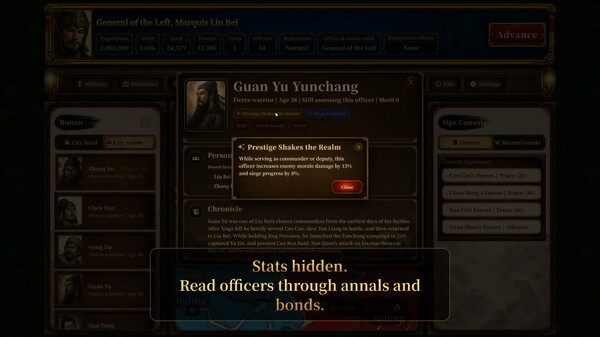
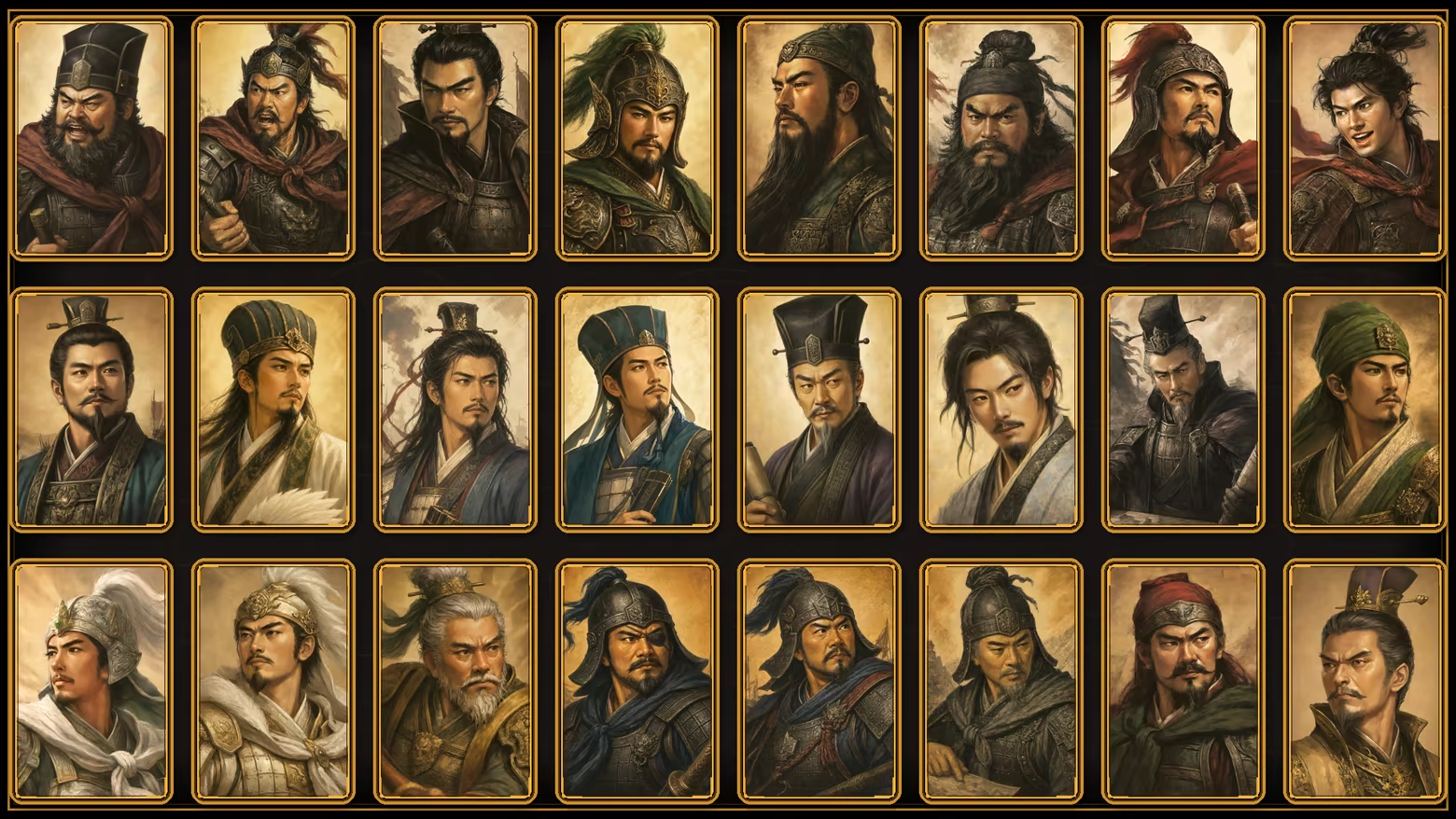
Behind every stat sheet is a person. Officers are not judged by combat ability alone. Their roles, personalities, traits, loyalty, relationships, biographies, and achievements all influence the front.
Strategists support supply lines and schemes. Fierce warriors lead attacks and defenses. Political officers strengthen city administration and diplomacy.
You can grant offices and titles to officers who distinguish themselves, preserving their loyalty and rewarding their service. You can also consider relationships and personalities when recruiting, negotiating with prisoners, or deciding their fate. Gaining a talented officer can matter longer than winning a single battle.
Battles unfold as operations over several days.
Attackers and defenders each choose their commands. In sieges, field battles, set-piece engagements, gate battles, and mountain battles, walls, high ground, supply lines, weather, morale, provisions, officer personalities, and traits can all lead to different outcomes.
Fire attacks, confusion, lures, supply raids, gate defense, and retreats can become decisive moves — or costly mistakes. A larger army does not always win. Which officer you place at the front, where you hold, and when you withdraw can change the course of battle.
“Setting camp on a mountain?”
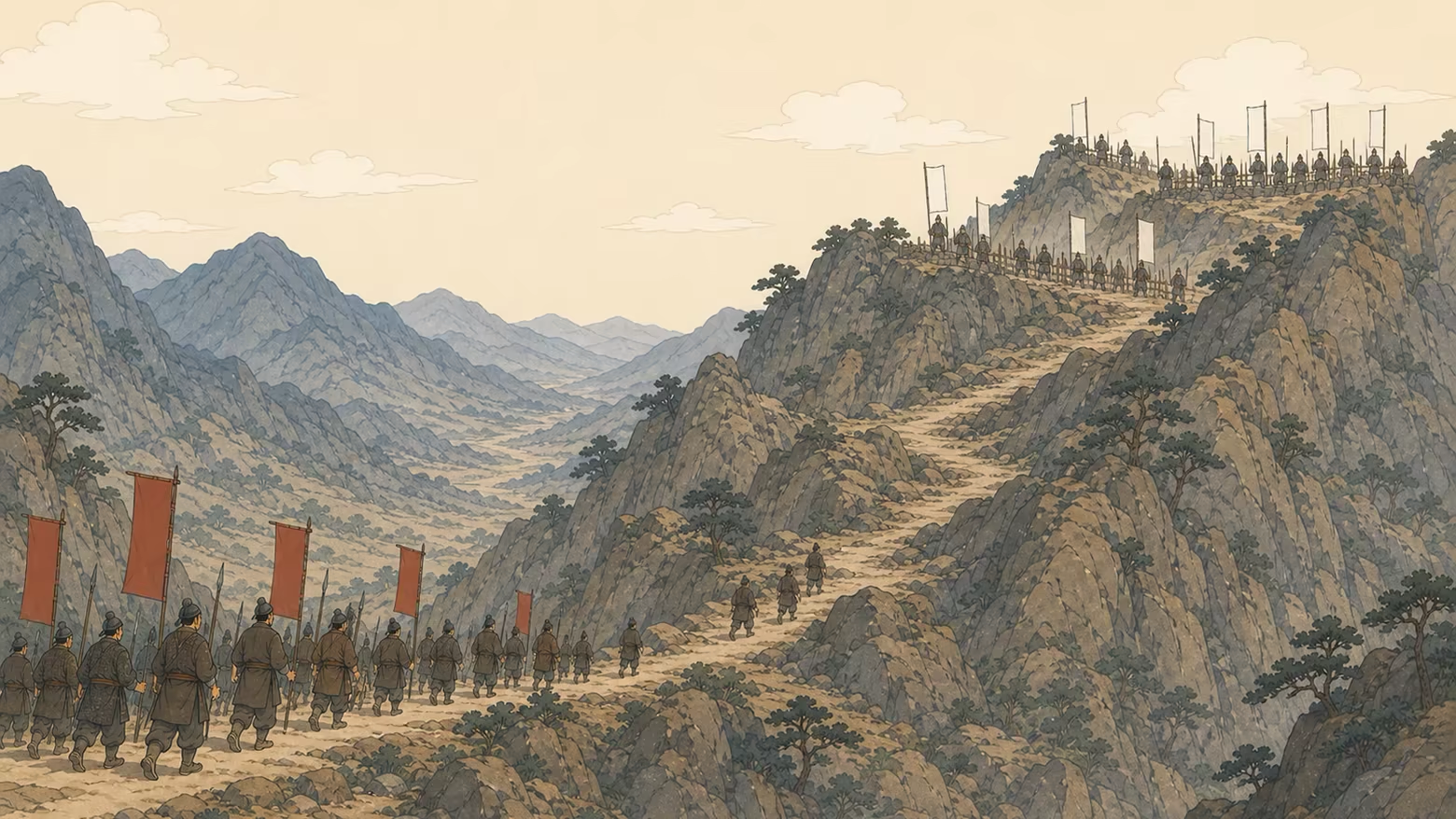
This time, even Ma Su may have another chance. In mountain battlefields such as Jieting, high ground, supply lines, and the commander’s judgment can alter the tide. Take Ma Su’s place on the mountain and try to overturn the result of Jieting yourself.
A direct assault is not the only path to victory. Dangerous routes such as the Ziwu Valley, Yinping Trail, Han River routes, and river crossings or mountain paths in Jiangdong can give you a chance to strike behind enemy lines. But harsh routes reduce troops and morale, and if discovered, they may be cut off. History is not already decided.
Change the front through diplomacy and schemes.
Truces, alliances, joint invasions, requests for aid, recruitment, prisoner treatment, surrender and vassalage proposals, relations with non-Han tribes, and historical events can be as important as war itself. Instead of attacking immediately, you may buy time. By persuading a capable officer, you may change the outcome of the next battle.
A good truce saves your army. A bad truce merely tells you the exact date of the next betrayal. Who you join hands with, and who you delay, can redirect the arrows on the front line.
Authority and records are also part of ruling the realm.
Taking the realm is one thing. Holding it is another. A faction must manage not only territory, but also legitimacy. Offices and titles, relations with the Han court, imperial accession, abdication, and post-unification choices can all leave different endings for your campaign.
Your campaign can be reviewed through replays and historical records. The orders you gave, the deeds of your officers, and the rise and fall of factions remain as part of the record.
Key Features
Multiple historical scenarios covering major periods from the late Han dynasty to the end of the Three Kingdoms era
Historical maps and data reflecting era-specific city names, faction structures, and officer deployments
Strategic systems linking domestic administration, logistics, public order, food, and troop management
Officer data based on historical records, including roles, personalities, traits, loyalty, relationships, biographies, and achievements
Turn-based battles divided into sieges, field battles, set-piece engagements, gate battles, and mountain battles
Risk-and-reward operations through difficult routes such as the Ziwu Valley and Yinping Trail
Diplomacy and personnel management, including truces, alliances, joint invasions, aid, recruitment, prisoners, and vassalage
Historical events and alternate-history settings triggered by specific conditions
Custom officers and new faction options
Observer Mode for watching AI factions develop on their own
Campaign replays and historical records
Three Kingdoms Classic values long-term judgment over quick decisions.
A single city’s food shortage can collapse a front. A single officer’s defection can shift the balance of the realm.
Write the next chapter of the age of chaos with your command.