Crush someone's skull, Suffer from Hypothermia, Transcend your Mortal Frame, Find all 10 Endings. GET YOUR HOUSE BACK.
Modeled estimate, not a reported figure. How we estimate →
Media
About
Stats
All-time low is the lowest price we've recorded for this game since we started tracking it.
Languages: English
Engagement
Hours played at review time, across 43 reviews with recorded playtime.
Reviews
Themes across 43 recent reviews and how positive each mention is. A keyword signal, not full sentiment analysis.
positive critical· bar length = how often the theme comes up
Reviews
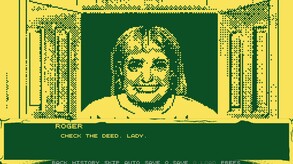
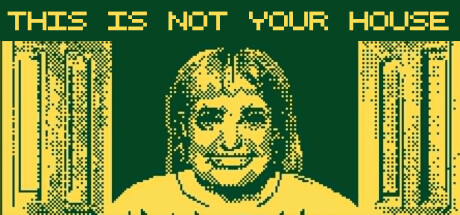
This Is Not Your House is a short visual novel 'game' where you return home from getting groceries to learn that someone has taken up residence in your house. The game presents you with various options to rectify the situation, taking you in 10 different directions based on your decisions. I can't really recommend it as a game per se, but I did enjoy the atmospheric/creepy vibe and going through each ending. There are some nice QOL features that make replaying a joy and not a chore. AVOID | LACKING | MAYBE | [b][u]WORTHWHILE[/u][/b] | COMPELLING | UNMISSABLE
[u][b]Overall Recommended:[/b][/u] ✅ [b]Gameplay[/b]: ❤️❤️🤍 [b]Graphics[/b]: ❤️❤️🤍 [b]Story[/b]: ❤️❤️🤍 [b]Music/Sounds[/b]: ❤️❤️🤍 [b]Jumpscares[/b]: ❎ [b]Bugs[/b]: 🚫 -------------------------------- [b][u]Total:[/u][/b] ❤️❤️❤️🤍 comment: Really short VN but interesting story that leaves the player with more questions than it answers, though I enjoyed the feeling of unknown it created.
Great writing, great mood and extremely disquieting. Absolutely worth the price. Give this game your time.
An equally absurd and eerie short, horror visual novel, that tickled my brain just right. The humor hit, the music is atmospheric, and the pixel art is compellingly abstract.
Mi pollo :(
room temp rotisserie chicken :'(
I played through this game last night, and in the single hour it took to see all of the game's different endings, I realised that this was going to stick with me. The writing really effectively depicts internal anxiety, and puts you in the headspace of someone gripped by a constant nagging paranoia that a random act of violence or a horrifying transgression is only seconds away. This is compounded by the harshness of its presentation, with a garish 'nuclear Game Boy' colour palette, crunchy ultra-lo-fi visuals and unnerving sound design. The different endings run the gamut between bittersweet and reassuring, darkly funny, viscerally disturbing and deeply bleak. If this is developer Trash Eyes' first go-around, I can't wait to see what comes next.
This Is Not Your House is a psychological horror visual novel that builds its entire experience around an unsettling premise that feels disturbingly realistic. The story follows Roger, an elderly widower who returns home after a routine shopping trip only to discover that someone has changed the locks and insists the house belongs to them. What begins as an ordinary misunderstanding quickly spirals into a disturbing nightmare where Roger's grasp on reality, security, and identity is continuously challenged. Instead of relying on constant jump scares or grotesque monsters, the game creates fear through uncertainty, emotional vulnerability, and the slow unraveling of its central mystery. The narrative is the game's strongest feature, presenting a branching choose-your-own-adventure format that allows every major decision to influence Roger's fate. With ten different endings available, players are encouraged to experiment with different choices and witness how seemingly small decisions can lead to dramatically different conclusions. Each route uncovers new pieces of the story while presenting fresh interpretations of the events unfolding around Roger. This design makes replaying worthwhile, especially with the inclusion of a story skip option that lets returning players move quickly through familiar scenes to discover alternative outcomes. Rather than focusing solely on horror, the game explores themes that resonate on a deeply human level. Aging, loneliness, grief, displacement, and the fear of losing one's home become the emotional foundation of the experience. Roger's situation feels believable enough that the psychological horror becomes far more effective than traditional supernatural scares. The game examines how fragile a person's sense of stability can be when everything familiar is suddenly taken away, creating an emotional weight that lingers beyond the credits. The writing effectively balances grounded storytelling with increasingly surreal developments. As Roger searches for answers, the line between reality and illusion gradually fades, leaving players questioning both the world around him and the reliability of his own perceptions. Some endings provide moments of closure, while others embrace ambiguity and symbolism, inviting players to interpret the deeper meaning behind the events. This variety ensures that every ending contributes something unique instead of simply serving as a different version of success or failure. Visually, This Is Not Your House adopts an attractive pixel-art presentation that contrasts nicely with its unsettling subject matter. The colorful environments and expressive character sprites give the game an initially welcoming appearance, making its darker moments even more impactful. The minimalist art style leaves room for imagination, allowing the psychological tension to flourish without depending on graphic imagery. Combined with effective sound design and a consistently uneasy atmosphere, the audiovisual presentation succeeds in maintaining suspense throughout the experience. Although gameplay primarily revolves around reading dialogue and making decisions, the pacing remains consistently engaging because every choice feels meaningful. The story rarely wastes time with unnecessary filler, instead maintaining a focused structure that keeps players invested from beginning to end. While those seeking traditional gameplay mechanics such as puzzles or exploration may find the experience relatively simple, fans of narrative-driven adventures will appreciate the emphasis on storytelling and player agency. The mature themes are handled with purpose rather than shock value. Throughout its multiple routes, the game explores subjects including homelessness, violence, grief, body horror, police misconduct, arson, substance abuse, and psychological trauma. These difficult topics reinforce the emotional impact of Roger's journey and help establish an atmosphere where every decision carries significant consequences. Players should expect an experience that is emotionally intense as much as it is frightening. An especially welcome addition is the game's accessibility support. An integrated screen reader capable of narrating dialogue, menu options, and interface elements demonstrates a commendable effort to make the experience available to a wider audience. Together with replay-friendly features like story skipping, these thoughtful additions improve the overall user experience without compromising the game's artistic vision. This Is Not Your House succeeds because it understands that genuine psychological horror often stems from ordinary fears rather than supernatural threats. By combining an emotionally compelling story, meaningful branching paths, memorable atmosphere, and thoughtful accessibility features, it delivers a narrative experience that remains engaging across multiple playthroughs. Its relatively short length and limited gameplay systems may not satisfy players looking for action-heavy horror, but those who appreciate choice-driven storytelling and unsettling psychological narratives will find a memorable and emotionally impactful experience. Rating: 8/10
作为一款像素风,点击类心理恐怖游戏,《This Is Not Your House》围绕着游戏中的一句话“Personal Property Is A Social Construct”而展开。玩家作为一个老年男性角色Roger,以第一视角参与到整个游戏中来。试想,如果有一天你开着车,带着买好的食物刚准备回家,但是这个时候你的钥匙打不开门,并且有一个奇怪的人在你家里面,声称ta才是房主而你是闯入者,你该如何证明这就是你的房子?(而闯入者认为谁在房子里面谁就拥有房子) 游戏的中心主旨是“Personal Property Is A Social Construct”,即社会建构(Constructionism)理论,指的是某些事物或观念并非天然存在,而是通过人类社会的互动、文化实践、语言和权力关系被共同“构建”出来的。如上所述,各种房产地契,身份证,户口本,都是社会建构的一部分,这些东西在剥离了社会属性以后毫无意义。这就表明了社会建构是一定在(某些)人类集体认同下才能诞生的东西。 基于这个理论,作者用十个结局来提出自己的思考。基于外部认同,你可能会因为无法提供房产证明而变成流浪汉,可能会被认为精神失常被送进精神病院,也可能顺利拿到身份证明和房产证明从而夺回自己的房子。基于自我认同,你可能会反复怀疑自己是否真的精神失常甚至怀疑自己的存在而迷失在真菌网络里,可能会固执地认为这就是你的房子并且为了夺回而纵火焚烧房子从而得到保险赔偿,也可能因为不敢反抗那个闯入者而活活冻死在家门口。等等,都是作者思考的结果。 这个游戏让我思考的部分是,什么才是自我?怎样证明自我?外部权威的描述是否能替代自己对自己的描述?当一切外部因素都在曲解你的时候你该如何保护自我或证明自我?有人会固执己见,认为只有自己才能定义自己,也有人会认为社会构建出来的自我才是自我,当然更多人的选择是结合自我认同和社会认同的我。但是问题是,如果你认知的自我和社会认知的你的自我有出入或者差别较大怎么办?该相信社会还是自己?如果只有外部因素才能构成对个体的解释,那算不算一种社会对个人的解释权的占领?当你被千夫所指时,你的自我同一性会不会发生改变,会如何发生改变?或者说,自我同一性也许不只是随着年龄而改变,也会根据发生在个体身上的随机性事件有关。
Stupid hoe stole my damn house
Related
Related
Trends
Concurrent players on Steam, sampled daily since tracking started.
Momentum
Pace estimated from the game's recent review growth (our daily snapshots) at its own sales-per-review ratio — a momentum signal, not booked sales.
Audience
Estimated from the language of this game's reviews — a proxy for where players are, not official Steam demographics.
Related
| BomberZone | $4.2K | 221 | 73% | $0.83 |
| Unbreakable Vr Runner | $4.2K | 56 | 98% | $3.99 |
| Welcome to Bummertown | $4.2K | 92 | 82% | $2.99 |
| Knife Hit Dash | $4.2K | 69 | 49% | $3.99 |
| Aviator - Bush Pilot | $4.2K | 82 | 23% | $1.49 |
| Schizo Dark | $4.2K | 92 | 93% | $1.99 |