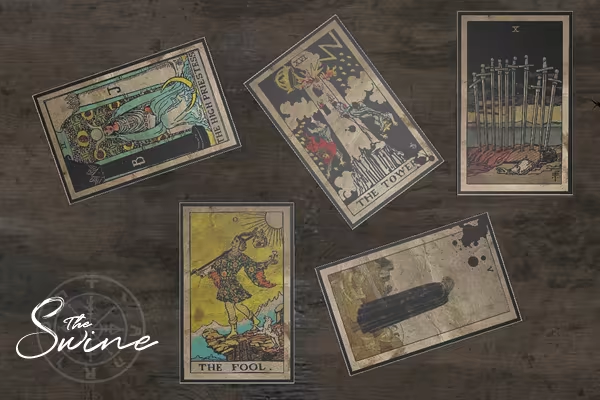
The Swine, developed and published by Vincent Lade, is a compact yet strikingly atmospheric horror experience that proves a short game can still leave a lasting impression. Set in the isolation of rural America, it tells the story of a man whose peaceful domestic life begins to unravel after the arrival of a mysterious package containing a set of tarot cards. What begins as an ordinary day in a quiet countryside home quickly descends into a disturbing confrontation with an occult group known only as “The Swine.” The game unfolds across a series of days, each more disorienting than the last, as the protagonist’s reality bends under the influence of unseen forces. The strength of the experience lies not in complex gameplay systems or jump scares but in its ability to make the familiar feel threatening, turning the comforts of home into a psychological trap.
From the first moments, The Swine establishes an unnerving sense of intimacy. The player is confined almost entirely to a single house and its immediate surroundings, forced to observe every creak of the floorboards and flicker of shadow. This domestic setting works perfectly for the kind of horror Vincent Lade creates—a creeping, existential discomfort rather than overt terror. The game’s structure mimics the passage of days, with each new morning presenting subtle alterations in the environment. A door once open is now locked, a painting slightly askew, an object inexplicably missing or replaced. These changes build tension in a natural and insidious way, training the player to question everything they see. Rather than relying on sudden shocks, the game cultivates dread through its pacing, letting silence and anticipation do most of the work.
Mechanically, The Swine is simple by design. It plays like a first-person exploration narrative, with light interaction elements such as examining objects, finding notes, and unlocking areas as the story progresses. The simplicity serves the atmosphere rather than limiting it—each action feels deliberate, each discovery a small revelation. The tarot cards act as the central narrative device, guiding both the player and the protagonist deeper into the occult mystery that consumes the household. The game’s brevity—lasting around an hour on average—is one of its strengths. By avoiding unnecessary padding, it keeps the experience focused and taut, maintaining its suspense from beginning to end. The sense of progression is steady, and while the gameplay never becomes complex, the unfolding narrative provides enough curiosity to keep the player engaged until the final moment.
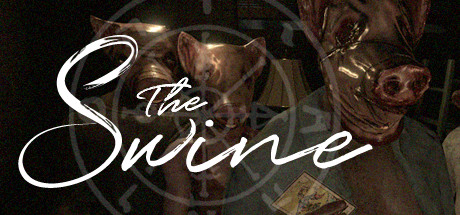
Visually, The Swine is modest but effective. The house is rendered in a muted color palette of greys, browns, and dim yellows, evoking a sense of quiet decay. Lighting plays a central role in maintaining the atmosphere—lamps cast uncertain glows, shadows stretch unnaturally, and moonlight filters through windows in cold tones. The world feels alive with unease even when nothing is happening. The design of The Swine cult members, masked and unsettlingly still, is one of the game’s most memorable visual elements. They appear suddenly yet without fanfare, standing motionless in the corners of rooms or at the end of corridors, their presence more disturbing than any loud scare could be. Combined with the sparse but effective use of sound—the soft hum of electricity, distant whispers, the faint rustle of movement—the result is an immersive environment that manages to feel both claustrophobic and endless.
The narrative unfolds primarily through environmental storytelling and brief written clues rather than direct exposition. This choice enhances the feeling of isolation and mystery, forcing players to piece together what is happening rather than being told outright. The protagonist’s voice is never heard, and much of the tension comes from the silence between moments of discovery. The Swine cult remains largely enigmatic, their motives and methods left ambiguous, which gives the story an open-ended quality that invites interpretation. Some players may find this lack of closure frustrating, especially as the game’s climax arrives quickly and concludes without offering concrete answers. Yet that ambiguity suits the tone perfectly—it mirrors the sense of helplessness and confusion that defines true psychological horror.
Despite its strengths, The Swine is not without flaws. Its limited scope and short length mean it lacks the depth or replayability of larger horror games, and some of its scares rely too heavily on repetition. The pacing, while deliberate, can feel overly slow for players expecting a more dynamic experience. Technically, the game shows its indie origins through minor visual roughness and basic animations. However, these limitations are easily overlooked when considering the effectiveness of the overall presentation. The atmosphere remains consistently strong, and the minimalist approach allows the game to achieve a level of tension that many higher-budget titles struggle to replicate.
Ultimately, The Swine is a compact exploration of dread that succeeds through restraint and subtlety. It’s a game about atmosphere, suggestion, and the horror of intrusion—how the smallest disruptions to routine can unravel a sense of safety. Vincent Lade demonstrates an acute understanding of psychological tension, crafting an experience that feels intimate and personal despite its brevity. The Swine does not aim to shock with spectacle or overwhelm with lore; instead, it lingers, unsettling players long after the credits roll. For fans of slow-burn horror experiences in the vein of P.T. or Layers of Fear, it offers a condensed yet satisfying glimpse into the unease of the unknown. It may be short, but its mood and imagery make a lasting impression, proving that even a small, focused horror story can be deeply effective when executed with care and precision.
Rating: 8/10