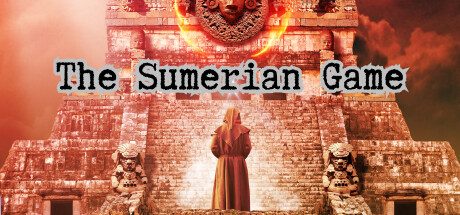
A game of strategy and management. The Sumerian Game is one of the earliest computer games. Developed and programmed between 1963 and 1965, it was designed to teach children math, economy and ancient history. The source code was lost but now you can play it again.
Revenue comes from in-game items and microtransactions, which our price-based model doesn't estimate. Copies below reflect the player base, not paid sales.
Media

About


Genres
Stats
Languages: English
Engagement
Reviews
Themes across 40 recent reviews and how positive each mention is. A keyword signal, not full sentiment analysis.
Reviews
Contrary to what you may think, you have never played The Sumerian Game unless you were a schoolchild in Westchester County, New York in the mid-1960s, because this game was developed by a fourth-grade teacher named Mabel Addis and a programmer named William McKay for a mainframe computer. Two groups of students got a chance to play it, one in 1964 and an expanded one in 1966. A handful of people also got to play it was the BOCES Research Center, and it's from there that the notes used to reconstruct this game derive. The original game cost a fortune to run and was funded by a grant. The gameplay is simple: you need to grow grain to feed your people, seed your fields and store for the future. Disasters are common, but you can also lose grain to rats and rot. If you want your civilization to grow, you have to feed people enough so they can reproduce. But if you feed them too much, you'll have too little available grain to grow and store. Because the game is so rare and has never been playable up until now, it's amazing that we're now able to play it at all thanks to the efforts of HareSoft. There's even a DLC pack that adds in an enhanced remake that includes some of the slides shown to students and trivia questions (both original and new) that periodically perform a knowledge check in the game. Also included are the 1968 Douglas Dyment game King of Sumeria, and the 1974 BASIC game Hamurabi (also known as The Sumer Game) published by David H. Ahl in the 1973 book BASIC Computer Games (by far the most famous version). These versions were based on an idea of what the game was about based on student anecdotes and added in the elements of buying and selling land as well as new settlers arriving. A later version called Santa Paravia added simple graphics and new features. Each of these games are not only the golden oldies of mainframe strategy games (found on systems all over the world), but also only partial replicas of The Sumerian Game itself. But how do these games play? First of all, they're extremely difficult and require some serious trial and error to get going. I killed my civilizations many times before I got them prospering. The key is to be very generous with your food starting out and find the sweet spot between satisfactory and starving. You also need to pray that the gods don't want you to fail, because disaster will strike and it takes careful planning to prepare for it. Second, these games are very simple, much like many early mainframe games that allow you to input short commands and then run a simulation based on your input. They're still a lot of fun - there are even trophies to earn! - but they're definitely a product of their time. Even so, I'm delighted to have them all available in a free-to-play package and encourage players to purchase the DLC to support HareSoft's efforts. This is game preservation at its best!
Related
Related
Trends
Concurrent players on Steam, sampled daily since tracking started.
Hours played at review time, across 40 reviews with recorded playtime.
positive critical· bar length = how often the theme comes up
The game itself is amusing, especially if you think that it has been created in the 1960s. Restoring and preserving old software/games is important and the project should be definitely supported.
Fun little piece of history, never thought I'd get to beat a game that's 60 years old. [spoiler] If you want to win the base game just keep feeding your guys 8000-9000 grain every report and plant about 4000-5000. If times are tough you can drop the food to 7000 and they'll just yell a little. Rinse and repeat for your 10-year reign [/spoiler]
⠀
Awesome job by the developer, meaningful both historically and from a preservation standpoint. Hats off!
It was my pleasure to enjoy in this history of gaming. 10/10
Fails on Steam Deck. I expected to have to use a virtual keyboard to interact, but it doesn't even launch the text prompt correctly. I was able to run it under Windows to see what it was supposed to do, it just doesn't function on Steam Deck.
Es fühlt sich irgendwie besonders an, ein Computerspiel zu spielen, das 60 Jahre alt ist. Wow! Und dabei macht es auch noch Spaß :-) Da diese Erfahrung noch nicht einmal Geld kostet, kann ich sie nur nachrücklich empfehlen!
Un gioco gratuito che oltre ad essere molto divertente (provare per credere) è gratis e vi insegna anche qualcosa, cosa si può volere di più? Ovviamente consigliatissimo, dategli una chance e non ve ne pentirete!!!
Playing The Sumerian Game was fun. Tasked with feeding an ancient population, I quickly learned the perils of agriculture. ( ͡° ͜ʖ ͡°)
Audience
Estimated from the language of this game's reviews — a proxy for where players are, not official Steam demographics.