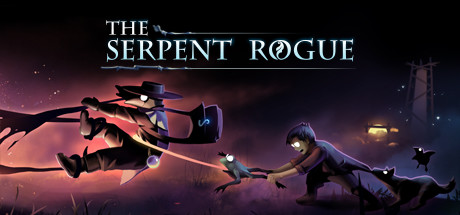
The Serpent Rogue is a botanical action-adventure game set in a medieval fantasy world. Master the art of alchemy, explore forgotten lands, tame wild beasts and protect the realm from impending disaster. You will craft, brew, boil, & concoct potions all in your stead to defeat an ominous danger!
Modeled estimate, not a reported figure. How we estimate →
Media

About
The Serpent Rogue is a botanical action-adventure game built around exploring a medieval fantasy world, mastering the art of alchemy, and taming wild creatures.
Playing as a mysterious alchemist known only as The Warden, you will craft, brew, boil & concoct potions all in your stead to protect the realm from the dreadful Serpent Rogue!

The ominous Serpent Rogue has laid down roots on Mount Morbus. Its evil is spreading quickly, and it threatens to overwhelm the realm. It is your task as the Warden to confront the Serpent Rogue and bring peace and tranquillity to the land. Explore every inch of the map, unearth secret passages, and expand your knowledge to stand against the incoming disaster.

Using your alchemy skills, craft and experiment with different ingredients to create extraordinary potions each with its own unique effects. Take on quests from the inhabitants of the cursed land and earn resources to further your exploits.

Each action you take will create interesting sequences of cause and effect. Keep too many creatures in one place and this will attract blood-thirsty reapers. Forget to bury the perished ones and you’ll start to attract corpse-eating ghouls. Hoard too many items in one location and attract plague-spreading vermin.

Shapeshift into different creatures, brew potions that will alter your body, give you unique abilities and create the perfect balance between human and creature.
Genres
Stats
All-time low is the lowest price we've recorded for this game since we started tracking it.
Languages: English*, Russian*, Ukrainian*, French*, German*, Spanish - Spain*, Simplified Chinese*, Italian*, Japanese*, Korean*, Traditional Chinese**languages with full audio support
Engagement
Hours played at review time, across 41 reviews with recorded playtime.
Reviews
Themes across 41 recent reviews and how positive each mention is. A keyword signal, not full sentiment analysis.
positive critical· bar length = how often the theme comes up
Reviews
The combat system is TERRIBLE. There is no way to not die constantly and loose all your stuff. There also is not a great tutorial. Things kept happening out of no where. The story was interesting so I'm bummed that this is completely unplayable.
Гра чудова. Було ідеально, якби добавили більше контенту. Трохи оптимізували та виправили багатенько багів
Came from Jerma, stayed because it's one of the best to ever do it. If you can get hooked, it's one of the best 10-15 hour games you can find. Played it on Switch and loved it so much I bought it again off-sale for the full $20 price tag.
Um ótimo mata tempo.
muy malo despues de las primeras horas
无意义的收集很多,谜语人的剧情
粪game
https://youtu.be/NveYi0c8Ojo Attempting to do too much too fast players may be left unclear to exactly what goals are required to make progression.
The Serpent Rogue is a dark fantasy action-adventure that builds its identity around experimentation, survival systems, and alchemy-driven gameplay rather than straightforward combat or traditional role-playing mechanics. Set in a corrupted world slowly collapsing under the spread of a mysterious plague-like force, the game places players in the role of The Warden, a masked alchemist tasked with restoring balance and containing the spreading corruption. What immediately separates the experience from more conventional fantasy games is how heavily it emphasizes observation, discovery, and consequence. Instead of handing players direct answers or clear progression paths, the game constantly encourages experimentation and rewards curiosity in ways that make the world feel dangerous, unpredictable, and alive. The alchemy system is easily the game’s defining feature. Nearly every aspect of progression revolves around collecting ingredients, identifying properties, and experimenting with potions and concoctions. Plants, monster remains, minerals, and strange substances can all be combined into useful mixtures capable of healing, poisoning, transforming, or manipulating the environment. Unlike crafting systems that simply provide recipes from the start, The Serpent Rogue requires players to slowly learn ingredient effects through testing and experimentation. This creates a strong sense of discovery because every successful potion feels earned through observation and trial rather than simple resource collection. What makes the alchemy particularly engaging is how deeply connected it is to the rest of the gameplay systems. Potions are not just optional bonuses but essential survival tools that influence combat, exploration, creature interaction, and world management. Some mixtures allow players to tame creatures, others can cleanse corruption or alter environmental conditions, while dangerous experimental combinations may create entirely unexpected outcomes. The game constantly encourages players to think creatively and adapt rather than relying on repetitive combat strategies. The world itself feels reactive in ways many fantasy games fail to achieve. Corruption spreads across environments over time, creating dangerous storms, mutating creatures, and transforming once-safe areas into hostile territory. Ignoring corrupted zones can lead to increasingly severe consequences, forcing players to actively maintain balance within the world instead of simply progressing through static environments. This mechanic creates a persistent sense of urgency because the world changes based on player actions and neglect. The feeling that the environment is constantly evolving helps the game stand out from more traditional open-world adventures. Creature interaction is another surprisingly deep system. Animals and monsters are not simply enemies waiting to be defeated. Many creatures can be captured, tamed, transformed, or manipulated depending on the player’s actions and potion usage. Certain animals may assist with gathering resources or combat, while others become corrupted and evolve into dangerous threats if left unchecked. The ecosystem-like behavior of the world gives the game a sense of unpredictability because seemingly small actions can create unexpected consequences later. Leaving corpses unattended may attract scavengers or spread disease, while overcrowded areas can spiral into chaos if corruption spreads too far. Visually, The Serpent Rogue adopts a stylized cel-shaded art direction that gives the game a distinct dark fantasy atmosphere. The plague doctor aesthetic, ruined settlements, twisted monsters, and corrupted landscapes create a world that feels unsettling without relying purely on graphic horror imagery. The environments are not enormous in scale, but they contain enough environmental detail and visual storytelling to remain immersive. Weather effects and corruption storms especially help reinforce the oppressive tone of the adventure. The sound design and music contribute heavily to the game’s atmosphere as well. Exploration is often accompanied by quiet ambient tracks and subtle environmental sounds that create a lonely and mysterious feeling. During moments of danger, the soundtrack becomes more tense and chaotic without ever overpowering the experience. The restrained audio design works well because it allows the atmosphere and environmental tension to remain the primary source of immersion. Progression in The Serpent Rogue feels very different from standard role-playing games because success depends more on knowledge and preparation than numerical character growth. Players gradually become more capable by understanding systems, learning ingredient combinations, and discovering efficient ways to manage corruption and survival. This creates a satisfying intellectual progression where experience and experimentation matter more than simply grinding statistics or equipment levels. However, the same systems that make the game unique can also become frustrating. The lack of direct guidance means players are often expected to learn through failure, and the game can feel intentionally vague during the early hours. Certain mechanics are poorly explained, which may overwhelm players who prefer more structured tutorials and clearly defined objectives. Some players will appreciate this sense of mystery and experimentation, while others may become frustrated by the amount of trial and error required. Combat is another area where the game feels less refined. While functional, melee encounters lack the responsiveness and fluidity found in stronger action-adventure titles. Stamina limitations, weapon durability, and somewhat clumsy enemy interactions can occasionally make fights feel awkward rather than satisfying. The game’s true focus clearly lies in alchemy and world systems, which means combat sometimes feels secondary compared to the more experimental mechanics. Inventory management can also become tedious over time. Constantly gathering ingredients, organizing materials, maintaining equipment, and balancing resources occasionally slows the pacing significantly. Players who enjoy survival mechanics and detailed management systems may appreciate this complexity, but others may find the repetition exhausting during longer sessions. Despite these flaws, The Serpent Rogue succeeds because of how committed it is to its unique vision. It does not attempt to simplify its systems into a generic fantasy adventure. Instead, it creates a world driven by experimentation, consequence, and environmental interaction. The game constantly rewards careful observation and curiosity, making every successful discovery feel meaningful. What ultimately makes The Serpent Rogue memorable is the atmosphere of uncertainty it creates. Players are never entirely comfortable because the world reacts dynamically to mistakes, corruption spreads unpredictably, and survival depends on understanding systems that initially seem mysterious. That constant tension gives the experience a distinctive personality rarely found in more traditional fantasy games. The Serpent Rogue may not appeal to players looking for fast-paced action or clearly guided progression, but those who enjoy experimentation-heavy gameplay and dark fantasy exploration will likely find it deeply rewarding. Its combination of alchemy, reactive world systems, creature management, and atmospheric design creates an experience that feels genuinely different from most modern action-adventure titles. While rough combat and occasionally frustrating mechanics prevent it from reaching greater heights, the game’s originality and immersive systems make it one of the more distinctive indie fantasy experiences available. Rating: 7/10
There is absolutely no way I would recommend this game unless you enjoy games that do not tell you how to play it and have no way of surviving beyond 45 minutes of playing. Definitely not for me.
Related
Related
Trends
Modeled estimate over time, reconstructed from Steam's monthly review histogram.
Momentum
Pace estimated from the game's recent review growth (our daily snapshots) at its own sales-per-review ratio — a momentum signal, not booked sales.
Audience
Estimated from the language of this game's reviews — a proxy for where players are, not official Steam demographics.
Related
| A Quest That Became Legend | $68.2K | 100 | 85% | $29.99 |
| Modern Tales: Age of Invention | $68.2K | 271 | 90% | $14.99 |
| Disc Creatures | $68.2K | 235 | 83% | $14.99 |
| Spirited Heart Deluxe | $68.2K | 90 | 46% | $19.99 |
| Colonize | $68.2K | 177 | 39% | $9.99 |
| Scarmonde | $68.2K | 227 | 99% | $10.49 |
Related
| 7 Days to Die | $425.3M | 403.6K | 87% | $44.99 |
| Mount & Blade II: Bannerlord | $309.8M | 294K | 88% | $49.99 |
| Palworld | $279.6M | 447.5K | 94% | $20.99 |
| Clair Obscur: Expedition 33 | $233.9M | 273.3K | 95% | $47.99 |
| Terraria | $187.5M | 1.5M | 97% | $9.99 |
| Don't Starve Together | $164.7M | 539.5K | 95% | $14.99 |