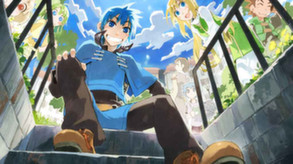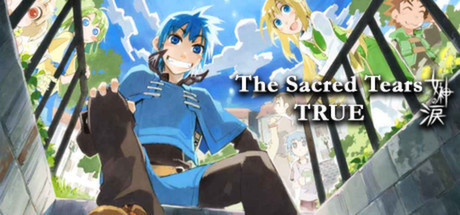
Sacred Tears TRUE brings both traditional JRPG elements and fresh and unique features such as a deceptively simple but deep card battle system, redistributable skill points, and graphics by Takashi KONNO, and music by Hiroyuki Ojima and Shimotsuki Haruka.
Modeled estimate, not a reported figure. How we estimate →
Media

About
Stats
All-time low is the lowest price we've recorded for this game since we started tracking it.
Languages: English
Engagement
Hours played at review time, across 40 reviews with recorded playtime.
Reviews
Themes across 40 recent reviews and how positive each mention is. A keyword signal, not full sentiment analysis.
positive critical· bar length = how often the theme comes up
Reviews
This is an outlier among the sea of samey RPG Maker games out there, as nearly everything in the game appears to be hand-made, from the nice battle screen graphics, character portraits and music. The card-based battle system is also unique too, and the character dialog is pretty decent too. Though, what makes me not want to play this game is, as I said above, it uses the RPG Maker game engine, and all the jank that comes along with it. I really don't want to run around in the flat, ugly and barely-interactives worlds that are constrained by this engine anymore, nor do I wanna see the janky in-game cutscenes/scripting that it brings. I guess the other reason I don't really want to play is the battle system. It's unique, yes, but it looks like it's overly luck-based, and the game did a terrible job explaining how anything worked. As I said, the assets in the game are great: The battle screen has great looking environments, characters, and character portraits. Pretty good music too, along with hand-drawn cutscenes. But screw RPG Maker.
anime rpg sıradan bsait kötü
The Sacred Tears TRUE, developed and published by AlphaNuts, is a retro-inspired Japanese role-playing game that attempts to merge classic 16-bit era sensibilities with a distinctive card-based combat system and episodic storytelling structure. Built with clear affection for traditional JRPGs, the game centers on a pair of young protagonists navigating a bustling city filled with guild work, personal drama, and a larger narrative involving ancient relics. While its presentation evokes nostalgia through pixel art and structured chapters, it simultaneously experiments with unconventional mechanics that set it apart from more formulaic RPGMaker-style titles. The story follows Seil and Seana, two resourceful youths who operate as members of a thieves’ guild while also managing their own investigative work. Their city, Genoseed, serves as the primary hub of activity and acts almost like a character in its own right. Rather than following a strictly linear progression across continents or sprawling overworld maps, the game unfolds through episodic missions that highlight both personal character moments and escalating plot developments. These episodes are divided into main story arcs and optional side stories, offering a rhythm that alternates between lighthearted slice-of-life interactions and more serious revelations tied to the mysterious Sacred Tear. This structure gives the game a television-like pacing, where each chapter feels self-contained while contributing to the overarching narrative. Character interactions form a substantial part of the experience. Dialogue is frequent and often dynamic, with non-playable characters reacting differently depending on your progress in the story. This design choice encourages revisiting familiar locations to uncover new conversations and subtle world-building details. While this adds depth and personality to Genoseed, it can also slow the pace, especially for players eager to advance the main storyline. Navigation occasionally requires speaking with multiple NPCs or revisiting areas to trigger events, which can feel immersive for those who enjoy thorough exploration but potentially tedious for those who prefer streamlined quest markers and clear guidance. Combat is where The Sacred Tears TRUE most clearly diverges from traditional JRPG conventions. Instead of selecting standard commands like attack or magic from fixed menus, players build and utilize a deck of cards representing different actions. Each turn requires choosing cards that determine offensive or defensive outcomes, creating a system that blends turn-based strategy with elements of unpredictability. The interplay between card types introduces tactical considerations, but the reliance on random draws can sometimes undermine careful planning. In tougher battles, especially against bosses, luck can play a significant role in determining success. This combination of strategy and chance makes combat feel unique but occasionally inconsistent, particularly for players who prefer complete control over battle outcomes. Visually, the game embraces classic 2D sprite work reminiscent of older console RPGs. Environments are colorful and structured, though not overly elaborate, reinforcing the retro atmosphere. Character portraits and illustrated chapter artwork elevate the presentation beyond basic pixel art, adding personality and emotional expression to story scenes. The soundtrack further enhances the nostalgic tone, delivering melodic themes that complement both exploration and combat. The music plays a crucial role in maintaining immersion, providing energy during battles and warmth during quieter narrative segments. Progression is steady rather than expansive. The game does not emphasize massive open-world exploration or intricate skill trees; instead, it focuses on completing episodes, improving card decks, and strengthening party members incrementally. This keeps the experience contained and manageable, though it may lack the sweeping sense of growth found in larger-scale RPGs. The episodic format also means that gameplay sessions can feel bite-sized, making it accessible for players who prefer structured chapters over sprawling adventures. Ultimately, The Sacred Tears TRUE is an ambitious indie JRPG that blends nostalgic design with experimental mechanics. Its strengths lie in its character-driven storytelling, episodic pacing, and distinctive card-based battle system. At the same time, its slower navigation, occasional pacing issues, and reliance on randomness in combat may divide players. For fans of retro aesthetics who appreciate narrative focus and are open to unconventional battle systems, it offers a memorable and heartfelt journey. While it may not reach the refinement of major studio RPGs, it stands as a creative and earnest project that aims to carve its own identity within the genre. Rating: 6/10
Lovely game with a lot to explore and a charming cast
Quite the little gem here. The Sacred Tears TRUE is a game that focuses the tree rather than the forest which I feel really enhances the experience. The story is nothing ground breaking as it is fairly generic, it follows the day to day happenings of the MC and how the MC goes about achieving his goal(s). The world around the MC keeps progressing even when the MC is not directly involved. The cast of characters are fairly fleshed out, we are given enough information about them to understand that they have their goals and ambitions. They are also involved just enough in the story to help enhance and progress the story rather than becoming a hindrance to it as it is not their story, it's the MC's. The game was very easy as I literately beat 90%-95% of all the combat encounters using the first three cards while the rest of my cards were for boss fights only (barely even used them for the bosses). The card based combat system was quite enjoyable, I see other people say how the game's RNG based combat system is holding it back. I disagree with them on that. The combat system requires a bit of predicting on the player's part as being able to predict the opponent's card could be what saves you from a fatal hit or not, if you don't like predicting you can literately just face tank through all the attacks, but that will cost you a little bit of healing items. I did encounter a few bugs and things that I wish could be improved on, but seeing how the game came out on August 10th 2005 I'm not going to complain about it. All in all I'd recommend it, like I said quite the little gem. Apologies about the vagueness, I didn't want to spoil anything for anyone planning on trying the game.
Just another RPG game that you should probably avoid.
Terrible RPGMaker game that does some things pretty decent, but the combat system is incredibly scuffed.
RPG Maker strikes again! This is one of hundreds of low effort retro-pixel JRPG ripoffs spamming the Steam catalog, made with the RPG Maker video game construction kit... in their own words, "Our easy to use tools are simple enough for a child." A little more effort went into this one than most get, but there are still fundamental problems. Take the role of thieves in a para-fantasy universe. There's some semblance of a story here but it's muddled by godawful retro pixel graphics. While changes have been made to the stock RPG Maker combat system, they don't improve on the stock RPG Maker combat system... it's still a terrible, weak mockery of the old FF games. Ugly retro pixel graphics aside, the developers also failed by including graphics that aren't retro pixel. This defeats the purpose of trying to be retro. Also, resolution and controls are fixed, and the fullscreen mode causes a crash (why don't indy shovelware devs ever test their junk before inflicting it on the Steam store?) so this game falls beneath minimum standard for PC. Gamers who want a good retro JRPG experience would be better off playing the originals, like Final Fantasy, Star Ocean or Chrono Trigger. This is just a sad exercise in putting a lot of work into making something terrible. Imagine if the developers had made a proper 21st century RPG instead of this retro crap.
Its two bucks. Yeah, it feels like some kid's school project in gamemaker, but at least they put some effort into the story and a unique, if somewhat questionable, combat system. Tabbing out kills the sound. Playing games like this is like reading online fanfiction "novels". I don't have time for it, but if you do, there are worse ways to drop two bucks.
Tears turned to magic. One drop made me a hero. The next made me lose my keys. Perfectly chaotic.
Related
Related
Trends
Modeled estimate over time, reconstructed from Steam's monthly review histogram.
Momentum
Pace estimated from the game's recent review growth (our daily snapshots) at its own sales-per-review ratio — a momentum signal, not booked sales.
Audience
Estimated from the language of this game's reviews — a proxy for where players are, not official Steam demographics.
Related
| 誰是犯案者 Who is the Criminal | $6.7K | 60 | 95% | $7.99 |
| Silent Nights | $6.7K | 217 | 73% | $1.19 |
| Mage of the Olekta Desert | $6.7K | 50 | 88% | $6.49 |
| CBT With Yuuka Kazami | $6.7K | 1.2K | 98% | $0.49 |
| The Golem | $6.7K | 51 | 92% | $9.99 |
| The Underground Man 2 | $6.7K | 145 | 84% | $2.49 |
Related
| 7 Days to Die | $425.3M | 403.5K | 87% | $44.99 |
| Mount & Blade II: Bannerlord | $309.8M | 293.9K | 88% | $49.99 |
| Palworld | $279.6M | 445.8K | 94% | $20.99 |
| Clair Obscur: Expedition 33 | $263.7M | 178K | 95% | $47.99 |
| Stardew Valley | $243.2M | 1M | 98% | $14.99 |
| Project Zomboid | $239.1M | 460.8K | 94% | $19.99 |