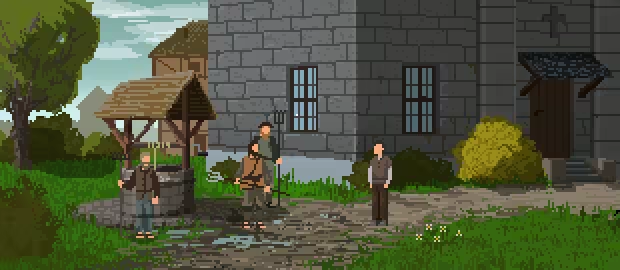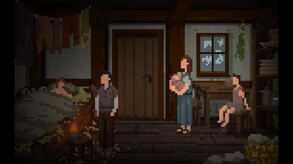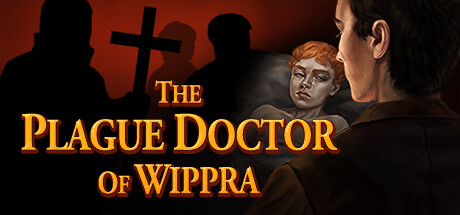
The plague spreads agony and fear in the small town of Wippra. As a plague doctor, you bring healing and relief wherever you can. But ignorance, superstition, and religious zeal make for a deadly threat in this retro medieval medical adventure!
Modeled estimate, not a reported figure. How we estimate →
Media

About

Stats
All-time low is the lowest price we've recorded for this game since we started tracking it.
Languages: English, German, French, Italian, Spanish - Spain, Portuguese - Brazil
Engagement
Hours played at review time, across 40 reviews with recorded playtime.
Reviews
Themes across 40 recent reviews and how positive each mention is. A keyword signal, not full sentiment analysis.
positive critical· bar length = how often the theme comes up
Reviews
Sympa et pas prise de tête, je recommande !
Echt tolles Spiel! Es gibt leider viel zu wenig Spiele, die in dieser Zeit spielen. Man merkt, dass es ein Herzensprojekt war. Hoffentlich bekommen wir noch ein weiteres Spiel dieser Art von dem Entwickler
短小但动人的游戏
унылый p&c, из достоинств лишь реалистичная концовка: сказал, что в чуме виноваты крысы, а не бог — ну и казнили тебя за такую ересь.
Fun game, great story, love the ending. Definitely worth the money.
nicee
The Plague Doctor of Wippra is a compact yet emotionally resonant adventure developed by Electrocosmos and published by Application Systems Heidelberg, built around the quiet horror and moral uncertainty of medieval life during the Black Death. Rather than relying on spectacle or shock, the game takes a restrained, contemplative approach, using traditional point-and-click mechanics to explore themes of fear, responsibility, superstition, and the fragile boundary between rational thought and belief. From its opening moments, it establishes a somber tone that treats its historical setting with respect and seriousness, inviting the player to reflect rather than rush. Players step into the role of Oswald Keller, a trained physician arriving in the village of Wippra at a time when plague has already begun to unravel the social fabric. The narrative quickly makes it clear that knowledge alone is not enough to save lives. Villagers are frightened, distrustful, and often guided more by rumor or religious conviction than by reason. Conversations form the backbone of the experience, and dialogue choices frequently carry consequences that extend beyond immediate puzzle solutions. How Oswald presents himself, whom he chooses to help, and how he balances compassion with pragmatism all shape the course of events and determine how the village responds to his presence. The gameplay adheres closely to classic point-and-click traditions, emphasizing exploration, item interaction, and logical problem-solving. Puzzles are generally grounded in the realities of medieval medicine and daily life, asking players to diagnose symptoms, gather materials, and apply treatments that reflect the limited understanding of the era. These challenges are rarely abstract; instead, they are closely tied to narrative context, reinforcing the sense that every task is part of a larger human story. While some solutions require careful observation and patience, the overall design avoids the obtuse logic that can plague older adventure games, keeping progression intuitive without sacrificing depth. What elevates the experience is how seamlessly mechanics and themes intertwine. Treating patients is never just a mechanical objective—it is an ethical act shaped by uncertainty and consequence. Success is not guaranteed, and failure often feels tragic rather than punitive. The game resists the power fantasy often associated with playing a healer, instead presenting medicine as an imperfect tool wielded under extreme social pressure. This approach lends emotional weight to even small decisions, making the player feel the burden of responsibility that Oswald carries with him through the village streets. Visually, the game employs a minimalist pixel-art style that serves its narrative well. The muted color palette, sparse animations, and carefully framed environments evoke a sense of stillness and decay, perfectly matching the subject matter. Wippra feels isolated and claustrophobic, its narrow paths and dim interiors reinforcing the feeling of a community cut off from help. The simplicity of the visuals allows players to focus on dialogue and atmosphere rather than spectacle, while subtle environmental details quietly reinforce the passage of time and the creeping presence of death. Sound design plays an equally important role in establishing mood. The soundtrack is understated, often fading into the background or surfacing only to underscore particularly tense or reflective moments. Ambient sounds—footsteps, distant murmurs, the quiet of empty spaces—add to the sense of unease without overwhelming the player. Silence is used effectively, allowing emotional beats to land without excessive musical cues, which further strengthens the game’s contemplative tone. Despite its short length, the game offers meaningful replay value through branching outcomes and multiple endings. Player choices influence not only individual character fates but also the broader direction of the story, encouraging reflection on what might have been done differently. While replaying means revisiting familiar scenes, the altered context provided by new decisions gives these moments fresh significance, turning the experience into a study of cause and effect rather than a simple narrative retread. The Plague Doctor of Wippra is not designed to entertain through constant activity or challenge escalation. Its pacing is deliberate, sometimes slow, and intentionally uncomfortable. This may not appeal to players seeking lengthy adventures or mechanically dense gameplay, but for those drawn to narrative-driven experiences with thematic ambition, its restraint is a strength. The game respects the player’s intelligence and emotional sensitivity, trusting them to engage with its ideas rather than guiding them with overt signposting. In the end, The Plague Doctor of Wippra stands out as a thoughtful and quietly powerful adventure that uses the point-and-click format to explore human vulnerability in times of crisis. Its blend of historical grounding, moral ambiguity, and understated presentation creates an experience that lingers long after completion. While modest in scope, it succeeds in delivering a story that feels meaningful, grounded, and unsettling in the most human way, making it a compelling choice for players who value atmosphere, narrative depth, and reflective storytelling over sheer scale or complexity. Rating: 8/10
historicl point click adventure
Crudo point and click narrativo sobre un médico en época de la peste negra y la reforma luterana. Los gráficos son dibujados a mano, lo cual le da +10 de artesanía.
A short story type point and click game, would recommend if you want a quick game that you can easily get 100% achievments for.
Related
Related
Trends
Modeled estimate over time, reconstructed from Steam's monthly review histogram.
Momentum
Pace estimated from the game's recent review growth (our daily snapshots) at its own sales-per-review ratio — a momentum signal, not booked sales.
Audience
Estimated from the language of this game's reviews — a proxy for where players are, not official Steam demographics.
Related
| Shred! 2 - ft Sam Pilgrim | $48.1K | 228 | 85% | $9.99 |
| Academy Love Saga: Tennis Angels | $48.1K | 215 | 95% | $8.99 |
| Hole Dweller | $48.1K | 278 | 97% | $7.99 |
| Darkness Within 2: The Dark Lineage | $48.1K | 270 | 67% | $9.99 |
| Letter Quest: Grimm's Journey Remastered | $48.1K | 338 | 94% | $7.99 |
| The Few | $48.1K | 204 | 52% | $7.99 |