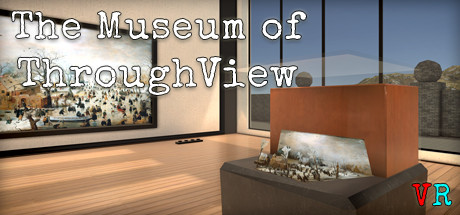
The Museum of ThroughView is an experimental virtual reality title developed by Erwin Wolf and published by MarWin Studios in collaboration with ThroughView that deliberately steps away from traditional game design in favor of immersive cultural exploration. Rather than offering objectives, puzzles, or progression systems, the experience positions itself as a virtual museum—one that invites players to engage with visual art and historical photography in a way that would be impossible in a physical gallery. It is best understood not as a game to be beaten, but as a space to be inhabited, explored, and reflected upon.
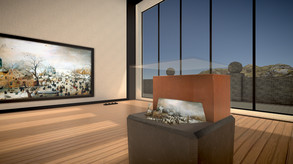
The central concept of The Museum of ThroughView revolves around transforming classic two-dimensional artworks and photographs into three-dimensional forms that can be experienced spatially in VR. The museum houses dozens of curated pieces, including famous paintings and historic photographic works, each reconstructed to give a sense of depth and volume while preserving the original composition. Instead of standing at a distance and observing framed art on a wall, players can move around each piece, examine it from different angles, and gain a new appreciation for texture, form, and perspective. This recontextualization fundamentally changes how familiar works are perceived, encouraging a slower, more deliberate mode of observation.
Exploration is entirely self-directed. The museum environment is calm, uncluttered, and intentionally minimalist, allowing the artwork itself to remain the focus. Navigation is designed to be comfortable and accessible in VR, minimizing motion discomfort and reinforcing the feeling of walking through a quiet exhibition hall. There is no time pressure or forced sequence; players are free to linger, revisit pieces, or move on at their own pace. This lack of structure may feel aimless to players accustomed to clear goals, but it is a conscious design choice that mirrors the open-ended nature of real museum visits.
One of the more compelling aspects of the experience is how it encourages users to think about the relationship between technology and art. By converting flat images into volumetric forms, The Museum of ThroughView invites questions about interpretation, authenticity, and the role of perspective. The included explanatory elements—such as background information on the artworks and insight into the 3D reconstruction process—add an educational layer that deepens engagement. These details help bridge the gap between passive viewing and active understanding, making the experience appealing not just to art enthusiasts but also to those interested in digital preservation and visualization techniques.
Visually, the presentation is clean and restrained rather than flashy. The environments are designed to support contemplation, with neutral lighting and spacious layouts that avoid competing with the exhibits. While the technical fidelity is modest compared to high-end VR games, it is more than sufficient for its purpose, prioritizing clarity and comfort over spectacle. The art reconstructions themselves are the focal point, and their effectiveness lies in subtlety rather than dramatic transformation.
Audio design follows a similar philosophy. There is little in the way of intrusive music or sound effects, reinforcing the quiet, museum-like atmosphere. The absence of constant auditory stimulation allows players to focus fully on visual exploration, enhancing immersion and reinforcing the sense of being present in a curated cultural space rather than a conventional entertainment product.
The Museum of ThroughView is undeniably niche, and its appeal depends heavily on player expectations. Those seeking interaction, challenge, or replayable gameplay systems may find the experience limited or uneventful. However, for players who approach it as an artistic or educational VR application, its strengths become far more apparent. It offers a unique way to engage with historical imagery and fine art, using virtual reality not as a novelty but as a tool for reinterpretation and deeper appreciation.
Overall, The Museum of ThroughView stands as a thoughtful experiment in how VR can be used beyond games. It demonstrates how immersive technology can expand access to cultural experiences and encourage new ways of seeing familiar works. While it lacks the traditional hooks of gameplay-driven titles, its value lies in atmosphere, curiosity, and reflection. For users interested in art, history, or the evolving role of VR in education and preservation, it offers a quiet but meaningful journey that highlights the medium’s potential as a space for contemplation rather than competition.
Rating: 6/10