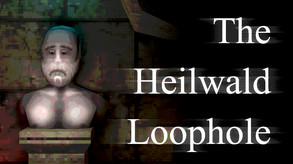
The Heilwald Klinikum used to be one of the most renowned medical facilities in Germany. That all changed when that curious loophole appeared...
Modeled estimate, not a reported figure. How we estimate →
Media

About
Genres
Stats
All-time low is the lowest price we've recorded for this game since we started tracking it.
Languages: English**languages with full audio support
Engagement
Hours played at review time, across 41 reviews with recorded playtime.
Reviews
Themes across 41 recent reviews and how positive each mention is. A keyword signal, not full sentiment analysis.
positive critical· bar length = how often the theme comes up
Reviews
Absolutely stellar game, presentation visually and audibly is incredible, the non linear structure really clicked with me and I was a little torn about it being stripped back towards the end but I had a great time with this!
yuh
muy bueno
Amazing game [b] 7/7 [/b] really just an overall [u] good horror game. [/u] top 10 games Ive played.
Tudo nesse jogo é feito com apreço, eu amo isso.
Vewy vewy good
Absolutely fantastic game. Highly recommend. Good soundtrack, intense to play, and fun graphics. One of my favorites!
The Heilwald Loophole is a first-person psychological horror experience developed and published by Jan Malitschek that distinguishes itself through both atmosphere and structure. Set within the decaying halls of Heilwald Klinikum, a once-prestigious hospital now twisted into something surreal and hostile, the game immediately establishes a sense of unease. Players awaken in a dim, dusty storage room with little context, surrounded by peeling walls and faint, unsettling sounds echoing through distant corridors. From this opening moment, the game commits to disorientation as a core design principle, pulling players into a labyrinth that feels less like a physical building and more like a manifestation of fractured memory and institutional decay. The most defining feature of The Heilwald Loophole is its central mechanic: death is not a failure state. In fact, it is often a gateway to progression. When enemies catch you or events result in what would normally be a fatal encounter, the game does not reset or penalize you in the traditional sense. Instead, it shifts perspective, opens new routes, or alters the environment in subtle ways. This inversion of survival horror expectations transforms the emotional stakes. Rather than fearing death as a setback, players begin to see it as part of the exploration process. The hospital becomes a shifting maze where each “end” reveals another hidden layer, reinforcing the theme that the institution itself operates under warped logic. Exploration forms the backbone of the experience. There is no conventional combat system or inventory management to dominate attention. Instead, players move cautiously through corridors, patient rooms, and sterile wards that feel abandoned yet disturbingly inhabited. The staff and patients encountered are grotesque distortions of medical authority and vulnerability. Nurses and doctors appear deranged, their behavior unpredictable and unnerving. Dialogue is often fragmented, garbled, or delivered in unsettling tones, leaving interpretation up to the player. This ambiguity strengthens the psychological tension, as the narrative is never handed over in a clear, linear fashion. The hospital’s layout is intentionally nonlinear. Corridors loop back on themselves, doors that once led nowhere suddenly open, and familiar rooms reappear altered. The sense of déjà vu becomes a narrative tool, encouraging players to question whether they are moving forward at all. Environmental storytelling plays a significant role; scattered notes, strange interactions, and subtle changes in atmosphere hint at a broader narrative involving neglect, corruption, and institutional collapse. Rather than providing a straightforward storyline, the game invites interpretation, leaving much of its meaning embedded in symbolism and fragmented encounters. Visually, The Heilwald Loophole adopts a retro-inspired aesthetic reminiscent of early 3D horror titles. Character models and environments possess a slightly stylized, low-polygon quality that enhances the uncanny effect. This deliberate design choice makes shadows feel heavier and movement slightly unnatural, amplifying discomfort rather than aiming for photorealism. Lighting plays a critical role in shaping tension, with dimly lit hallways and flickering bulbs creating pockets of vulnerability. The art style may appear simple at first glance, but it effectively supports the game’s dreamlike horror tone. Sound design is equally crucial to the experience. Ambient noise fills the spaces between events, from distant echoes and mechanical hums to sudden, sharp audio cues that signal something is wrong. Voices often sound distorted or partially incomprehensible, reinforcing the theme of communication breakdown within the institution. Music is used sparingly, allowing silence and environmental soundscapes to carry the weight of tension. This restraint enhances immersion and ensures that even small noises can provoke anxiety. One of the game’s strengths lies in its ability to maintain suspense without relying on traditional jump-scare tactics. While startling moments do occur, the primary source of fear comes from uncertainty and the unsettling logic of the hospital itself. The impossibility of permanent death does not eliminate tension; instead, it reframes it. Players are driven not by survival instinct alone but by curiosity. Each encounter, whether threatening or bizarre, becomes an opportunity to uncover another fragment of the hospital’s secrets. The experience is relatively concise, but its replayability stems from branching paths and the unpredictable outcomes tied to different choices. Multiple playthroughs can reveal alternate events and hidden sequences, encouraging experimentation with how and when to confront danger. The structure rewards exploration and risk-taking, aligning with its core design philosophy that progress often lies beyond apparent failure. Ultimately, The Heilwald Loophole stands as a distinctive entry in indie horror. By subverting traditional survival mechanics and embracing nonlinear storytelling, it crafts an experience that feels both unsettling and intellectually engaging. Its atmospheric design, retro-inspired visuals, and inventive use of death as progression combine to create a haunting journey through a space where logic is distorted and meaning must be pieced together. For players who appreciate psychological horror that prioritizes mood and interpretation over action, it offers a memorable and unsettling descent into institutional nightmare. Rating: 9/10
Lots of secrets. I missed a whole area. Weird atmosphere and disturbing yet kind of funny stuff happening. Strange game but I liked it nonetheless.
one of my favorite games ive ever played
Related
Related
Trends
Modeled estimate over time, reconstructed from Steam's monthly review histogram.
Audience
Estimated from the language of this game's reviews — a proxy for where players are, not official Steam demographics.
Related
| FISH FEAR ME | $53.3K | 224 | 85% | $9.99 |
| Urja | $53.3K | 181 | 51% | $9.99 |
| Spectacular Sparky | $53.3K | 190 | 88% | $14.99 |
| Ancient Abyss | $53.3K | 190 | 66% | $14.99 |
| Dark Water : Slime Invader | $53.3K | 190 | 95% | $14.99 |
| Super Sami Roll | $53.3K | 190 | 84% | $14.99 |