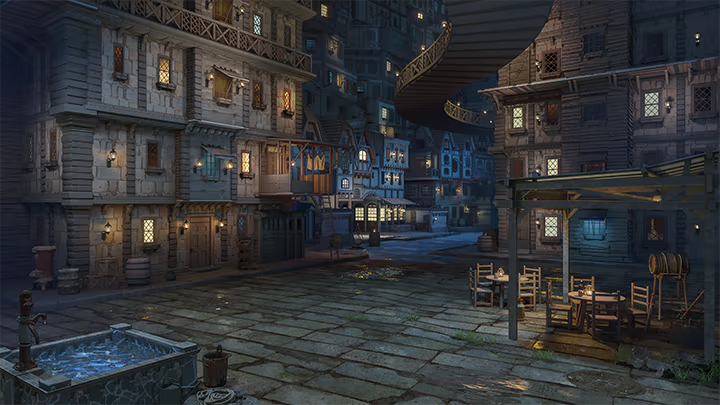
The Days Without Gods is a text-based DND fantasy ADV in which the player takes on the role of Mori Granson, an apprentice and subordinate of Hysso, the president of the Magic Association, and meets Coccinea, a young girl he rescued years ago, and other characters in the mage capital of Tylin.
Modeled estimate, not a reported figure. How we estimate →
Media

About


Stats
All-time low is the lowest price we've recorded for this game since we started tracking it.
Languages: Simplified Chinese*, English, Japanese, Traditional Chinese**languages with full audio support
Engagement
Hours played at review time, across 41 reviews with recorded playtime.
Reviews
Themes across 41 recent reviews and how positive each mention is. A keyword signal, not full sentiment analysis.
positive critical· bar length = how often the theme comes up
Reviews
[h1]并不是很类DND的国产西幻视觉小说——《赠予神家与谎言》[/h1] 《赠予神家与谎言》整个商店界面吸引我的只有类DND这个介绍,西幻背景的游戏一抓一大把没必要非得买一个国产galgame体验那种感觉,但类DND就是一个特别吸引人的东西。毕竟《博德之门》《冰风谷》《巫术》以及一系列角色扮演游戏都受到了DND的启发,我是头一次听说视觉小说说自己类DND,但实际游玩后我发现《赠予神家与谎言》并不像是一个受DND启发而诞生的作品。 [h1]并不DND的世界观设定[/h1] 那么先从游戏的世界观入手吧,我在翻找的时候发现了制作组在微博写的世界观设定,制作组的想法是设定一个工业革命后的魔幻世界,这个想法与名作《奥秘:蒸汽与魔法》不谋而合。另一个设定是神明离开了这个世界,狂热的教徒创造了代神来作为神的替代品,这些世界观设定我觉得问题大极了。 DND世界观里大部分位面应该都没机械存在,这意味着你很难从一些经典战役里汲取灵感比如《被遗忘的国度》。塔林的设定有点像耐色瑞尔的浮空城,但游戏流程中也没出现耐色瑞尔的一些标志建筑和法术比如伊奥勒姆长生术,只有最后一部分西索的计划和卡尔苏斯的夺神计划有一点点相似的地方,更何况不提前告知类DND我也联想不到这种程度。 神明离开我觉得就更不靠谱了,DND世界里神明和人类本来就不在一个位面,人类在的位面叫主物质世界,神明和魔鬼住在外层位面,外层界面有巴托地狱、无底深渊、极乐境等等,神明如果离开总要安排一个新地方。而且DND里牧师的力量和他信仰的神明息息相关,除了少部分信仰善良本源的无神论牧师,不过本作唯一一个出现的牧师也不会神术,那就当做牧师已经死绝了。 《赠予神家与谎言》中一眼能看出是DND元素的只有法术位和魔网等相关施法设定,这个世界虽然没有蜜斯特拉但魔网在某个大法师的研究下恢复了,玩家能看到一些熟悉的法术比如火球术、魅影杀手、魔法飞弹、护盾术、解除魔法。剧情里有用护盾术抵挡魔法飞弹的桥段,说明制作组应该了解一点规则书内容,这两个都是比较常用的一环法术。 但是解除魔法的效果制作组应该没认真看规则书,或者是没认真玩游戏。解除魔法在《正义之怒》中是比较常用的3环魔法之一,尽管《正义之怒》是PF规则但PF也是根据DND3R规则转化的,大部分法术的内容都一样。解除魔法只适用于解除一些还在生效的或正在生成的法术效果,简单点说解除魔法没法解除火球术这种瞬发的塑能法术,如果你想反制大部分攻击法术要使用反魔法立场或者魔法反制,而用解除魔法解除瞬发塑能法术这种不合理的桥段在本作出现了很多次,这都说明作者并不是很了解DND。 最后还要说的是即便商店界面上写着类DND,但打开《赠予神家与谎言》,我没看到拥有无上力量的骰子、也没看到出圈的阵营九宫格、更没看到比现代大部分角色扮演游戏都要完善许多的游戏系统,视觉小说可能本来就不是DND的良载体。我没有一丁点自己在冒险和跑团的感觉,大部分内容都是男主单打独斗。 因此如果从类DND的角度出发《赠予神家与谎言》是一部相当失败的作品。我一个不敢自称老炮只是略有了解的玩家眼里都能找出那么多问题,真正的骨灰级爱好者看到本作我无法想象,我个人的想法是DND在中国即便是个异常小众的东西,但既然写上类DND就应该拿出相应的制作态度,要不就把类DND那几个字去掉。 [h1]食之无味的游戏剧情[/h1] 除去那些不怎么的DND内容之后本作的剧情只能说中规中矩,在不剧透的前提下概括本作的话,《赠予神家与谎言》是一个相当简单的阴谋论作品。玩家在相当早的时候就知道本作的最终反派是谁,因为反派直接告诉主角他有一个大计划。所以本作中间大部分剧情可以说意义不大,《赠予神家与谎言》给我的感觉是每过一个剧情都是在完成通向结局的手续,中间的内容没有对结局产生任何影响。 在故事安排上开头男主从邪教组织里救下代神并给她取名柯希尼娅,柯希尼娅本来是人偶但男主跟她缔结契约后她就有了心。根据我玩galgame七八年的经验,这个地方是可以写出非常感人和相当有意义的剧情。男主被称为塔林之刃说白了就是冷酷的杀手,女主则是邪教造物有了意识后跟刚出生的婴儿差不多,西索甚至还说了一句家庭会改变男主。如果故事能放在男主女主如何互舔伤口最后走向幸福生活,那我觉得《赠予神家与谎言》会是一部相当优秀的作品,即便不想往这个方向写,写一些主角和柯希的相处时光也有利于塑造角色的形象, 但是制作组的处理我只能说不那么高明,男主救下柯希之后马上被安排去了外地工作八年,八年回来后柯希直接长大了,这相当于直接略过了全部的成长历程。男主最开始对柯希的态度并不怎么样,如果不写出具体的态度转变我觉得这不是最好的处理方式。之后的剧情无非走个流程,男主莫名其妙被三个妹子包围,不过最后还是在没有什么恋爱味道的剧情中和柯希在最后的最后喜结连理了。 另外要说的是游戏其实还留下了许多没填的坑,比如倒转的法师塔里有什么,众神离开的原因等等。完结之后我发现《赠予神家与谎言》倒也没那么坏吧。除去DND内容之后这游戏也没什么侮辱玩家智商的桥段,或者严重的情节不合理之处,只是它的内容着实不够丰满,玩家愿不愿意给好评,全看他对国产二字的态度如何。 [h1]总结[/h1] 《赠予神家与谎言》是一款相当失败的类DND国产视觉小说,在这个游戏里你能看到的DND元素寥寥无几,仅有的部分元素也存在不同程度的错误,作者在脱离DND战役的情况下构筑的世界观可谓是支离破碎。除开这部分内容《赠予神家与谎言》也只能算是一个中规中矩的作品,剧情没有明显缺陷但也没有任何刺激玩家肾上腺素的事件,整个故事从第一分钟到最后一分钟都难以给你带来情绪波动。 [code]关注[url=https://store.steampowered.com/curator/31899806]纯白鉴黄师 [/url],[url=https://steamcommunity.com/groups/cbjhs]加入我们[/url] 社保是什么?黄油玩家,你本来就很纯洁 [/code] 宣个群:243613400
好评!绝天地通!真正的原神!
整体而言还不错,cv们的配音很有趣,有一种很用心的样子。就是每次结束的地方有点令我意想不到,还有要是再长一点就好了。
故事叙述整体不错,人设略显单薄,部分剧情存在bug。整体体验7/10分,可以入手一玩
好玩
保存老是容易卡死,能不能解决一下。。。
好,除了故事是单向的(也很合理)没什么可以被吐槽的点。
还好是好结局
好玩好玩好玩
The Days Without Gods is a narrative-driven fantasy adventure developed by 季森造纸工坊 and published by WindField Games. It unfolds in a world that has been abandoned by its deities for more than two centuries, a setting that serves as both the backdrop and the central metaphor for its themes of loss, faith, and human adaptation. You play as Mori Granson, a thirty-year-old mage’s apprentice living in the capital city of Tylin, a place where magic has evolved into a tool of bureaucracy and commerce rather than wonder. Without the gods to guide them, humanity has built its own system of order through the power of mages and scholars, giving the world a sense of both progress and decay. The story begins quietly, but as it unfolds, it exposes the moral and emotional fragility of a society that thrives despite having long forgotten what it means to believe in something greater than itself. From the very beginning, The Days Without Gods establishes itself as a text-heavy experience designed for players who enjoy slow, reflective storytelling. The game plays out largely through dialogue, inner monologue, and branching narrative paths, presented with visual novel-style character portraits and backgrounds. Every decision you make subtly shapes the way characters perceive one another, though the story remains largely linear in structure. The primary focus is on conversation, introspection, and world-building rather than action or strategy. The player navigates through the social and political circles of Tylin, meeting a range of personalities including Coccinea Granson, a young woman rescued by Mori who now lives under his guardianship. Their relationship, bound by both affection and an uneasy sense of ownership, forms the emotional center of the narrative. Through their interactions, the story explores questions of morality, responsibility, and what it means to “save” someone in a world that no longer recognizes divine right or wrong. The writing draws much of its strength from its setting and tone. The capital city of Tylin is described with a sense of faded grandeur—an empire that has mastered magic but lost its soul. Magic, once seen as a divine gift, has become an industry, commodified by guilds and bureaucrats. The world is rich in history, with references to past wars, ancient temples, and forgotten rituals that hint at a once vibrant spiritual tradition. Yet beneath the surface lies a quiet melancholy, as if everyone in this world is simply going through the motions. Mori himself embodies this existential fatigue: he is talented but uninspired, bound by duty but unsure of purpose. His encounters with others—mages, merchants, priests, and wanderers—paint a portrait of a civilization that continues to function even in the absence of meaning. The narrative’s introspective tone invites players to contemplate the nature of belief, authority, and the human need to fill the void left by lost gods. Gameplay in The Days Without Gods is minimal and deliberate. It primarily follows the conventions of an interactive novel, where progression comes through reading, choosing dialogue responses, and occasionally engaging in light role-playing decisions. There is no combat system or complex skill management; the experience relies entirely on storytelling and atmosphere. Choices influence certain narrative outcomes and relationships, but they don’t radically alter the plot. The design is reminiscent of tabletop role-playing sessions—there’s even a subtle Dungeons & Dragons influence in the way certain events are structured, with character interactions feeling like narrative “encounters.” While this slow pace might frustrate players seeking more traditional gameplay, it suits the story’s contemplative nature. The interface is clean and straightforward, emphasizing readability and immersion over visual spectacle. The presentation reflects the indie nature of the project. The art direction favors simplicity—static character portraits, moody backgrounds, and subdued color palettes that evoke the tone of a forgotten world. The hand-drawn art, though modest, conveys warmth and personality, while the text layout and subtle animations keep the screen from feeling static. The music is minimal but effective, using soft piano and ambient strings to reinforce the story’s somber tone. Technically, the game runs smoothly even on low-end hardware, requiring very little in terms of performance, which makes it accessible to almost any player. However, the translation quality can be inconsistent. The original Chinese writing carries a lyrical and poetic tone that doesn’t always survive the English localization, leading to moments of awkward phrasing or lost nuance. This issue occasionally disrupts the emotional flow of the dialogue but never completely undermines the story’s impact. Thematically, The Days Without Gods is strongest when it explores the contradictions of a world that has moved beyond faith but not beyond the need for it. The characters embody various responses to that absence: some cling to old rituals, others rationalize their existence through science or politics, and some simply drift. The game doesn’t judge these perspectives but instead observes them with quiet empathy. There is an underlying sadness in its depiction of progress—a sense that even as humanity masters magic and reason, it loses something fundamental in the process. The story’s title is not just literal but philosophical: “The Days Without Gods” refers to the modern condition of living without higher guidance, where morality becomes relative and meaning must be self-created. In that sense, the game succeeds as an allegory for contemporary life disguised as a fantasy narrative. While The Days Without Gods is limited in scope and presentation, its emotional resonance and thematic ambition make it stand out among indie narrative titles. Its greatest strength lies in its atmosphere—a quiet, melancholic world that feels alive even in its desolation. It doesn’t rely on spectacle or action but on reflection and tone, inviting players to slow down and listen. The shortcomings are clear: the translation could be more polished, the pacing at times drags, and the gameplay mechanics are sparse. Yet these flaws are outweighed by the sincerity of its storytelling and the richness of its world-building. It is a small game with big ideas, one that speaks softly but leaves a lasting impression. For players who appreciate literary fantasy, introspective narratives, and emotionally grounded storytelling, The Days Without Gods offers a poignant journey through a world that has lost its divine light but not its humanity. Rating: 8/10
Related
Related
Trends
Modeled estimate over time, reconstructed from Steam's monthly review histogram.
Momentum
Pace estimated from the game's recent review growth (our daily snapshots) at its own sales-per-review ratio — a momentum signal, not booked sales.
Audience
Estimated from the language of this game's reviews — a proxy for where players are, not official Steam demographics.
Related
| Grumpy Gaffer | $2.9K | 122 | 94% | $0.99 |
| ADULT SHERIFF | $2.9K | 236 | 69% | $0.99 |
| Civil Warfare: Another Bullet In The War | $2.9K | 125 | 34% | $0.99 |
| Cat Slide Tiles | $2.9K | 155 | 99% | $1.49 |
| Block'Em! | $2.9K | 121 | 88% | $1.39 |
| Cats of the Ming Dynasty | $2.9K | 190 | 98% | $0.99 |
Related
| DAVE THE DIVER | $67.1M | 158.8K | 97% | $19.99 |
| The Scroll of Taiwu : Beyond The Dome | $62.3M | 69.6K | 66% | $29.99 |
| Castle Crashers® | $41.4M | 139.7K | 96% | $14.99 |
| My Time at Sandrock | $29.4M | 28.8K | 88% | $39.99 |
| Creativerse | $24.3M | 30.7K | 78% | $24.99 |
| Forager | $23.8M | 43.8K | 90% | $19.99 |