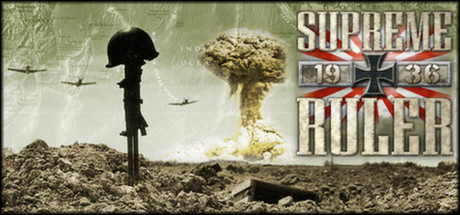
Developed and published by BattleGoat Studios, Supreme Ruler 1936 is a deeply ambitious grand strategy simulation that places players in control of a nation during one of the most pivotal periods of modern history. Set in the years preceding the outbreak of the Second World War, the game challenges players to guide their chosen country through a world defined by political tension, economic uncertainty, military expansion, and rapidly shifting alliances. Rather than focusing solely on warfare, it attempts to simulate nearly every aspect of national leadership, creating an experience that feels as much like governing a country as commanding an army.
One of the game's most impressive features is the sheer number of playable nations available. From major powers such as Germany, the United Kingdom, the Soviet Union, and the United States to smaller countries struggling to maintain their independence, nearly every nation presents a unique strategic situation. This variety significantly enhances replayability because each campaign unfolds according to the strengths, weaknesses, geography, and political circumstances of the chosen nation. Playing as a global superpower feels entirely different from attempting to guide a minor state through a dangerous international environment.
The game excels at giving players freedom to shape history according to their own vision. Historical events provide the foundation for the campaign, but the outcome is never predetermined. Players can follow historical paths, avoid conflicts entirely, pursue aggressive expansion, establish unlikely alliances, or create completely alternate versions of twentieth-century history. This sandbox approach is one of the title's greatest strengths because it encourages experimentation and allows every campaign to develop its own narrative.
Economic management forms the backbone of the entire experience. Nations rely on complex networks of production, trade, resource extraction, and industrial development to function effectively. Players must monitor resource stockpiles, balance budgets, maintain infrastructure, and ensure that economic growth keeps pace with national ambitions. Military expansion is impossible without a stable economy supporting it, making financial planning just as important as battlefield strategy. The interconnected nature of these systems creates a realistic sense of responsibility and forces players to think beyond short-term objectives.
Diplomacy plays an equally important role. Alliances, trade agreements, political influence, and international relations can dramatically alter the course of a campaign. Nations rarely exist in isolation, and maintaining productive relationships often proves as valuable as military strength. Players can use diplomacy to secure allies, weaken rivals, expand influence, or avoid unnecessary conflicts. The flexibility of the diplomatic system encourages different approaches to achieving national goals and adds another layer of strategic depth.
Military operations are extensive and highly detailed. Armies, navies, and air forces can be deployed across a massive world map where terrain, logistics, and supply considerations influence outcomes. Warfare unfolds in real time, creating large-scale conflicts that feel appropriately grand. Players must coordinate multiple fronts, manage reinforcements, and ensure that military operations remain sustainable over extended periods. The scale of these campaigns helps capture the immense challenges faced by nations during the era.
The technology system further enhances the strategic experience. Scientific and industrial advancements unlock new military capabilities, improve economic efficiency, and influence a nation's overall development. Research decisions can have long-lasting consequences, allowing players to specialize in certain areas while potentially neglecting others. This creates meaningful choices and encourages long-term planning rather than short-term optimization.
One of the more interesting aspects of Supreme Ruler 1936 is the level of control it offers. Players can personally manage nearly every component of government or delegate responsibilities to artificial intelligence ministers. This flexibility makes the game approachable for different types of strategy players. Those who enjoy detailed micromanagement can oversee every policy decision, while others can focus on broader strategic objectives and allow automated systems to handle routine administration.
The game's representation of geography and logistics deserves praise as well. Terrain influences movement and combat effectiveness, while weather conditions can significantly impact military operations. Strategic planning often requires consideration of factors that many strategy games ignore, such as transportation infrastructure, supply routes, and environmental conditions. These systems contribute to a stronger sense of realism and reward thoughtful preparation.
Visually, Supreme Ruler 1936 is functional rather than spectacular. The interface prioritizes information delivery, presenting players with vast amounts of economic, military, and political data. While the presentation may appear dated compared to modern grand strategy titles, it succeeds in communicating the information necessary to manage a nation effectively. The world map remains clear and detailed enough to support the game's extensive strategic systems.
The primary obstacle for many players will be the complexity. Supreme Ruler 1936 is not designed for quick or casual sessions. The number of interconnected systems can feel overwhelming at first, and mastering them requires patience. New players may struggle with the volume of information presented, while experienced strategy fans will likely appreciate the depth and flexibility offered by the simulation. The learning curve is steep, but the reward for overcoming it is a remarkably rich strategic experience.
What ultimately distinguishes Supreme Ruler 1936 is its commitment to simulating national leadership on a global scale. Military conquest is only one component of success. Economic growth, technological innovation, diplomatic maneuvering, and political stability are equally important. Every decision contributes to a larger vision of nation-building, creating a sense of responsibility rarely found in strategy games.
Supreme Ruler 1936 remains one of the most comprehensive geopolitical strategy simulations available. Its enormous scope, historical flexibility, detailed economic systems, and emphasis on player freedom make it a compelling choice for fans of deep grand strategy games. While its aging visuals and demanding mechanics may deter some players, those willing to invest the time will discover a richly detailed historical sandbox capable of delivering countless hours of strategic depth and alternate-history possibilities.
Rating: 7/10