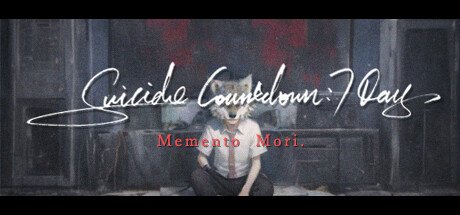
Only 7 days remain until death embraces you -- the everyday life of a young boy begins to distort little by little, unfolding into a bizarre and ghastly series of events... When fate comes knocking, will you have the courage to make a choice?
Modeled estimate, not a reported figure. How we estimate →
Media

About


Genres
Stats
All-time low is the lowest price we've recorded for this game since we started tracking it.
Languages: Simplified Chinese*, Traditional Chinese*, Japanese, English, Korean*languages with full audio support
Engagement
Hours played at review time, across 40 reviews with recorded playtime.
Reviews
Themes across 40 recent reviews and how positive each mention is. A keyword signal, not full sentiment analysis.
positive critical· bar length = how often the theme comes up
Reviews
好玩
Suicide Countdown: 7 Days is a somber, introspective visual novel that places narrative weight and emotional discomfort at the very center of its experience. Developed and published by 致意, the game is structured around a stark and unsettling premise: the protagonist, a high school student named Hanchuan, is living through the final seven days before his predetermined death. Rather than framing this as a thriller or horror story, the game approaches its subject matter through quiet tension, psychological pressure, and the slow unraveling of personal and social relationships. The story unfolds over the course of a single week, with each day presenting new interactions, discoveries, and choices that shape how Hanchuan’s final days are spent. He is portrayed as a capable and outwardly responsible class monitor, yet internally burdened by isolation, confusion, and a growing sense of inevitability. As the days progress, the narrative intertwines his personal struggles with a broader mystery involving a missing classmate and a disturbing online counseling platform that appears to blur the line between support and manipulation. This dual focus allows the game to explore both internal despair and external influence, suggesting that emotional collapse rarely occurs in isolation. Gameplay is firmly rooted in visual novel conventions, relying on reading, dialogue choices, and branching narrative paths rather than traditional mechanics. Player decisions influence the tone, pacing, and revelations of the story, guiding Hanchuan toward different emotional conclusions even when the overarching outcome remains fixed. The game makes a deliberate choice to emphasize perspective over control; while players can shape how the story unfolds and what truths are revealed, they cannot simply “solve” the situation through optimal choices. This design reinforces the themes of fatalism and constrained agency that run throughout the narrative. One of the game’s strengths lies in its presentation. Live2D character animation gives subtle motion to character expressions, making conversations feel more human and emotionally grounded despite the limited interactivity. Voice acting further enhances immersion, lending authenticity to moments of vulnerability, confrontation, and quiet reflection. Background art is detailed and atmospheric, often using subdued color palettes to reflect emotional states rather than dramatic shifts in setting. Sound design is restrained, allowing silence and minimal music to heighten moments of unease rather than overwhelming the player with melodrama. The branching structure encourages multiple playthroughs, as no single route provides a complete picture of the narrative. Each path reveals different facets of the mystery and the characters surrounding Hanchuan, gradually building a more comprehensive understanding of the forces at work. A built-in flowchart helps track progress and makes revisiting unexplored routes more accessible, reinforcing the idea that meaning emerges through accumulation rather than resolution. This approach rewards patience and reflection, particularly for players who enjoy piecing together fragmented narratives. That said, the game’s heavy themes and deliberate pacing will not appeal to everyone. Some players may find the story emotionally draining or frustrating in its refusal to offer catharsis or empowerment. Certain plot developments can feel abrupt, and the translation and narrative clarity occasionally falter, which may disrupt immersion. Additionally, because the experience is relatively short in any single playthrough, its impact relies heavily on the player’s willingness to revisit the story multiple times to fully engage with its structure and intent. Ultimately, Suicide Countdown: 7 Days is best understood as a reflective narrative experiment rather than a conventional visual novel built around choice-based triumph. Its strength lies in its willingness to confront uncomfortable themes with restraint, ambiguity, and emotional honesty. For players seeking a narrative-driven experience that prioritizes mood, introspection, and psychological depth over entertainment or escapism, it offers a memorable and thought-provoking journey—one that lingers not because of spectacle, but because of the questions it quietly leaves behind. Rating: 8/10
no idea what im reading but mo qiu is cute
interesting game.
爆炸的时候打了响指,在月光下打了响指
ストーリーに全然引き込まれない 登場人物の説明もなく、分岐の条件も分からないのですごい消化不良な感じで終わりました
如果自杀有用的话,要精神病院干嘛。除了黎乾和武晓,其他人统统给我关进精神病院。而且武晓只是个挣扎着生活的人,凭什么没有好下场。 游戏除了价格便宜,太多不足之处了: 1. 各人物形象浅薄,行为逻辑混乱,且对话像背书,口语书面化,在中不中日不日的故事背景下尤为水土不服。 2. 故事展开突兀,转折生硬,叙事混乱,缺乏必要的背景铺垫和情绪积累。有故作高深的姿态,没有扎实的叙事和情感内核。 3. 哲学、心理学的部分无病呻吟,令人一头雾水。小篇幅不能很好地支撑其庞大主题,只能接收到一堆零散的概念,无法形成连贯的思想和情感冲击。
配音(尤其男主)令人迷惑,搞不懂到底是什么情绪。 故事略单薄,配不上这个很有噱头的标题和立意。 文笔偶尔故弄玄虚,部分用词不够讲究。
I wish there was a neutral button, but as it is, I have to say yes, I recommend this game because it is generally very well done as a VN. My only complaint is the fact that it is unclear what affects each route. Somehow, picking one line of dialogue instead of a (similar) different one changes drastically the trajectory of the story? Confusing. Being able to jump from one scene to another using the flowchart would've been a nice plus.
AWESOME STORYLINE I LIKE, PLOTTWIST TOO OMGAH EVERYONE PLEASE READ
Related
Related
Trends
Modeled estimate over time, reconstructed from Steam's monthly review histogram.
Momentum
Pace estimated from the game's recent review growth (our daily snapshots) at its own sales-per-review ratio — a momentum signal, not booked sales.
Audience
Estimated from the language of this game's reviews — a proxy for where players are, not official Steam demographics.
Related
| Our Red String | $45.1K | 118 | 97% | $19.99 |
| Legitimate Space Corp Simulator LLC | $45.1K | 90 | 73% | $12.99 |
| Doorways: Prelude | $45.1K | 635 | 62% | $2.99 |
| Insanity's Blade | $45.1K | 298 | 73% | $5.99 |
| CodeSpells | $45.1K | 265 | 39% | $4.99 |
| Ash & Adam's Existential Treads | $45.1K | 368 | 92% | $4.54 |