
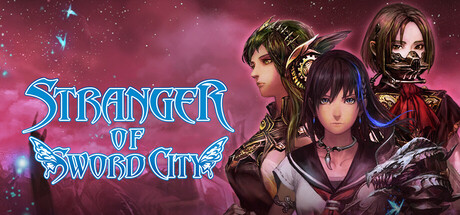
Your flight crashes after passing through a mysterious portal. As the sole survivor, you awaken to an unfamiliar land lit by stars you’ve never seen. This land is Escario. Quickly marked as the Chosen One, the Stranger of Sword City, you must defend this place, and choose your allegiances carefully...
Modeled estimate, not a reported figure. How we estimate →
Media
About
Genres
Stats
All-time low is the lowest price we've recorded for this game since we started tracking it.
Languages: English, Japanese**languages with full audio support
Engagement
Hours played at review time, across 40 reviews with recorded playtime.
Reviews
Themes across 40 recent reviews and how positive each mention is. A keyword signal, not full sentiment analysis.
positive critical· bar length = how often the theme comes up
Reviews
Stranger of Sword City is a dungeon-crawling RPG that blends traditional grid-based exploration with a dark fantasy aesthetic. Its structure emphasizes careful party building, methodical progression, and high-stakes encounters that reward planning over improvisation. The game positions itself firmly within the lineage of classic dungeon crawlers while introducing its own identity through atmosphere and visual style. The story begins when the protagonist is transported to Escario, the titular “City of Strangers,” after a mysterious plane crash. This world is shaped by competing factions and powerful beings known as Lineage Types. Narrative delivery is understated, relying on brief scenes, faction choices, and discoveries made within the labyrinths. The plot is intentionally sparse, allowing environmental tone and gameplay tension to dominate the experience. Character creation and party composition form the game’s strategic core. Players build a full team from several races and classes, each with advantages in durability, magic, or agility. Long-term planning is essential, as reincarnation mechanics, stat growth, and class changes influence overall effectiveness. The balance between survivability and specialization becomes increasingly important as enemies grow more dangerous. Exploration follows a first-person grid format, with dungeons that feature traps, hidden passages, and enemy ambush points. Visibility and mapping are key, encouraging careful movement rather than rapid advancement. Each labyrinth has distinct themes and enemy groups, creating a steady escalation in challenge that promotes cautious resource management. Combat is turn-based and unforgiving. Many enemies can defeat poorly prepared teams quickly, pushing players to consider formation, ability synergy, and targeted strikes. The ambush system—where players set traps to lure specific enemies—adds a tactical layer that helps secure rare items and experience. Boss battles, especially against Lineage Types, serve as major skill checks that test party resilience and planning. Presentation stands out through its detailed character art and contrasting art styles, offering a choice between Western-inspired and anime-inspired visuals. The dark color palette, atmospheric music, and sparse sound effects reinforce the sense of tension that defines dungeon exploration. While environments are functionally designed, their minimalist approach supports clarity during grid navigation. Stranger of Sword City succeeds as a focused, challenging dungeon crawler built around deliberate progression and strategic party management. Its emphasis on high-risk encounters, atmospheric worldbuilding, and flexible character development makes it appealing to fans of traditional grid-based RPGs. For players seeking a demanding and methodical experience, it offers a well-crafted and distinctive entry in the genre.
Sick asf
還行吧,進度到見過三位容器了,算是及格的 D-RPG。美術非常優秀,音樂也非常棒,就是攻擊特效方面比較簡化。主要對話基本上全日文語音倒是出乎我意料,這點加分。 然而這遊戲在引導方面做得比較差,事實上主角在最初脫離迷宮抵達公會前最好全程防禦,不然只會不停死亡拿不到經驗。劇情在後期一點遇上多排複數怪物時也沒有相關教學提示,實際上怪物和玩家隊伍一樣有攻擊距離的限制,後排怪物大部分手不夠長打不到玩家。 遊戲難度比較高,再加上職業技能與隔壁《世界樹的迷宮》相比可以說非常貧乏,很容易勸退玩家。初始提供招募的職業只有 5 種,加上玩家自己隊伍一共就六人,而且不能再次招募隊伍已擁有的職業,什麼意思?就是隊伍人數不足以建立 A、B 分隊,如果有人陣亡住院,住院期間你的隊伍就是少那幾個人!然後這遊戲也不知道有什麼毛病,病人恢復分為緩慢恢復 (挺花時間) 和立刻恢復 (花超多錢),不是啊這應該是手遊的機制吧?你放在 PC 單機遊戲裡腦袋是有什麼問題? 另外這遊戲也不支援中文,我自己是使用了專門給 AVG 遊戲即時翻譯的軟體《Luna Translator》邊看邊玩,雖說這遊戲的英文也不到艱深但用母語玩總是比較舒服。對這遊戲有興趣的玩家可以參考一下。 整體來說這遊戲美術優於遊戲性,個人只推薦 D-RPG 愛好者遊玩。
I've never seen a character customization like that 😍 I am so in love already
100時間遊びました。ストーリークリアだけでもかなりの手応えがあり、楽に進めるタイプのDRPGではありませんが、そのぶん攻略の達成感がとても大きい作品です。死亡の重さや育成の厳しさも含めて、世界の緊張感にしっかり繋がっています。 特に良かったのはトレハン要素です。待ち伏せで輸送隊を襲い、宝箱の中身をある程度見極めながら狙った装備を掘れる仕組みがとても快適で、気づけば長時間遊んでいました。装備の補正値やユニーク装備もあり、掘る楽しさがしっかりあります。 ダンジョンごとに「技禁止」「スペル禁止」などの制約があり、いつもの定石がそのまま通じないのも面白いところです。転職を活かしたビルドの試行錯誤も楽しく、簡単ではないのに最後まで夢中になれました。歯ごたえのあるDRPGや、装備集めと育成をじっくり楽しみたい人にはかなりおすすめです。
I tried a few times to get into it, but it just feels like a really rough ride for the wrong reasons. It's not Wizardly traditional enough to really feel like it matters, and it's not new-age enough to say it's a smooth operator either. It really sits in an awkward bubble, and a lot of that has to do with the inherent and promoted level of grinding in it. Literally one of the first mechanics you're taught of is to sit around and wait for enemies to appear so you can get PHAT LOOT. Really missed the mark. If you want oldschool with a workable interface, just go play Wizardry 8.
If the cross-eyed ♥♥♥♥♥♥♥♥ from Spaceballs made a FPS Dungeon Crawler, it would be this game. The art style is great, the premise is sound, but in the I'd choose the bear. Walk in circles is fun weee, grind harder than egirl on OF, go nowhere fast, more confused than dementia hospice. It was the Kaka-est of Cruddies. 3/10
むずかしい
Stranger of Sword City, developed by Experience Inc. and published by NIS America, Inc., is a dungeon-crawling RPG that makes no effort to soften its edges for a modern audience. It is rooted firmly in the traditions of classic first-person RPGs, drawing heavily from the Wizardry lineage, and it embraces that heritage with a level of commitment that can feel both admirable and daunting. From the moment it begins—with the protagonist suddenly transported from a plane crash into a mysterious fantasy realm—the game establishes itself as a journey defined less by cinematic storytelling and more by survival, adaptation, and slow, deliberate progress. The narrative framework is intriguing but intentionally restrained. Players find themselves in Escario, a world populated by others who have similarly been displaced from different realities. While there are factions, political tensions, and a central mystery surrounding powerful entities known as Lineages, the story rarely takes center stage. Instead, it acts as a backdrop to the player’s own experience, unfolding gradually through exploration and interaction rather than scripted sequences. This design choice reinforces the game’s focus on immersion through gameplay, allowing the player’s successes and failures to become the primary source of engagement. Exploration is handled through grid-based, first-person dungeons that demand careful navigation and attention to detail. Each step forward carries potential risk, whether from hidden traps, ambushes, or powerful enemies lurking just out of sight. The act of mapping out these environments—mentally or through the game’s systems—becomes a core part of the experience, giving a sense of discovery that is both methodical and rewarding. Unlike more modern RPGs that prioritize flow and accessibility, Stranger of Sword City expects players to proceed cautiously, learning from mistakes and gradually mastering its systems. Combat is where the game’s design philosophy becomes most apparent. Battles are turn-based, but they are far from relaxed. Every encounter has the potential to escalate quickly, and even seemingly minor enemies can pose a threat if approached carelessly. Success depends on preparation, party composition, and a solid understanding of each character’s role. The game offers a wide range of classes and customization options, allowing players to build a party that suits their preferred strategy. However, this depth comes with a steep learning curve, as the game provides limited guidance and expects players to experiment and adapt. One of the defining aspects of the experience is its emphasis on risk and consequence. Progression is not simply a matter of leveling up and acquiring better equipment; it involves making difficult decisions about when to push forward and when to retreat. The possibility of losing characters permanently under certain conditions adds a layer of tension that permeates every dungeon run. This system ensures that victories feel meaningful, as they are often achieved through careful planning and a willingness to accept potential setbacks. The game also introduces unique mechanics that differentiate it from other dungeon crawlers. The ability to ambush enemies at specific points to obtain targeted loot adds a strategic dimension to equipment acquisition, while the presence of powerful Lineage enemies encourages players to seek out high-risk encounters for valuable rewards. These systems create a gameplay loop that balances exploration, combat, and resource management, rewarding players who are willing to engage with its complexities. Visually, Stranger of Sword City adopts a distinctive style characterized by detailed character portraits and atmospheric enemy designs. While the environments themselves are relatively simple due to the grid-based structure, the artwork helps establish a somber and immersive tone. The soundtrack complements this with a mix of subtle and intense compositions that enhance the sense of tension and discovery. However, the presentation does show its limitations, with minimal animations and a somewhat static feel that may not appeal to players accustomed to more dynamic visuals. Despite its strengths, the game’s adherence to old-school design can be a barrier. Its systems are often opaque, requiring players to learn through trial and error, and its pacing can feel slow, particularly when grinding becomes necessary. The lack of strong character-driven storytelling may also make it harder for some players to form an emotional connection to the world. These elements contribute to an experience that demands patience and persistence, qualities that not all players will find appealing. Ultimately, Stranger of Sword City is a game that knows exactly what it wants to be and refuses to compromise. It offers a challenging, methodical, and deeply rewarding experience for those who appreciate classic dungeon crawlers, while remaining unapologetically demanding for those who do not. It is not a game that seeks to guide or comfort the player; instead, it invites them to endure, adapt, and ultimately succeed through their own efforts. Rating: 8/10
懐かしくなって再度プレイ。攻撃当たらないだとか文句言ってるにわかさんがおるけど、WIZではこんなもんだしなぁ。ぬるいプレーヤーには無理かもねW
Related
Related
Trends
Concurrent players on Steam, sampled daily since tracking started.
Momentum
Pace estimated from the game's recent review growth (our daily snapshots) at its own sales-per-review ratio — a momentum signal, not booked sales.
Audience
Estimated from the language of this game's reviews — a proxy for where players are, not official Steam demographics.
Related
| Subterrain | $303K | 1K | 79% | $16.99 |
| Operencia: The Stolen Sun | $302.9K | 575 | 77% | $29.99 |
| Space Tyrant | $302.9K | 615 | 84% | $19.99 |
| Disc Room | $303.1K | 1.1K | 93% | $14.99 |
| Initial Drift Online | $302.8K | 5.8K | 62% | $1.99 |
| Sandwalkers | $302.8K | 547 | 76% | $19.99 |