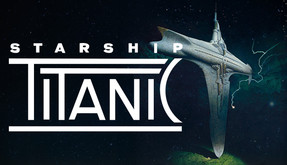
From the creative mind of Douglas Adams. The Starship Titanic crashes into your house and takes off with you onboard. Inhabited by malfunctioning robots and a semi-deranged parrot, you must gain control of the ship and pilot it back to Earth.
Modeled estimate, not a reported figure. How we estimate →
Prices
The United States storefront in every case, so this compares stores and not countries.
Discounts
Every price cut of more than 20% we have observed, in each market that quoted one, with this game's chart position on either side of it. These are episodes, not a model: a sale is one event, and one event cannot tell you what the next one will do.
Reviews, worldwide (the counter carries no country): 0.14/day in the week to Aug 22 → 0.29/day in the week after.
For scale, across Steam · Top Sellers · Brazil over the last 30 days: the 25 chart moves that followed a price cut of more than 20% went a median of 10 places towards #1, and the 2,413 moves with no price cut behind them went 2 away. One store, one chart, one country — it is the only place we have enough observations to say even that.
Prices outside the United States have been collected since 6 August 2026 and chart positions since 19 July 2026, so a cut older than that has no market to compare and a market that joined later has no history yet. Nothing here is converted between currencies.
About
Sums Steam only; GOG publishes no volume signal, so the true total is higher by an unknown amount.
| Store | Price | Audience | Score | Chart | Est. revenue |
|---|---|---|---|---|---|
SteamYou are here | $5.99 | 129reviews | 82% | — | $13.8K |
| $5.99 | 129ratings | 82% | — | not modelled |
Matched by title — a reused name can pair the wrong games. * is a critic aggregate. Prices and positions are each store's United States storefront; Epic charts worldwide. Audience and Score too, except Steam's, which is worldwide.
Engagement
Reviews
Themes across 47 recent reviews and how positive each mention is. A keyword signal, not full sentiment analysis.
Reviews
This is one weird game. At first you may be turned off by graphics that are—let’s be honest—very ugly. The 3D design is awkward, confusing, and off-putting. It’s kind of a futuristic art deco meets pop art that was put through a very chonky compression algorithm. It didn’t turn out very well. But it was ambitious for the time, and you can see what they were going for, so just take a while to appreciate what you see and take it for what it is. Second, the controls. They’re... cryptic, and take some getting used to. This is an artifact of the time, when games would come with a big manual and expected you to use it. So read the manual. Oh, you did? And it was useless? Yeah, the manual for this game is pretty useless. It’s mostly nonsense, but it does have a few hints plus a map telling you where the elevators are. I spent half an hour trying to find the elevators on my own, so that would’ve helped. Third, the story. It’s all but nonexistent. If you want, you can read some in-game emails or the manual, but the characters known very little and if you really want the backstory you need to read the book by Terry Jones. It’s finally back in print, so check it out. But to be honest, none of it is going to help with the puzzles, which are frankly nonsensical. I don’t know how anyone would ever figure half of them out without going insane. Let’s face it. This game is a confusing mess. I feel like they tried to do too much, and realized it halfway through, and ended up releasing something that wasn’t quite finished. Nevertheless, you can see some hints of what it could have been, and it’s worth visiting this strange, lonely world created by this game just to glimpse that dream.
Media

Related
Related
Price dynamics, follower growth, revenue and sales trajectories with interactive tooltips
This and every other Pro feature is free until October 20, 2026. A free account is all it takes.
Genres
Stats
All-time low is the lowest price we've recorded for this game since we started tracking it.
Languages: English, German
Hours played at review time, across 47 reviews with recorded playtime.
positive critical· bar length = how often the theme comes up
you're going to need a walkthrough
No doubt that this game is a certified classics! It is a true old-school, adventure point n'click and I mean that in a good and a bad way. I'll elaborate: The good way: Unique, large and beautifully crafted ship to explore, fun interactable characters that all carry the classic Douglas Adams humor, immersive and enjoyable music, an interesting story that makes you want to see it through to the end. The bad way: I doubt you'd be able to finish the game without the manual. I mean you can, it would just take you a loooong time and nerves of steel. Nothing is explained to you and the hints are, well...I couldn't find them. a Good portion of puzzles are nonsensical and most of the solutions can either be found via guide or by sheer luck and accident. The UI is confusing at the start. I wandered around trying to finish a puzzle only to realize it's because I wasn't using the correct interface. What, I have to go to another interface just to call an elevator?! A click wasn't obvious enough?! And, admittedly, the parrot that screamed over the talking characters and in my ear made me want to shove in into a Succ-U-Bot and leave it there to choke. Despite these outdated mechanics and flaws, I enjoyed this game and would recommend it to those who enjoy these types of old school adventure games.
Великолепный, но противоречивый образчик квестов 90х. Плюсы: Сценарий - Дуглас Адамс. Он же играет главную роль. Прям играет, да. Полностью озвученные персонажи с соответствующими шутками. Попугай, жрущий курицу или бомба, читающая тебе нотации в перерывах между обратным отчётом. Собственный движок с текстовым процессором, позволяющий общаться с персонажами словами. 7 часов записанных диалогов. Отлично работает на Win 10. Приличная графика, удобное управление. Минусы: Чтобы понять, что вообще требуется сделать, надо выслушать все 7 часов диалогов на английском и, поняв весь сопутствующий английский юмор пополам с сарказмом, выявить последовательность действий. То есть - невозможно. Думаю, учитывая изменившийся за 27 лет культурный контекст, даже носителям будет тяжело. В общем, без прохождения никак. Несмотря на то, что у игры есть русификация Фаргуса, версия из Стима с ней несовместима и из-за изменения файлов требует переписывания и перекомпиляции. А версия с русификацией не запускается на современных системах. В общем, без русика. Вердикт: Фанатам квестов 90х, фанатам английского юмора, фанатам Дугласа Адамса. Остальным можно пропускать.
[b]TLDR[/b] Strong Douglas Adams writing trapped inside a clunky, frustrating adventure game with opaque puzzles and terrible interface design. [8/20⭐, 10h🏅, 4/5💡] [b]Context[/b] Starship Titanic is a 1998 puzzle adventure set aboard a luxury starship whose controlling AI has gone haywire. The game was written by Douglas Adams (of The Hitchhiker’s Guide to the Galaxy fame), and the humour and writing are strong. Unfortunately, it pains me to say that, both mechanically and structurally, this is an awful game. [b]Writing[/b] The premise is simple: humans built a luxurious starship staffed by humanoid AIs, something went wrong, the humans vanished, and the robots are malfunctioning. For unclear reasons, you are tasked with fixing the situation. What truly stands out is the writing. The game captures the absurdity of shallow AIs running a faux-luxury spaceship in a genuinely funny way (and for some reason, there is also a parrot). However, the mechanics undermine the writing. Conversations rely on a primitive text parser, which is far too limited to support meaningful exchanges, resulting in fragmented and often incoherent interactions. [b]Aesthetics[/b] The visuals are pre-rendered in that unmistakable late-90s CGI style — glossy, plastic, and uncanny — with occasional live-action human appearances. But given the malfunctioning robotic setting, this almost works in the game’s favour. The soundtrack successfully creates the illusion of opulent luxury. Voice acting is strong overall (with some Monty Python alumni involved), though to me the elevator operator and the restaurant waiter stand out the most. Unfortunately, the developers failed to account for the repetition involved in an exploration game: what could be a funny over-the-top interaction quickly becomes grating when revisited repeatedly (the parrot and the Succ-U-Bus being prime offenders). [b]Gameplay[/b] At its core, this is a traditional puzzle adventure: progress through dialogue, environmental puzzles, and item collection/combination. A twist is the text-based conversation system, replacing the multiple-choice dialogue common at the time. Unfortunately, the ambition far exceeds the execution. The interface is clunky, and the puzzles are poorly designed. The result is a game that is difficult for all the wrong reasons. Most of the time, there is no clear objective. The robots provide confusion more often than guidance. The text processor is particularly frustrating: you rarely know what to ask, and even when you do, responses depend on phrasing questions in very specific shapes. Worse, it’s often impossible to distinguish useful hints from nonsense. More than once I was sent chasing irrelevant rooms or hallucinated problems (one robot repeatedly insisted a room was “the most unimportant,” which proved to be false). Conversations frequently lack internal logic — in a single exchange, a bot might ask you to deal with a bomb and then immediately deny its existence. On top of that, each robot has three behavioural gauges affecting its functioning, adjusted through obscure and poorly explained mechanics. The puzzles themselves are a checklist of infamous adventure game tropes: pixel hunting without feedback, repetition-based sequences (the waiter confrontation), timing puzzles (the chicken and the parrot), and finicky movement interactions (the lemons). There is a localisation system that assigns every room an identifier, including your own cabin among dozens. While an interesting touch, it quickly becomes tedious. Reaching your room requires finding the correct elevator, selecting the correct floor, and then locating the correct door (and besides all the clicking, the floor number is typed manually). The interface is inconsistent: most interactions are point-and-click, except when they arbitrarily require menu navigation or typed input (like calling elevators, or controlling TV channels). To make matters worse, I encountered a game-breaking inconsistent state that forced a full restart. Because the game offers no clear direction, I had no way of knowing my save was corrupted until much later ([spoiler]for the record: the functions in your third-class stateroom are not supposed to block![/spoiler]). The game auto-saves occasionally, and you can save manually at any time. I don’t think there are (intended) deadend states. [b]Value[/b] It took me around 10h to finish the game, including a restart caused by the glitch. You cannot revisit earlier chapters, but you have 5 save slots available. There are no achievements — this is the original 1998 version. The game is barely playable, let alone repayable. [quote][i]For more puzzle-game reviews and curated lists check out the [url=https://store.steampowered.com/curator/43326007-The-Clueless-Adventurer-Puzzle-Trove/]Puzzle Trove[/url].[/i][/quote]
love it oldie but goodie
Certifiable classic, hands-down. Only... yet another title Steam hasn't made available for Linux? 'Got the game installed and it didn't have that dreaded "Available (only) for Windows" message, but it refuses to launch. I will not touch Orwell 10 or 11 with the proverbial 40-foot pole so... waiting. But yeah, 'played this roughly 3/4 of the way through a decade or so ago - until another Windows system crashed and I lost the game saves - and though it's understandably dated it's all of: hilarious, mysterious, Art-Deco cool, suspenseful, meditative and thought-provoking. 'Would be real nice to be able to play it again. But if you've already cursed yourself with an Orwellsoft system, go for it. This one is not to be missed.
An old classic and a bit basic these days, but full of Douglas Adams humour and well worth a look. One of the best. The best being Grim Fandango, of course.
A house for a starship. What a bargain! Thank you, Adams! 42/42
Developed by The Digital Village and published on Steam by Nightdive Studios, Completely Unexpected Productions, and Atari, Starship Titanic is a science-fiction adventure game that stands apart from almost every other title of its era. Created from an original concept by Douglas Adams, the celebrated author behind The Hitchhiker’s Guide to the Galaxy, the game combines exploration, puzzle-solving, comedy, and experimental conversation mechanics into an experience that is as strange as it is memorable. Decades after its original release, it remains a fascinating example of how creativity and personality can leave a lasting impact regardless of technological limitations. The story begins with a premise that perfectly captures the game's eccentric sense of humor. The Starship Titanic is advertised as the most advanced and luxurious spacecraft ever constructed, a marvel of engineering designed to represent the pinnacle of technological achievement. Predictably, everything goes catastrophically wrong. Shortly after launch, the vessel suffers a bizarre malfunction and unexpectedly crashes into the player's home before carrying them away into deep space. This absurd opening sets the tone for an adventure built around unlikely situations, strange logic, and a constant stream of comedic surprises. Exploration forms the foundation of the experience. The Titanic itself is enormous, filled with lavish halls, extravagant rooms, mysterious machinery, and unusual locations that seem designed according to dream logic rather than practical architecture. Every area possesses its own visual identity, making the ship feel like a living character rather than merely a setting. Moving through its corridors often creates the impression of exploring an interactive science-fiction novel where curiosity is rewarded with both narrative discoveries and visual spectacle. The game's greatest asset is undoubtedly its writing. Douglas Adams' distinctive style is present throughout the entire adventure. Conversations are packed with wit, absurd observations, and clever wordplay. Rather than treating the player's situation as a life-threatening crisis, the game constantly finds opportunities for humor. The result is a world where malfunctioning systems, bizarre characters, and impossible circumstances are approached with a level of casual absurdity that feels uniquely Adams-inspired. Even simple interactions often become memorable because of the quality of the dialogue. One of the most ambitious features is the communication system. Instead of relying exclusively on traditional dialogue trees, Starship Titanic encourages players to type words and phrases directly to various robotic inhabitants of the ship. This conversational technology was remarkably ambitious for its time and helped distinguish the game from other adventure titles. Although the system is not flawless and can occasionally misunderstand player intentions, it remains impressive because of the freedom it attempts to provide. Few adventure games of the era were willing to experiment so heavily with player communication. The robotic crew members themselves are among the game's most entertaining elements. Each possesses a distinct personality, ranging from overly enthusiastic service robots to anxious assistants struggling to cope with the ship's growing problems. These characters serve both narrative and gameplay purposes, often providing clues, information, and comedic interactions that enrich the adventure. Their exaggerated personalities ensure that even routine conversations remain engaging. Puzzle-solving plays a central role throughout the journey. Players must gather items, solve mechanical problems, unlock restricted areas, and gradually restore functionality to parts of the ship. Many puzzles are imaginative and fit naturally within the strange logic of the game's world. When solutions finally come together, there is a genuine sense of accomplishment. However, some challenges reflect older adventure game design philosophies and may occasionally feel obscure by modern standards. Certain solutions require unconventional thinking that can either feel clever or frustrating depending on the player's perspective. Progression is tied closely to exploration and social advancement within the ship. New areas become accessible as players solve problems and interact with the crew, creating a steady sense of forward momentum. The ship gradually reveals more of its secrets, ensuring that curiosity remains one of the strongest motivations for continuing the adventure. Every new location introduces additional mysteries and opportunities for discovery. Visually, Starship Titanic remains distinctive despite its age. The pre-rendered environments are filled with imaginative architecture and extravagant detail. The artistic direction prioritizes creativity over realism, resulting in locations that still possess a unique charm decades later. While the graphical technology is undeniably outdated, the visual design continues to communicate a strong sense of identity. The ship feels luxurious, strange, and slightly surreal, perfectly matching the tone of the story. The audio presentation contributes significantly to the overall atmosphere. Music supports the sense of exploration while voice acting brings the robotic cast to life. The performances are particularly important because so much of the game's humor relies on delivery. Many conversations remain entertaining purely because of how effectively the characters are voiced. Despite its many strengths, Starship Titanic is not without flaws. The conversational parser occasionally struggles to interpret player input, which can lead to confusion when attempting to communicate with characters. At times, players may know exactly what they want to ask but struggle to find phrasing that produces the desired response. This issue can interrupt the otherwise immersive flow of exploration. The interface and controls also show their age. Navigation lacks the convenience found in modern adventure games, and interacting with objects can occasionally feel cumbersome. Players accustomed to contemporary design standards may need time to adjust to the slower pace and more deliberate style of interaction. Puzzle design can also be inconsistent. While many challenges are imaginative and rewarding, others rely on logic that may not be immediately apparent. The game occasionally embraces the kind of obscure problem-solving that was common in late-1990s adventure games, which may frustrate players who prefer clearer guidance. Nevertheless, the game's strengths far outweigh its shortcomings. Starship Titanic succeeds because it commits fully to its unusual vision. It combines science fiction, comedy, exploration, and experimentation into a package that feels genuinely original. Rather than following established conventions, it constantly introduces strange ideas and unexpected situations that keep players engaged. What makes the experience truly memorable is its imagination. Every room, character, and puzzle reflects a willingness to embrace creativity over predictability. The game never feels generic, and even its flaws contribute to its identity as a product of a unique creative vision. Few adventure games manage to create such a strong sense of personality. Starship Titanic remains a remarkable piece of interactive storytelling and one of the most distinctive adventure games ever released. Its combination of Douglas Adams' humor, imaginative world-building, experimental conversation systems, and memorable characters creates an experience that continues to stand out decades after its debut. Although its age introduces certain frustrations, the creativity, charm, and originality at the heart of the adventure ensure that it remains well worth exploring for fans of classic point-and-click games and unconventional science-fiction stories. Rating: 7/10
Selling now
See how fast this game is selling right now — estimated copies and revenue per day from recent review growth.
Players by region
Where this game's players are, estimated from review languages.
Related
| Game | Estimated lifetime revenue | Reviews | Review score | Price |
|---|---|---|---|---|
| $0 | 1.2K | 83% | Free | |
| — | 0 | — | — | |
| $12.7M | 45.8K | 92% | $14.99 | |
| $4.1M | 13.8K | 95% | $14.99 | |
| $2.2M | 8.2K | 84% | $14.99 | |
| $337.5K | 3K | 96% | $7.79 |
Related
| Game | Estimated lifetime revenue | Reviews | Review score | Price |
|---|---|---|---|---|
| $13.8K | 58 | 83% | $9.99 | |
| $13.8K | 87 | 86% | $9.99 | |
| $13.8K | 57 | 95% | $9.99 | |
| $13.8K | 100 | 88% | $5.59 | |
| $13.8K | 91 | 97% | $4.99 | |
| $13.8K | 87 | 83% | $7.99 |