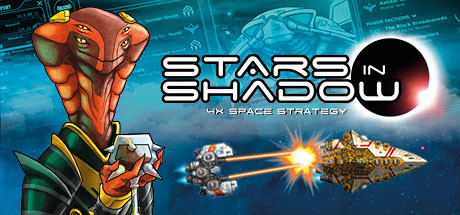
Stars in Shadow is a turn-based 4X strategy game and a vivid tribute to the genre classics. Compete with alien factions to explore and colonize nearby starsystems, build fleets to defend against rivals, negotiate or conquer them. Win by unifying the galaxy, through diplomacy or force.
Modeled estimate, not a reported figure. How we estimate →
About
Stars in Shadow is a turn-based 4X science fiction strategy game. Explore the stars, settle distant worlds, and build an interstellar empire. Recover ancient technologies and negotiate with alien leaders. Created by a pair of passionate strategy gamers, Stars in Shadow features streamlined empire management, sophisticated turn-based tactical combat, and detailed world building.
Epic Scope:
Starting at the dawn of interstellar travel, progress through four eras of technological advancement. Discover the science of planetary terraforming, upgrade your infantry battalions to battle mechs, and grow your fleet from a squadron of destroyers to an armada of planet-destroying Dread Stars.
Varied Factions:
7 Playable factions comprising six alien races. Each faction has different research strengths and technology options. Forming alliances, conquering neighboring species, or discovering ancient artifacts may open up additional avenues of research. Choose your race wisely as it impacts which worlds will suit you, what trades or alliances may be offered, and whether or not your neighbors are inclined to trust you.
Stylized Setting:
A distinctive comic-book art style and an original, detailed universe backstory draw you into an immersive game world. Interact with a unique cast of alien characters, make friends and influence people, or crush your enemies and see them driven before you.
Focused High-Level Strategy:
Build a vast and varied empire, taking advantage of the unique traits offered by different alien populations and the worlds they inhabit. Experiments on a slave population might diminish your popularity in the Galactic Council. A streamlined resource and planetary improvement model keeps the game moving even when your empire grows large.
Deep Turn-Based Tactical Combat:
Face off against your opponents in complex 2D turn-based tactical battles. Counter your enemy’s missile barrage using point defense or interceptors, then close to energy weapon range! Stars in Shadow’s tactical engine includes several features rarely seen in turn based games. Multi-ship commands keep even large fleet battles fast-paced, and smart unit behaviors allow tight control with minimal micromanagement. Auto-resolve battles that are a foregone conclusion, while retaining the ability to replay any engagement to see exactly what happened.
Stats
All-time low is the lowest price we've recorded for this game since we started tracking it.
Languages: English
Engagement
Hours played at review time, across 42 reviews with recorded playtime.
Reviews
Themes across 41 recent reviews and how positive each mention is. A keyword signal, not full sentiment analysis.
positive critical· bar length = how often the theme comes up
Reviews
Stars in Shadow is a carefully crafted space strategy title that embraces the classic principles of the 4X genre while refining them into a focused and approachable experience. Developed by Ashdar Games and published by Iceberg Interactive, the game is clearly inspired by genre-defining titles of the past, yet it avoids feeling like a mere imitation. Instead, it presents a thoughtfully streamlined vision of galactic empire building, one that prioritizes clarity, meaningful decision-making, and tactical depth over excessive systems or unnecessary complexity. From the beginning of a campaign, Stars in Shadow establishes a strong sense of structure and purpose. Players choose from a roster of predefined factions, each with its own distinctive traits, philosophies, and strategic advantages. These differences meaningfully shape how each empire plays, encouraging varied approaches to expansion, research, and diplomacy. Exploration forms the backbone of the early game, as players survey star systems, evaluate planetary potential, and decide where to commit their limited resources. This phase captures the excitement of discovery, with each new system offering both opportunity and risk, especially as rival civilizations begin to emerge and territorial boundaries take shape. Empire management is one of the game’s strongest elements, striking an effective balance between depth and accessibility. Colonies require careful attention to population growth, production priorities, research output, and defensive readiness, but the interface presents this information cleanly enough to prevent micromanagement fatigue. Every decision feels interconnected: aggressive expansion can fuel economic growth, but it may also strain logistics and leave worlds exposed to attack. The technology system reinforces this balance, offering meaningful choices rather than overwhelming tech trees, and encouraging players to specialize rather than pursue everything at once. Combat is where Stars in Shadow most clearly distinguishes itself from more abstract 4X experiences. Instead of resolving battles purely through numerical comparisons, the game offers turn-based tactical encounters where ship positioning, weapon ranges, and defensive systems matter greatly. These battles reward thoughtful fleet composition and battlefield awareness, allowing smaller or technologically superior forces to overcome larger opponents through smart play. At the same time, the option to auto-resolve battles ensures that pacing remains under the player’s control, preventing frequent skirmishes from becoming tedious during larger conflicts. Diplomacy and interstellar politics play a supportive but meaningful role throughout the game. While not as intricate as in some modern grand strategy titles, diplomatic interactions still influence the flow of a campaign, shaping alliances, trade relationships, and rivalries. The influence system adds weight to diplomatic decisions, making peaceful coexistence or calculated aggression feel like deliberate strategic choices rather than background mechanics. These systems complement the military and economic layers without overshadowing them, reinforcing the game’s cohesive design philosophy. Visually, Stars in Shadow adopts a bold, stylized art direction that sets it apart from the often sterile or hyper-realistic presentation common in the genre. Alien races are expressive and distinctive, ship designs are easy to read at a glance, and planetary backdrops are colorful without being distracting. This comic-inspired aesthetic enhances the game’s personality while maintaining the clarity essential for strategy gameplay. The user interface, though occasionally dense, is generally intuitive and supports the game’s emphasis on informed decision-making. Overall, Stars in Shadow succeeds by understanding exactly what it wants to be. It does not attempt to overwhelm players with endless systems or sprawling complexity, nor does it sacrifice strategic depth for simplicity. Instead, it delivers a polished and engaging 4X experience that respects both the genre’s legacy and the player’s time. For fans of classic space strategy who appreciate tactical combat, thoughtful empire management, and a clean, focused design, Stars in Shadow remains a rewarding and enduring journey across the stars. Rating: 7/10
Did you love Master of Orion 2? So did the devs, and this game is a love letter to it. I even dare say it's better, with a simplified and improved planet development system that hits the just right balance.
Well, this game was fun. Now the developers have made hard almost impossible to do and normal plays like hard. At least I can't tell the difference. Mid game everyone already got endgame Adamantine armor and end game artillery vortex weapons... sigh, and has 10x the units and tech as you do.... What a waste of time!
This game has somewhat deep, unexplained mechanics, that ends up making the game to feel shallow. The more time I play this game I feel the urge to play other games instead of this, like Master of Orion II or Empire Interactive's Stars!, or even Space Empires IV.
Fun little space 4x. Very good in that there is little of the detail overkill of many 4x games. But that's also a potential problem. If you want to dig deeper there is no there to dig into. Still I have fun with this game when I need a break from micromanagement hell that the top 4x games have become. I like the art style because it is fresh compared to other games. I recommend this game for many hours of relaxing expansionism.
It's not terrible I'd even sat the turn based combat is well done and the art is pretty good didn't run into any bugs. But the whole game just feels shallow and maybe a bit under baked. The tech tree is pretty bare and generic the races mostly have pretty minor variations and there's just not all that much interesting to run into as you explore the maps. Bask to Playing the original Sword of the Stars for me.
My playtime is only an half hour but during this I found out this is no match to Master of Orion (or Stellaris). +Some player choice -Felt like chore to play -Lackluster aesthetics = Disappointed. I would never recommend such game to myself so I won't do it to you either.
Played this game a lot, it's simple in some aspects, but the one more turn, one more game feel is real. Nice thing to play when you played too much of Master of Orion 2 and wish for something different, but of the kind.
TL/DR: There's nothing particularly bad about the game, but also nothing outstanding, nothing to immerse and captivate you. So there's little reason to buy it. Yeah, the art may be pretty, but it's not enough of a selling point. Long story: This is basically a 2-man team's attempt to make their own Master of Orion-style game. Unfortunately, it doesn't live up to the legacy. While there are some good ideas, their implementation is rather lackluster, and they simply get lost amidst the other parts of the game. Which are either rudimentary, unfinished, or even disappointing. Let's get through them one by one: 1. The UI is very hard to use. No overviews, no central management menus, basically, there's always a click or three too many to get anything done. 2. The colony building logic is a gateway to micromanagement hell. 3. The population management system is so rudimentary, it doesn't even qualify as a placeholder. 4. The research screen is very confusing, there should be at least a search or a sorting function. 5. The ship design is severly limited by the "hardpoint" system. 6. The tactical combat, which was supposed to be the main focus of the game, feels like a stub of a feature. Other, important parts of the original Master of Orion 2 (like colony/fleet leaders, espionage, morale effects, pollution, or space elves!!!), were left out entirely. Overall, the game might be enough for a gaming weekend, mainly due to the novelty (or nostalgia) factor, just don't expect anything beyond that.
One of the best ways to get that Master of Orion "Just one more turn" fix
Related
Related
Trends
Concurrent players on Steam, sampled daily since tracking started.
Audience
Estimated from the language of this game's reviews — a proxy for where players are, not official Steam demographics.
Related
| 7 Days to Die | $425.3M | 403.6K | 87% | $44.99 |
| Mount & Blade II: Bannerlord | $309.8M | 294K | 88% | $49.99 |
| RimWorld | $176.7M | 243.3K | 98% | $34.99 |
| Don't Starve Together | $164.7M | 539.5K | 95% | $14.99 |
| Satisfactory | $164.4M | 275.9K | 97% | $27.99 |
| Hell Let Loose | $51.5M | 148.7K | 82% | $17.49 |
Related
| Wayward Terran Frontier: Zero Falls | $514K | 481 | 67% | $29.99 |
| Iron Front: Digital War Edition | $514K | 867 | 59% | $14.99 |
| Deadly Days | $514.2K | 1.9K | 86% | $11.99 |
| Horizon's Gate | $514.2K | 1.3K | 95% | $19.99 |
| Witch Hunt | $513.9K | 2.4K | 88% | $9.99 |
| Low Magic Age | $514.3K | 3.5K | 89% | $5.99 |