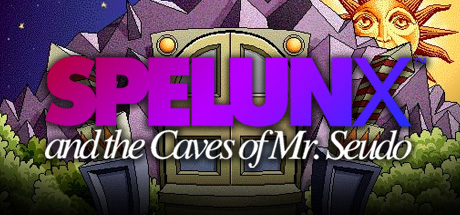
Professor Spelunx and Mr. Seudo are studying Planet X, a place full of mystery and adventure. There's a surprise around every turn, a huge world to explore and dozens of mini-games to enjoy. Spelunx and the Caves of Mr.
Modeled estimate, not a reported figure. How we estimate →
Media
About
Genres
Stats
All-time low is the lowest price we've recorded for this game since we started tracking it.
Languages: English
Engagement
Hours played at review time, across 51 reviews with recorded playtime.
Reviews
Themes across 51 recent reviews and how positive each mention is. A keyword signal, not full sentiment analysis.
positive critical· bar length = how often the theme comes up
Reviews
Great game for today's kids, as well as for nostalgic kids of the 90s like me! No plot or bad guys, but fun exploring and clicking random things. Players will find plenty to interact with, and no shortage of humor, whimsy, and fun! A true Cyan masterpiece!
GF played it for 10 minutes and got bored.
.
Of the three early Cyan games, this one makes the most sense. It still doesn't have a story or point though. You can see the seeds of what became Myst, and may recognize some sound effects from the later game, but there isn't a great deal here to hold your interest.
An okay puzzle game that is VERY short. It also has a nice art style but there isn't really a story.
Spelunx and the Caves of Mr. Seudo is one of those unusual releases that feels like stepping into a time capsule from an earlier generation of PC gaming. Developed and published by Cyan Worlds, Inc., long before the studio became widely recognized for its groundbreaking adventure titles, this educational exploration game reflects a creative period when developers experimented with interactive learning in ways that prioritized discovery and imagination. Rather than presenting players with traditional objectives, combat systems, or structured progression, the game builds its identity around curiosity and the joy of uncovering hidden ideas. Set on the mysterious Planet X, players enter a sprawling underground environment alongside Professor Spelunx and his assistant Mr. Seudo. The experience unfolds within an interconnected cave system packed with strange devices, unusual rooms, and dozens of activities waiting to be uncovered. Instead of moving from mission to mission, players are encouraged to wander freely and interact with whatever captures their attention. Every corner of the cave contains opportunities to experiment, solve small challenges, or discover educational concepts hidden beneath playful design. What makes Spelunx particularly memorable is its refusal to behave like a standard educational title. Many games designed for younger audiences rely heavily on direct teaching methods, quizzes, or obvious learning objectives. Spelunx takes a different approach entirely. It trusts players to learn naturally through exploration. Scientific concepts, mathematical thinking, observation skills, and logical reasoning are woven directly into the environment rather than presented like classroom assignments. The result feels less like studying and more like participating in an interactive science playground. The design philosophy feels remarkably forward-thinking even by modern standards. Players are rarely pushed toward specific outcomes. Instead, experimentation becomes the core mechanic. Strange machines invite interaction. Hidden activities reward persistence. Small discoveries build momentum and create a genuine sense of wonder. Younger players may find themselves learning without fully realizing it, while older players can appreciate how elegantly the educational material blends into the world itself. Visually, the game carries unmistakable early-1990s charm. The graphics naturally show their age, but there is personality embedded in every strange corridor and quirky room. Cyan’s creative identity already feels present here. The studio would later become famous for atmospheric worlds and environmental storytelling, and early traces of that style can be seen throughout Planet X. The cave system feels mysterious without becoming intimidating, imaginative without becoming chaotic. Even simple visual elements contribute to the feeling that players are exploring a place filled with secrets. The sound design complements the slower pace effectively. Instead of relying on energetic music or constant audio stimulation, the game creates an atmosphere that encourages focus and curiosity. Exploration feels peaceful rather than stressful. Players are given time to observe, think, and experiment without pressure. That relaxed approach helps reinforce the educational goals while maintaining a sense of adventure. Modern audiences should understand that Spelunx belongs to a very different era of game design. Players expecting fast progression systems, cinematic storytelling, or constant rewards may initially struggle with its slower structure. There are moments where older interface decisions become noticeable, and some mechanics inevitably feel dated compared to contemporary releases. However, many of those limitations become easier to appreciate when viewed within historical context. One of the game’s strongest qualities remains its commitment to open-ended interaction. There is no overwhelming emphasis on winning or completing objectives. Discovery itself becomes the reward. The excitement comes from finding something unexpected hidden inside the cave network or experimenting with an unfamiliar system until understanding clicks into place. That approach creates a lasting charm that helps the experience remain memorable long after individual puzzles or activities fade from memory. For players interested in gaming history, educational software evolution, or Cyan Worlds’ early creative work, Spelunx and the Caves of Mr. Seudo offers something genuinely worthwhile. It stands as an example of developers trying to create learning experiences that respected curiosity rather than forcing information onto players. The game may show its age visually and mechanically, but its ideas still feel meaningful decades later. Planet X remains a strange and inviting place to explore. Hidden beneath its retro presentation is a thoughtful educational experience built around imagination, experimentation, and discovery. While it may not appeal to everyone, especially players seeking modern gameplay conventions, those willing to embrace its slower pace will find a unique piece of gaming history that still carries surprising charm. Rating: 6/10
https://youtu.be/fOEW1YEx0L0 More of an art toy than from a lost era than a game with goals and objectives.
The stuff nightmares are made of.
대부분의 경우 이것은 작은 상호 작용 요소가있는 공개 게임입니다. 어린 아이들을위한 키보드의 장난감 중 하나처럼 보입니다. 여기서 앉아서 무언가를 클릭 할 때마다 재미있는 소리를 낼 수 있습니다. 이 게임은 어린 아이들을위한 것이기 때문에 이미 곱셈 테이블을 알고있는 사람들에게는 권장하지 않지만 아직 그렇지 않은 경우 아이를 위해 구입할 수 있으며 만족할 것입니다. 나는 아이들을위한 게임으로 +를 넣었다.
I don't *really* recommend this game, but its really neat in that early-90s-kids-game sort of way. There's not much game here - just a big sandbox with educational toys, more or less. With that said, there's lots of little educational and humorous tidbits, and its very typical for the style and for the era, so it earns a recommendation on those points.
Related
Related
Trends
Modeled estimate over time, reconstructed from Steam's monthly review histogram.
Audience
Estimated from the language of this game's reviews — a proxy for where players are, not official Steam demographics.
Audience
Games most often reviewed by the same players — an audience-affinity signal from our review sample, not full ownership data.
Related
| Goblin and Coins | $4.9K | 108 | 89% | $1.99 |
| Dream Coaster VR Remastered | $4.9K | 81 | 54% | $1.99 |
| Cannibal Tales - Episode 1 | $4.9K | 63 | 89% | $2.49 |
| Nightwatch: Closer | $4.9K | 63 | 86% | $4.99 |
| Skatemasta Tcheco | $4.9K | 146 | 93% | $1.99 |
| GYROPIA | $4.9K | 53 | 100% | $2.49 |