How do you balance -- and indeed encourage -- a war between factions without letting either side obliterate the other? How do you rule over gods, creatures, and men who refuse to obey you? How do you build a landscape of villages when bandits and mythology are conspiring to tear it down?
Modeled estimate, not a reported figure. How we estimate →
Media

About
Genres
Stats
All-time low is the lowest price we've recorded for this game since we started tracking it.
Languages: English**languages with full audio support
Engagement
Hours played at review time, across 50 reviews with recorded playtime.
Reviews
Themes across 50 recent reviews and how positive each mention is. A keyword signal, not full sentiment analysis.
positive critical· bar length = how often the theme comes up
Reviews
a fun little game worth buying
Ejemplo de manual de que las ideas por sí solas no sirven para nada y que una idea genial con una ejecución nefasta da lugar a un resultado nefasto. La idea de un juego de equilibrio de fuerzas es genial, de verdad. Entro por el tutorial. Vale, veo un mapa, no hay animaciones espectaculares, pero es un tablero en el que puede desarrollarse un buen juego, eso está bien. No es necesario más, los ingredientes son buenos. En el primer turno del tutorial me estás diciendo que construya todo esto pero no aquello. Todavía no tengo claro ni para qué he de construir todo eso ni de la importancia de los recursos (por cierto, cuáles son?), ni de cómo funciona el sistema de combate, ni de nada. Me has dado mil opciones y me has dicho "construye esto, y no preguntes". El primer problema es que me das una lista de la compra con lo que he de construir para un equipo y luego "haz lo mismo para el otro equipo, ah, pero no pongas al Cerbero, que al elfo no le gusta y tal", todo esto explicado en dos parrafones. Entiendo que el "Show, don't explain" no se entienda a la perfección, ni se aplique siempre, pero aquí has optado por el contrario al extremo: "Explain, don't show", y esto en un TUTORIAL de un juego es una decisión de diseño nefasta. En un tutorial, el jugador ha de aprender las mecánicas de forma gradual. Ha de poder ver en qué consiste el juego y cómo administrar sus recursos a nivel básico. Puede estar en forma de primer nivel, de modo tutorial, o implícito en el mismo juego. El formato escogido no es el problema, los tres bien utilizados funcionan, utilizados cuando son necesarios funcionan. Y un tutorial bien diseñado ya deja entrever cómo va a ser el juego y cómo va a estar diseñado. El tutorial aquí está tan mal diseñado que deja entrever lo mal diseñado que está el juego. Satura más que enseñar a jugar. No necesito ver el resto del juego para saber que la mejor forma de mantener el equilibrio entre los dos bandos es no jugarlo.
양 진영을 밸런스 있게 발전시켜(?)야 하는 게임인데.. 좀 난해하고 지루한 편입니다.
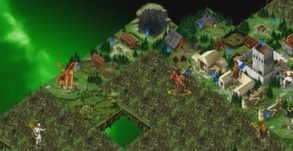
Skyward Collapse is a unique game, even amongst the multitude of God games out there. It is less a power fantasy and more like babysitting civilisations and stopping them from killing each other. The basic gimmick is you're in charge of managing the buildings and world of two rival factions who want nothing more than to wipe each other out. Of course, they need some military to defend themselves from bandits. Which they inevitably use to try to kill each other. So you have a multitude of summons and supernatural abilities to turn the tide. The game turns into an interesting tug of war between keeping factions alive and generating enough points to meet each age's quota. More destructive events like buildings or even whole towns being destroyed generate more points, but also weaken the losing faction potentially leading to a snowball effect of destroying them. I feel this mostly works: the higher risk, the more points are on offer. The game can suffer a bit in late game, where there's too many towns to keep track of and you're just waiting out the clock but the game does have speed modifiers and even lets you skip watching units move to accommodate for this. It can also be difficult to keep track of military buildings, and if they even have the right buildings to continue producing units. Overall I recommend this game, and especially at a five euro price tag.
Very fun toy of a game.
Trying to balance between factions - and when each faction has seriously damaging weapons - combined with world ending disasters is not fun. Not fun at all. On the other hand, you can get achievements pretty easy for this game by following the community guide so if it's on sale cheap enough, go for it. After reading the guide I figured out how to win - don't build anything, stonewall for 60 turns, and pray the disasters are the right type so you don't get wiped out.
I thought it was alright.
It has a cool concept but suffers from tedious gameplay, poor execution, and repetition.
The premise of balancing two sides and ensuring both of their survival is well-executed! I'll be playing more of this.
Is it worth 2$? Yes. Would you recommend this game? No. Why? Tabbing off the screen or using multiple monitors clicking off monitor freezes the game( when AI is doing its thing). The game isn't that interesting.
Related
Related
Trends
Modeled estimate over time, reconstructed from Steam's monthly review histogram.
Momentum
Pace estimated from the game's recent review growth (our daily snapshots) at its own sales-per-review ratio — a momentum signal, not booked sales.
Audience
Audience
Estimated from the language of this game's reviews — a proxy for where players are, not official Steam demographics.
Games most often reviewed by the same players — an audience-affinity signal from our review sample, not full ownership data.
Related
| Trivia Vault: Science & History Trivia | $62.2K | 132 | 55% | $13.99 |
| Obscuritas | $62.2K | 219 | 61% | $14.99 |
| Rencounter | $62.3K | 375 | 71% | $5.99 |
| Little Nemo and the Guardians of Slumberland | $62.2K | 121 | 95% | $19.99 |
| Wayhaven Chronicles: Book One | $62.3K | 369 | 92% | $7.99 |
| Krampus is Home | $62.3K | 276 | 80% | $9.99 |