Silent Rain is an oppressive and deeply atmospheric cooperative horror game that combines paranormal investigation, survival mechanics, procedural exploration, and psychological tension into an experience designed to make players feel constantly vulnerable. Developed by 2Brains&Coffee and Seedlers Interactive, the game places players in the role of Seekers working for a mysterious organization tasked with investigating supernatural contamination spreading through abandoned locations affected by a phenomenon known as the Silent Rain. Instead of focusing on traditional combat or action-heavy horror, the game builds fear through uncertainty, isolation, and the constant pressure of exploring environments filled with hidden threats and unpredictable paranormal activity.
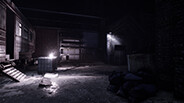
The game’s strongest quality is its atmosphere. From the moment players enter a mission, Silent Rain establishes a feeling of dread that rarely disappears. Dark hallways, abandoned buildings, flickering lights, distant noises, and suffocating silence all work together to create an environment where even simple exploration feels dangerous. The game constantly gives players the impression that something is nearby watching them, even during moments where no immediate threat is visible. This approach makes the horror feel psychological rather than purely dependent on sudden jump scares.
The gameplay revolves around exploring haunted and contaminated locations while searching for clues, solving environmental puzzles, and attempting to survive hostile supernatural entities. Progression requires careful investigation and attention to detail because important objects, keys, puzzle pieces, and hidden information are scattered throughout the environment. The game encourages slow and methodical exploration instead of reckless movement, forcing players to balance curiosity against the growing risk of attracting dangerous paranormal forces.
One of the most impressive aspects of Silent Rain is its procedural structure. Important items, puzzle elements, traps, and objectives are randomized between runs, ensuring that investigations rarely unfold exactly the same way twice. This system greatly improves replayability because players cannot simply memorize solutions or enemy patterns after a single playthrough. Every failed attempt becomes part of the learning process as players slowly understand how to navigate environments more efficiently and survive increasingly dangerous encounters.
The horror design itself is extremely effective because of how unpredictably the game handles tension. Long stretches of silence and slow exploration often build unbearable anxiety before supernatural events suddenly erupt into chaos. The game understands that anticipation can be more terrifying than constant action, and it uses pacing very effectively to maintain pressure throughout each mission. Even basic interactions such as opening doors or entering dark rooms can become stressful because players are never completely certain what might happen next.
The cooperative gameplay adds another major layer of intensity. Silent Rain supports up to four players, and teamwork quickly becomes essential for survival during more difficult investigations. Communication is constantly important when solving puzzles, navigating dangerous areas, or escaping supernatural threats. The game naturally creates chaotic and memorable moments as players panic, separate, regroup, and attempt to survive together while paranormal activity intensifies around them.
At the same time, the game also works well as a solo horror experience. Playing alone removes the safety net provided by teammates and significantly increases the psychological tension. Solo exploration feels much more isolating and oppressive because every sound and movement becomes entirely the player’s responsibility. The slower pacing and lack of support make the horror far more personal when playing without companions.
The environmental design contributes heavily to immersion. Each location feels abandoned, decayed, and hostile, filled with narrow corridors, dark rooms, deteriorating structures, and disturbing visual details that reinforce the game’s oppressive atmosphere. Lighting is used especially well, with darkness, shadows, flashlight beams, and sudden environmental distortions constantly making players question what they are seeing. The environments may not be visually groundbreaking from a technical standpoint, but their mood and atmosphere remain consistently effective.
Sound design is easily one of the game’s greatest strengths. Creaking structures, distant footsteps, whispers, distorted sounds, and sudden supernatural noises constantly create tension during exploration. Silence itself becomes a source of fear because players begin anticipating paranormal events even when nothing is happening. The audio design alone is often enough to make exploration deeply uncomfortable, which is exactly what the game intends.
Another admirable aspect is the game’s commitment to challenge. Silent Rain expects players to fail repeatedly while gradually learning its systems and environmental layouts. The game avoids excessive handholding, which strengthens immersion and makes successful investigations feel rewarding. Escaping a dangerous mission after surviving multiple close encounters creates genuine relief because the game constantly reinforces how fragile players are inside these environments.
However, the game is not without flaws. One of the biggest issues is the steep learning curve. Silent Rain intentionally explains very little, which can create confusion during early sessions as players struggle to understand objectives, puzzle solutions, and survival mechanics. New players may initially feel overwhelmed by the lack of guidance and harsh difficulty.
The procedural structure, while excellent for replayability, can occasionally create uneven pacing. Some runs feel perfectly balanced and tense, while others become slower due to awkward item placement or extended searching. Repetition can also gradually emerge after many hours as players begin recognizing familiar environmental patterns and objective structures despite the randomized elements.
Technical roughness is occasionally noticeable as well. Some animations, interactions, and multiplayer synchronization moments can feel inconsistent, slightly disrupting immersion during otherwise tense situations. Online sessions may also occasionally encounter connectivity or performance issues common in many smaller-scale cooperative horror games.
The slower pace of the game may also divide players. Silent Rain prioritizes tension, exploration, and environmental pressure over constant action, meaning large portions of gameplay involve cautious movement and investigation rather than direct confrontation. Players expecting nonstop scares or fast-paced survival horror may find the experience too methodical during quieter sections.
Despite these shortcomings, Silent Rain succeeds remarkably well as a cooperative paranormal horror experience focused on atmosphere and survival tension. Its combination of procedural replayability, oppressive environmental design, difficult gameplay, and teamwork-driven exploration creates an experience that feels genuinely stressful and immersive. The game fully embraces psychological horror and constantly reinforces the feeling that players are entering places humanity was never meant to disturb.
For fans of cooperative horror games, paranormal investigations, and survival experiences built around fear and tension rather than combat, Silent Rain delivers a memorable and highly atmospheric adventure. Its strong environmental storytelling, unpredictable structure, and relentless sense of dread make it one of the more intense indie horror experiences currently available.
Rating: 7/10