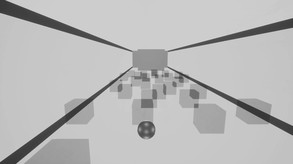
And again you get into the world of a rolling ball. Only this time the level is just one, and it's unlimited. Easy control and insanely exciting passing obstacles with a rolling ball. Go around and jump over obstacles using only a mouse. RollingBall: Unlimited World will let you relax and rest.
Modeled estimate, not a reported figure. How we estimate →
Media

About
Genres
Stats
All-time low is the lowest price we've recorded for this game since we started tracking it.
Languages: English
Engagement
Hours played at review time, across 40 reviews with recorded playtime.
Reviews
Themes across 40 recent reviews and how positive each mention is. A keyword signal, not full sentiment analysis.
positive critical· bar length = how often the theme comes up
Reviews
This is an extremely low effort/buggy/unfinished 3D endless runner where you roll a ball down an infinite corridor full of obstacles. But that's not really what this is. In reality this is asset flipped achievement spam trash that Valve should never have allowed onto Steam in the first place. An important note: PotatoIndustries are known asset flippers and have previously taken other developers work and put it on Steam in an attempt to scam gamers and get paid for someone else's effort. One example of PotatoIndustries doing this is Slabs, which is really the "[url=https://youtu.be/JE24WmnmCes]UE4 Blueprint - Create "Stack" Android Game[/url]" asset, written by the actual developers, ARCHITYPE. Asset flips are harmful to the gaming industry. They're nothing but cash grabs, and they harm genuine indie developers by reducing their visibility on Steam. Because this game has all the same low quality as an asset flip, as well as the other problems with it, it's impossible to recommend.
RollingBall: Unlimited World is a minimalist arcade title developed and published by PotatoIndustries that centers its entire experience on a single, endlessly looping mechanic: guiding a rolling sphere through an infinite stream of obstacles. On paper, the concept is immediately understandable and deliberately stripped down, promising a reflex-driven challenge that anyone can grasp within seconds. In practice, the game’s simplicity becomes both its defining trait and its greatest limitation, shaping an experience that feels more like a rough prototype than a fully realized arcade challenge. The core gameplay loop is extremely straightforward. The ball moves forward automatically, and the player’s only responsibilities are steering left or right and jumping to avoid oncoming barriers. There are no complex systems to learn, no branching paths, and no secondary mechanics layered on top of the movement. This immediacy makes the game accessible to virtually anyone, but it also means that engagement hinges entirely on how responsive and fair the controls feel. Unfortunately, the execution struggles to consistently deliver that sense of precision, which undermines the skill-based appeal the game aims to offer. One of the most prominent issues is how the controls and physics feel during play. Steering and jumping can come across as floaty or inconsistent, making it difficult to build muscle memory or trust that inputs will translate cleanly into on-screen action. In a game that relies exclusively on reaction time and spatial judgment, this lack of tight responsiveness is especially damaging. Missed jumps or sudden collisions often feel arbitrary rather than the result of player error, which can quickly turn frustration into disengagement. The “unlimited world” concept suggests constant novelty, but the procedural nature of the obstacle generation does not evolve in meaningful ways. Obstacles repeat frequently, patterns rarely escalate in complexity, and there is little sense of pacing or progression beyond surviving longer than the previous attempt. Without new mechanics, environmental changes, or escalating rule sets, the infinite level feels static rather than dynamic, and the promise of endless replayability fades after only a handful of runs. Visually, the game opts for a clean but bare presentation. The environments are functional and uncluttered, which helps with readability, but they lack personality or atmosphere. There is no strong visual identity to mark progress or differentiate one stretch of the run from another, reinforcing the sense that time spent playing blends together without memorable landmarks. Sound design is similarly minimal, offering basic feedback without adding tension, excitement, or rhythm to the experience. Progression systems are virtually nonexistent. There are no unlockable mechanics, upgrades, or meaningful milestones that alter how the game plays over time. While the game includes a very large number of Steam achievements, these are largely passive or time-based and do little to create a sense of accomplishment or mastery. Instead of motivating players to improve through new challenges, the achievement structure feels disconnected from gameplay depth and fails to compensate for the lack of substantive content. Community reception reflects these shortcomings. Many players approach RollingBall: Unlimited World expecting a relaxing or meditative arcade experience, only to encounter mechanics that feel undercooked and inconsistent. The gap between the game’s simple promise and its actual feel leads to disappointment, especially for players accustomed to more polished endless runners or arcade reflex games that offer tight controls and escalating challenge curves. That said, there is a very narrow audience for whom the game may still hold some appeal. Players seeking an extremely lightweight, almost mindless reflex exercise—with no learning curve and no narrative or system complexity—might find brief enjoyment in its simplicity. In short sessions, and with lowered expectations, the act of steering and jumping can function as a basic distraction rather than a demanding game. Ultimately, RollingBall: Unlimited World feels like an idea that was never pushed far enough beyond its initial concept. Its minimalism is not reinforced by precision, variety, or progression, leaving the experience shallow and prone to frustration rather than mastery. While its accessibility and simplicity may attract curiosity, the lack of polish, depth, and meaningful evolution prevent it from standing out in a genre filled with more refined and rewarding endless arcade titles. Rating: 3/10
Terrible. I don't like having to go into discussions to see why something isn't working, especially for an achievement printer. Attempt 1 I learned it's impossible to organically survive more than 5 seconds, attempt 2 I learned that you have to idle it, and then wait after exiting to main menu while it prints the spam. So idling something 3 separate times because the maker couldn't even get an achievement printer game right... wow.
game which could be made in a day not worth paying for
1 von 10
[h1] Totally unplayable[/h1] I'm gonna skip the obvious things like: there is no fun playing it, game is annoying AF etc. To unlock all the achievements you just have to play BUT. One achievement is play for 5 sec. Good luck not dying in less than 5 sec. 1500 achievements x 5 sec = 125 min (if you survive 5 sec). Game is bugged and that's a feature if you want to unlock this achievements (read the guide). It's a waste of money.
recomendo.
X
口区,这种游戏简直反人类。
垃圾,根本玩不了,成就也解锁不了,开发的什么垃圾东西。
Related
Related
Trends
Modeled estimate over time, reconstructed from Steam's monthly review histogram.
Momentum
Pace estimated from the game's recent review growth (our daily snapshots) at its own sales-per-review ratio — a momentum signal, not booked sales.
Audience
Estimated from the language of this game's reviews — a proxy for where players are, not official Steam demographics.
Related
| Splash Girls | $825.6 | 66 | 76% | $0.99 |
| The Road to Hades | $825.6 | 55 | 51% | $0.99 |
| Fantasy Maid | $825.6 | 60 | 50% | $0.49 |
| 100 RUB: Operation Global Denomination | $825.6 | 66 | 80% | $0.99 |
| Magic matchstick | $825.6 | 56 | 70% | $0.99 |
| Ink Plane | $825.6 | 55 | 80% | $0.99 |