Rogue Summoner is a turn-based roguelike strategy game developed and published by Gamecraft Studios that takes a creative approach to dungeon crawling by shifting the focus away from the player character and onto the monsters they command. Instead of directly attacking enemies or controlling a party of heroes, players take on the role of a summoner who relies entirely on conjured creatures to fight on their behalf. This unusual twist transforms the traditional roguelike combat system into something closer to a tactical puzzle, where predicting movement patterns and carefully planning placements becomes the primary method of overcoming challenges. The game blends elements of roguelike exploration, tactical board-game mechanics, and monster collection into a compact but thoughtful strategic experience.
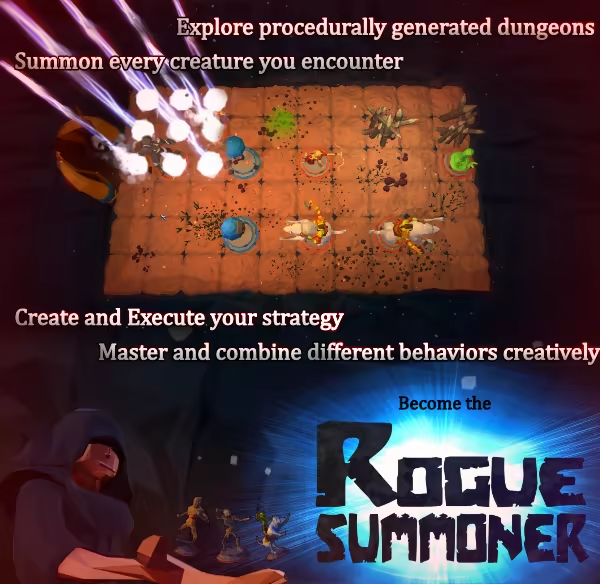
The basic structure of Rogue Summoner revolves around exploring a dungeon composed of interconnected rooms filled with enemies, traps, and occasional rewards. Each room acts as a small battlefield where the summoner must decide which creatures to deploy and where to place them in order to defeat the opposition. What makes the combat system particularly distinctive is that summoned creatures operate automatically once placed on the battlefield. The player does not directly control their actions after summoning them. Instead, every monster follows a predetermined behavior pattern that dictates how it moves and attacks. Some creatures aggressively pursue the nearest enemy, others attack from a distance, while some perform unusual actions such as teleporting, exploding, or altering the environment. Learning how each monster behaves becomes essential for success.
Because of these predictable behavior patterns, the combat encounters often feel like strategic puzzles. Players must think several turns ahead, anticipating how monsters will interact with one another once combat begins. A poorly placed summon can lead to disastrous results, while a carefully planned placement can eliminate several enemies with a single chain reaction. The satisfaction of successfully predicting the outcome of a complex encounter is one of the game’s most rewarding aspects. It creates a feeling similar to solving a tactical puzzle or playing a strategic board game, where every move carries consequences that unfold over time.
Another interesting feature of Rogue Summoner is its monster recruitment system. As players defeat enemies throughout the dungeon, those creatures gradually become available as summons for future battles. This mechanic encourages players to pay close attention to enemy behaviors during combat because understanding how a monster works is the key to using it effectively later. Over time, players build a growing collection of creatures that can be used in different tactical situations. Some monsters excel at dealing heavy damage, while others serve defensive roles or disrupt enemy formations. Experimenting with different combinations of creatures adds a layer of strategy that keeps the game engaging as players continue to progress.
Managing resources also plays a crucial role in the game’s tactical depth. Summoning creatures requires mana, which is a limited resource that must be used carefully during each encounter. Players cannot simply fill the battlefield with powerful monsters without considering the cost. Running out of mana at the wrong moment can leave the player defenseless against enemy attacks. Fortunately, defeating enemies restores small amounts of mana, creating a delicate balance between aggressive summoning and cautious resource management. In addition to summoning creatures, players can also make use of potions, runes, and other items that provide temporary advantages during difficult encounters.
The overall structure of Rogue Summoner follows classic roguelike principles. Each dungeon run features procedurally generated layouts and enemy combinations, ensuring that no two runs are exactly the same. However, failure carries significant consequences. When the player dies, the run ends and they must begin again from the start without retaining the monsters or resources acquired during that attempt. This design emphasizes mastery of the game’s systems rather than gradual accumulation of permanent upgrades. Players improve not through character leveling but through a deeper understanding of monster behaviors, enemy patterns, and effective summoning strategies.
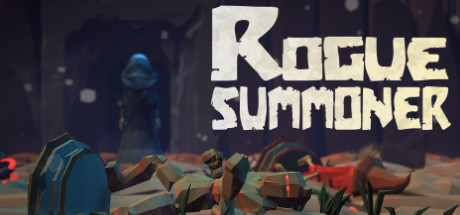
Visually, the game adopts a simple top-down perspective with low-polygon graphics and stylized creatures that resemble miniature figurines placed on a tactical board. The environments are functional rather than elaborate, consisting primarily of dungeon rooms with modest visual variation. While the graphics are relatively basic compared to larger modern games, they serve the gameplay well by keeping the battlefield clear and easy to read. Because the player must constantly track how different creatures move and interact with each other, visual clarity becomes more important than high graphical fidelity.
Despite its inventive design, Rogue Summoner does have some weaknesses. The early sections of the game can feel repetitive, especially when players must replay the same early dungeon rooms after each failed run. The limited visual variety of environments may also make extended sessions feel somewhat monotonous. Additionally, the game initially hides detailed information about some enemy behaviors until the player encounters them multiple times, which can lead to frustrating defeats when facing unfamiliar creatures. Since success often depends on understanding exactly how enemies behave, learning through trial and error can occasionally feel punishing.
However, the game’s unique combat system helps offset these issues. Few roguelikes approach strategy in quite the same way, and the satisfaction of orchestrating a perfectly planned battle remains consistently engaging. The moment when a carefully arranged group of summoned monsters wipes out an entire wave of enemies can be immensely rewarding. For players who enjoy tactical thinking and puzzle-like gameplay, the depth of the combat system provides plenty of opportunities for experimentation and mastery.
Overall, Rogue Summoner is a creative and intellectually engaging roguelike that stands apart from more action-focused entries in the genre. Its emphasis on indirect control, monster behavior patterns, and strategic planning transforms dungeon battles into thoughtful tactical challenges. While the repetitive structure and limited presentation may not appeal to everyone, the game offers a refreshing alternative for players who prefer careful planning over reflex-based combat. Those who enjoy strategy games, puzzle mechanics, and roguelike experimentation will likely find a great deal to appreciate in its unique design.
Rating: 7/10