Jump a rift, fight off monsters, plunder their world. A strategic mix of juicy tower loadouts, varied monster behaviors, and forgiving mechanics.
Modeled estimate, not a reported figure. How we estimate →
Media

About
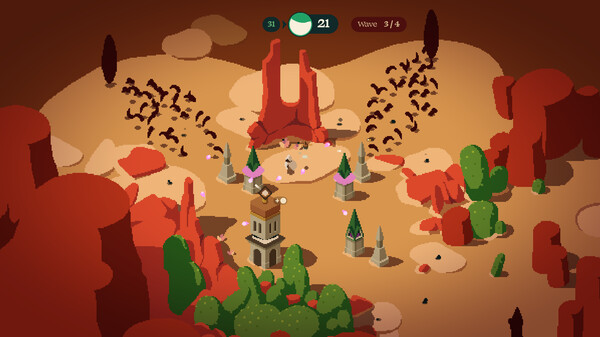
Jump a rift, fight off monsters, and plunder their world. Rift Riff is a tower defense game noteworthy in two ways: it's particularly strategic and remarkably forgiving.
At the heart of the strategic layer of Rift Riff is a mix of choosing what towers you bring into each rift and being clever about the various monster behaviors. Monsters attack in waves, either going straight for your Extractor (your main tower) or attacking every tower in proximity. To defend yourself, you choose a handful of towers at the start of a scenario and build them on predetermined spots on the map. You obtain juice (your build resource) during monster waves and have the ability to build and upgrade towers before and during each wave. Surviving the onslaught of monsters gives you prisms, which in turn unlocks more rifts, towers, companions, and tower upgrades.
Don’t have enough juice to build your tower? Schedule it. Built the wrong tower? Get a full refund. Lost a tower? It’ll respawn for free after the wave. Lost your Extractor? Only redo the last wave. Having a hard time? Pick flowers for a bit of extra juice.
The full game currently features ± 15–20 hours of gameplay:
20 worlds with 2 or more scenarios each.
17 tower types with 7 overpowered upgrades.
25 monster types with varying behaviors.
6 companions who'll assist you and your towers.
45 challenges for die hards.
All the good Steam stuff: achievements, stats, controller support, cloud saves, etc.
Have a suggestion or want to report a bug? Talk to the developers on the Steam Forums or on Discord.
Rift Riff is made by game designer Adriaan de Jongh (best known for the indie hit Hidden Folks), graphic designer Sim Kaart, enemy wave designer Professional Panda, music composer and sound designer Matthijs Koster, and programmer Franz LaZerte. Rift Riff is made using the open source game engine Godot.

Stats
All-time low is the lowest price we've recorded for this game since we started tracking it.
Languages: English, French, German, Spanish - Spain, Dutch, Japanese, Korean, Polish, Portuguese - Brazil, Russian, Simplified Chinese, Traditional Chinese +1 more
Engagement
Hours played at review time, across 40 reviews with recorded playtime.
Reviews
Themes across 40 recent reviews and how positive each mention is. A keyword signal, not full sentiment analysis.
positive critical· bar length = how often the theme comes up
Reviews
I've rarely struggled so hard to enjoy and make progress in a TD as I have with Rift Riff. When I make progress with the more difficulty levels, I never really understand why what I did worked. Maybe its because the developers decided they didn't want to bother including an adjustable speed. Combined with a tiny mouse pointer with my 4K monitor, the game becomes an arcade and not a strategic challenge. I won't down vote this game, but only because it isn't terrible and it is an indie game. But when the much better Thronefall exists, why would you bother buying this game? I completed Thronefall at the normal difficulty, yet struggle with Rift Riff. The developers call this game forgiving, it is anything but forgiving for me. I'm well aware that I can set sliders that increase/decrease damage, eventually I could find something that works. That doesn't work for me - I expect the difficulty to be tuned by the developers. Normal difficulty should be achievable for an average gamer like myself.
This game is one of the best tower defense games I've played. The art feels great. The sound has the right amount of juice without being distracting. The towers and upgrades allow for diverse strategy, but most importantly, the level designs (which look beautiful) force you to adapt your strategy. Lots of tower defense games feel stale once you've figured out one or two ways to win, but not here. In Rift Riff, different levels require different plans. And that's built upon with a simple progression that unlocks and teaches how different towers work. Simply excellent.
Rift Riff creatively alters fundamental [b]tower defense[/b] mechanics without straying and utilizes its [b]minimalist design[/b] to promote thoughtful strategy, level diversity, and build variety. Stages are open concept and less linear. This means that no one combination outright demolishes obstacles. For the most part, one can succeed with their own tactics. The consistently flowing juice currency and risk reward flower economy were great implementations. Furthermore, [b]accessibility options[/b], including wave restarts, layout saving, and tower refunding, made the rounds more enjoyable. Though some late-game challenges required very specific solutions. Even still, those looking for a [b]medium-length[/b], variety-heavy, and achievement-plenty experience will have an excellent time playing.
The blabbering character voice is awful and can't fully be disabled. Otherwise a decent game. But man that voice... terrible decision.
[h1] Formas básicas, minimalismo y disonancia: el encanto (y los peros) de un TD minimalista [/h1] Ritf Riff es un tower defense permisivo y minimalista; es tal esa fijación en reducir al mínimo cada elemento, que el bestiario es engrosado por criaturas que son poco más que figuras tridimensionales básicas: Un enjambre de pequeñas esferas, amenazantes conos levitantes o resistentes prismas harán de hueste asaltante. Esta intencionalidad, reducir al mínimo sus elementos, permea cada rincón; su musicalización, sus vibrantes escenarios desprovistos de texturas complejas y, a lo que refiere el diseño de torres, con un leitmotiv evidente. Resulta satisfactorio atestiguar la armonía que se respira aquí. Esto, a su vez, consecuencia de ese minimalismo que resuena al unísono en —casi— cada apartado, termina configurando una experiencia limpia, contrastando con lo que solemos encontrar en este subgénero. [h2] Parecido a Thronefall, pero sin tantas capas, mucho con poco y zona segura navegable mediante elemento diegético [/h2] Pero..., ¿exactamente cuál es su jugabilidad? Por lo artístico más que por lo jugable, recuerda a Thronefall. Y sí, al igual que este, es un vibrante tower defense minimalista con personaje jugable, puntos predefinidos de construcción y sin una zona de circulación de ataque estrictamente delimitada, lo que posibilita que las torres sean susceptibles a los ataques. Pero, ojito, no tiene tantas capas como Thronefall; no hay edificios de tipo producción y manejo de grupo de unidades. Afín a esa simplificación que fuertemente abraza Rift Riff, encontramos un gameplay mucho más sencillo, pero no por ello menos divertido. Para poner en marcha el ciclo ataque-defensa bastará con construir el extractor, el edificio a defender, en una casilla especial. Una vez construido, emergerá una ventana que nos reporta los enemigos que saldrán y, a su vez, en la que seleccionaremos nuestras torres y compañeros. Inicialmente sólo podemos equipar 3 torres, pero aumentará conforme progresemos. Entre etapa y etapa, recorreremos una zona segura. Su función principal es servir de puente entre niveles y, al mismo tiempo, es ese espacio donde utilizamos los metarecursos ganados para desbloquear torres o mejorarlas. Conforme progresemos, nos encontraremos con etapas que modifican, mediante rasgos, el comportamiento de los enemigos: atacar a las torres, dirigirse directamente al extractor o atacar a torres en suelo fértil. A modo ilustrativo, centrémonos en esto último: Cualquier torre que construyas en una zona fértil se le condena a que sea prioridad para los enemigos que tengan ese rasgo. Lo ideal es construir un obelisco (la arquetípica torre de resistencia) y, en zonas aledañas, torres de ataque. Lo que quiero remarcar de acá es: Estos rasgos van reconfigurando la forma en que nos abordan los enemigos y, a su vez, nuestras estrategias. Orilla a utilizar cada torre del repertorio; es tan así, que en algunos niveles directamente se sugiere no prescindir de determinada torre. De esta forma, y con muy poco, Rift Riff inyecta novedad; pese que los enemigos son poco más que conos, esferas y cilindros, el sistema de rasgos, que no es otra cosa que scripts subordinados al diseño de niveles, altera su comportamiento y, de cara a ello, nuestra forma de orquestar la defensa. ¿Lo genial? Con muy poco han logrado que su gameplay no se sienta repetitivo. [h2] Minimalismo, disonancia y comunicación a través de la silueta [/h2] Rift Riff es un ejemplo perfecto de cómo el minimalismo funcional potencia la comunicación entre el juego y el jugador… dah, sí, eso ya lo saben, pero…, a ver, me explico: Al eliminar el "ruido" visual de texturas complejas, HUD recargados o anatomías detalladas, permite que nuestro cerebro se enfoque en la esencia de las reglas y la función de cada enemigo. Un ejemplo mayúsculo de esto son las formas de los enemigos. Si tienes nociones básicas de diseño, sabrás que hay comunicación a través de la silueta; las formas puntiagudas suelen comunicar peligro, las redondas se asocian con objetos que no dañan y, finalmente, un bicho con forma de prisma sugiere masa, peso y resistencia, estableciendo una expectativa de que será un enemigo "tanque" difícil de mover o destruir. Hay una evidente preocupación en asegurarse de que cada píxel en pantalla sea funcional y necesario, reduciendo la carga cognitiva innecesaria y creando las condiciones para que entremos en el anhelado estado de flow. Todo es tan directo, limpio y sin distracciones, que crea las condiciones para una experiencia en donde florece lo mejor de tu yo estratégico. Engancha fácilmente. No lo había pensado, porque el género estrategia me ha acostumbrado a HUD RECARGADOS, menús contextuales y toda clase de indicadores, pero…, hay elegancia en que el ejercicio de planificar una estrategia efectiva no sea saboteado constantemente por información "no esencial". A mi modo de ver, ese es el encanto de Rift Riff. Ahora, les mentiría si les dijera que todo de él me ha gustado; eso me lleva a hablarte de su carácter permisivo. A propósito de ello, en su página de Steam encontramos lo siguiente: ¿No tienes suficiente energía para construir una torre? Prográmala. ¿Te has equivocado de torre? Puedes recibir un reembolso completo. ¿Has perdido una torre? Se regenerará sin coste tras la oleada. ¿Has perdido tu extractor? Repite sólo la última oleada. ¿Te está costando? Recoge flores y consigue energía extra. Sí, hay una serie de decisiones de diseño que favorecen la progresión y economía del tiempo del jugador sobre el reto. En parte me gusta; algunas de ellas son opcionales, otras, no. Y ese es el quid del asunto: sería ideal que el jugador decidiera hasta qué punto los atenuantes de dificultad están presentes. Un sistema de modificadores solventaría esto. Adicionalmente, aún no he llegado ahí, tenemos una segunda dimensión que, según entiendo, son niveles más hardcore, pero desconozco si estos operan bajo las mismas reglas que un nivel estándar. Y esta no es mi única crítica importante: Hay otras decisiones que entran directamente en conflicto con su pretendido minimalismo; los primeros niveles se sienten muy guiados; está esa tosca preocupación por que entiendas las reglas del juego y no te quedes atascado… Una de las virtudes de los juegos minimalistas es que tratan a sus jugadores como seres pensantes; confían en su diseño y en sus jugadores. También choca que en algunos niveles, en esa fase de preparación, se señale qué torres son recomendadas para ese nivel, afianzando la sensación de exceso de guía. Esas decisiones las encontré totalmente disonantes con el resto de las partes. Una gran y escandalosa mancha marrón. No me mal entiendan, hay niveles desafiantes y, en general, es un tower defense muy disfrutable, pero…, lo más aconsejable en un tower defense es que sea el jugador el que decida qué tan grande es el desafío al que se enfrentará y, a su vez, el ejercicio de pensar cómo armar una defensa funcional es…, maldita sea, el núcleo de un tower defense… Me parece que algunas decisiones de diseño socavan estos principios.
It is very enjoyable, easy to play, and stress relieving. Highly recommended. :))
Love the cozy vibe. And it's still challenging despite being forgiving, becoming more of a puzzle challenge to get a layout that works, rather than a timing challenge to set it up the fastest. There are a lot of upgrade paths to explore, and the controls are simple enough that you can play with just the left hand on the keyboard. Pixel art and animation are spot on, and the sound design and music are fun and unique, contributing to the casual vibe. Absolutely adore the voice acting from the player character; she's always got some kind of silly vocalization, humming to herself if you're idle, talking back to you in gibberish as you make selections, or humorously exclaiming "wowwwww" when a gatling gun spins up to full speed or a sniper tower comes online. It's just too cute.
It is very sleek, well balance and addicting.
Cute little game, worth every dollar. The kind of puzzle TD that respects your time since it allows you to redo each wave without having to start over from scratch. Also quite forgiving as you can sell each tower in between rounds with full refund (and you will need that in many of the end game challenges to adapt to different monsters). Highly recommend.
Great game, beautiful art and music style, elegant design for a tower defense game, really leans into the strategy aspect in a great way. I love it
Related
Related
Trends
Modeled estimate over time, reconstructed from Steam's monthly review histogram.
Momentum
Pace estimated from the game's recent review growth (our daily snapshots) at its own sales-per-review ratio — a momentum signal, not booked sales.
Audience
Estimated from the language of this game's reviews — a proxy for where players are, not official Steam demographics.
Related
| Dwelvers | $139.4K | 318 | 69% | $14.99 |
| Pizza Slice | $139.4K | 242 | 56% | $14.99 |
| Crowns and Pawns: Kingdom of Deceit | $139.4K | 477 | 81% | $19.99 |
| Vibrant Venture | $139.3K | 662 | 98% | $14.99 |
| Syn-Chorus 01: The New Life | $139.4K | 355 | 83% | $10.99 |
| Heaven Island - VR MMO | $139.3K | 2.1K | 58% | $1.99 |
Related
| 7 Days to Die | $425.3M | 403.5K | 87% | $44.99 |
| Mount & Blade II: Bannerlord | $309.8M | 293.9K | 88% | $49.99 |
| Squad | $166.3M | 240.4K | 81% | $39.99 |
| Schedule I | $144.4M | 308.4K | 98% | $19.99 |
| Raft | $144M | 375.8K | 93% | $19.99 |
| Don't Starve Together | $130.6M | 373.1K | 95% | $14.99 |