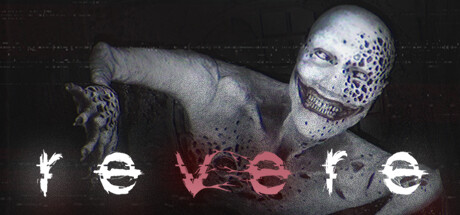
'revere' is a psychological found footage horror game where every detail matters. Prepare yourself for an experience where your sanity will be condemned.
Revenue comes from in-game items and microtransactions, which our price-based model doesn't estimate. Copies below reflect the player base, not paid sales.
Media

About
Genres
Stats
All-time low is the lowest price we've recorded for this game since we started tracking it.
Languages: English*, Portuguese - Portugal, French, Italian, German, Spanish - Spain, Indonesian, Romanian*languages with full audio support
Engagement
Reviews
Themes across 41 recent reviews and how positive each mention is. A keyword signal, not full sentiment analysis.
Reviews
⠀
El juego tiene una propuesta interesante, con una mezcla de point and click, escape room y mecánicas de vigilancia al estilo Five Nights at Freddy’s. Sin embargo, en lugar de complementarse bien, estas mecánicas chocan entre sí, haciendo que la experiencia se sienta caótica y frustrante. Resolver puzzles mientras estás bajo tensión constante no es una buena combinación, y en vez de generar miedo, acaba siendo agotador. Los puzzles en sí tienen buenas ideas, pero su implementación es deficiente. Un caso claro es el ordenador dentro del juego: cada vez que intentas consultar otra información, las ventanas prácticamente se reinician, haciendo que interactuar con él sea un suplicio. Esto rompe la fluidez y la lógica de los acertijos, convirtiendo lo que debería ser una mecánica interesante en un problema más. Otro fallo importante es el sistema de checkpoints. Son absurdamente injustos, devolviéndote demasiado atrás cuando fallas, lo que te saca completamente de la experiencia. Más que generar tensión, lo que provoca es la sensación de estar perdiendo el tiempo, aumentando la frustración y las ganas de dejar el juego. A nivel técnico, hay problemas graves. Si activas el v-sync, el juego empieza a laggear de forma exagerada (algo que le ocurre a todo el mundo). Además, aunque el juego permite elegir idioma, hay secciones donde esto no se respeta, como en el ordenador, donde todo sigue en inglés aunque hayas seleccionado otro idioma. En definitiva, la idea detrás del juego es buena y el alma del proyecto se siente, pero la ejecución es torpe. Con una mejor estructura, separando momentos de puzzles tranquilos de las secciones de tensión, la experiencia sería mucho más disfrutable. Tal como está ahora, se siente más como un castigo que como una experiencia de terror inmersiva. No lo recomendaría, a menos que tengas la paciencia de aguantar sus fallos o prefieras verlo en YouTube antes que jugarlo.
Related
Related
Trends
Modeled estimate over time.
Hours played at review time, across 41 reviews with recorded playtime.
positive critical· bar length = how often the theme comes up
revere is a slow-burn psychological horror game that places atmosphere, tension, and mental unease far above spectacle or action. Rather than relying on constant jump scares or combat encounters, the game commits to a restrained design philosophy that emphasizes isolation, uncertainty, and the creeping dread of being trapped in a place that feels wrong in ways that are difficult to immediately articulate. From its opening moments, it makes clear that progress will come through observation, patience, and interpretation rather than reflexes or force. The experience unfolds primarily through exploration of confined, decaying environments that feel abandoned yet unsettlingly present. Spaces such as the chapel and surrounding interiors are designed to feel oppressive, with low lighting, muted colors, and a deliberate lack of visual comfort. The world feels suspended in time, as though days and weeks blur together, reinforcing the game’s themes of disorientation and mental strain. The sense that something is watching or waiting just beyond perception permeates every room, even when nothing overtly threatening is happening on screen. Gameplay is driven by point-and-click style interaction layered onto a first-person perspective. Players must examine their surroundings carefully, interacting with objects, reading notes, and manipulating environmental elements to solve puzzles that block progression. These puzzles often rely on logic, pattern recognition, and contextual clues rather than explicit instructions. The game rarely explains itself, expecting players to experiment and think through solutions independently. This hands-off approach deepens immersion for players who enjoy discovery, but it can also make certain moments feel opaque or unforgiving, particularly when clues are subtle or easy to overlook. Tension in revere is built gradually through sound design and pacing rather than visual excess. Ambient noises, distant mechanical hums, and sudden shifts in audio texture create a constant sense of unease. Silence is used just as effectively as sound, allowing players’ imaginations to fill in the gaps. Threats are introduced carefully and escalate over time, increasing pressure without overwhelming the core puzzle-solving focus. Even routine tasks, such as activating machinery or navigating familiar corridors, are infused with anxiety because of the game’s oppressive atmosphere and limited sense of safety. Narratively, the game takes a fragmented and ambiguous approach. Story elements are revealed through environmental storytelling, scattered notes, and subtle visual cues rather than direct exposition. The protagonist’s identity, motivations, and past are intentionally obscured, encouraging players to piece together meaning through interpretation rather than clear answers. Themes of memory, guilt, and distorted perception surface gradually, creating a psychological undercurrent that lingers even when the immediate objectives seem mundane. This ambiguity strengthens the horror for players who enjoy symbolic or interpretive storytelling, though it may frustrate those looking for a more concrete or traditional narrative arc. Visually, revere adopts a restrained, almost retro-inspired aesthetic that prioritizes mood over detail. Textures and models are functional rather than flashy, but this simplicity works in the game’s favor by keeping focus on lighting, composition, and environmental storytelling. The interface is minimal, reinforcing immersion but occasionally making interaction feel rigid or dated. Movement and interaction are intentionally deliberate, which enhances tension but can also make the game feel sluggish during longer sessions. The pacing is methodical and unhurried, sometimes to a fault. Long stretches of exploration and puzzle solving are punctuated by moments of heightened stress, but the game resists the urge to constantly escalate. For some players, this slow rhythm enhances dread and emotional investment. For others, it can feel drawn out, particularly if progress stalls due to an unclear puzzle or missed clue. The game demands patience and attention, and it does not soften its difficulty to accommodate casual playstyles. Overall, revere is a niche but committed psychological horror experience that values mood, interpretation, and mental tension over accessibility or spectacle. It succeeds most strongly when it allows players to sit with discomfort and uncertainty, using atmosphere and sound to create fear rather than overt threats. While its puzzle design and pacing may not appeal to everyone, players who appreciate slow-burn horror, environmental storytelling, and games that trust the audience to engage deeply with their mechanics will find it a haunting and memorable journey. Rating: 6/10
"revere" is your usual Unity asset flip/kitbash, yet another first person horror adventure "game" where, guess what, you're in an asset flipped Unity house with bad lighting, some puzzles straight off the horror adventure game template, and of course, jumpscares. It's been done before literally hundreds of times, and this is not one of the better ones. In fairness a small amount of effort was put into arranging other people's game assets and sorting out some "puzzles" for the user to solve between jumpscares, but hard work copying other people's game assets doesn't automatically mean good work. The game graphics look better than you might expect, but that's just because it looks like some or all of them are "borrowed" from asset stores or wherever. Gamers can tell... and it comes across as insincere. There's also the old adage that those who lack the budget and talent to make their own game assets usually lack the budget and talent to do the rest of the job of game development properly, too. It's free... now, but it wasn't before. The developer was charging $10 USD for this. Price barriers, especially on low quality products, can be a direct cause of failure. It's a nice gesture for the game to be given away for free, but it also tells us that the game wasn't good enough to succeed as a paid product. It's also a bit of a slap in the face to anyone who paid money for this... nobody got refunded. Despite having no up-front cost, this failed to appeal to the 120 million+ gamers on Steam. SteamDB showed the game peaked at only 7 concurrent players... this is a dismal public reception. This was so bad they couldn't even give it away. Bearing in mind that free games don't add +1 to your game collector count, should you bother adding this to your library and downloading it? Not this time. This isn't worth downloading. While this won't cost you any money, you get what you pay for, and sometimes, even when the game is free, it's still not enough.
★★☆☆✩ Not worth your time, even for a free game Revere nails the atmosphere and music. That part’s genuinely well done and sets a nice eerie tone. Unfortunately that’s about where the positives end. The game just drops you in with zero guidance. No hints, no direction, nothing. The puzzles feel like random guesswork. Frustrating and borderline impossible without a walkthrough. Instead of feeling challenged, you simply feel lost. The monster surely looks creepy but it doesn’t really do much. There’s no real tension or sense of urgency, so you end up not caring whether it’s there or not. On top of that, you can’t even turn the game volume down in the settings or adjust the gamma if it’s too dark which just adds to the frustration. Even as a free game, it’s hard to recommend. There’s potential here but it’s buried under too much confusion and lack of player support. Your time’s better spent elsewhere.
여러모로 애매하네요. 퍼즐도 그렇고, 시점이라든가 시야각도 먼가 답답하고 괴물에게 죽지 않기위해 망을 보거나 할때 판정도 애매해서 계속 죽게됩니다. 분위기 자체는 나쁘지 않다고 생각합니다만 그냥 거기까지 인것 같습니다. 그냥 그렇네요. [url=https://store.steampowered.com/curator/45555420-%25EB%258D%2594%25ED%258E%2598%25EC%259D%25B4%25ED%258D%25BC%25EC%2599%2580-%25EA%25B2%258C%25EC%259E%2584%25ED%2595%2598%25EA%25B8%25B0/]Steam Curator ThePaper <--큐레이터 주소[/url]
Tbh, ich find das Game nicht gut - man kam nicht beim ersten "Rätsel" weiter und war komplett stucked Hab es direkt wieder deinstalliert
The atmosphere of the game is pretty good and the puzzles are done just hard enough to be a fun challenge. As a free game I personally recommend trying this game out
Génial je suis un peu teuteu donc je bave devant les puzzles pendant environ 10 minutes avant de voir la sainte lumière du seigneur et enfin trouver la réponse... mais j'adore ça ! le fait de voir gérer les monstres est assez intuitif et ils ne viennent pas t'arracher la tête en moins de 2s ce qui laisse quand même assez de temps pour résoudre au moins une énigme avant de devoir aller les remettre a leur place. L'ambiance est super cool, les graphismes et design sont super cool, les puzzles sont turbo cool ET c'est gratuit.
For a free 2 hour horror game it works pretty well. The game nails pretty much everything a horror game like this should, from the graphics, atmosphere, and music to the gameplay and puzzles. While the puzzles are definitely challenging for the mentally disabled like myself, they are still completable if you think hard enough. If you still can't figure how to do a puzzle, then you can always refer to the guide that the devs have made for both the stages and monsters. Overall, revere is definitely worth your time.
Audience
Estimated from the language of this game's reviews — a proxy for where players are, not official Steam demographics.