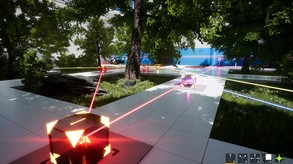
As an inmate of a government-controlled Correctional Facility in the year 2275, you have the right to prove yourself worthy of being part of Society again. Show your skills in logical thinking by solving puzzles of varying size, type and difficulty in this first-Person puzzle game, and redeem your freedom!
Modeled estimate, not a reported figure. How we estimate →
Media

About
Genres
Stats
All-time low is the lowest price we've recorded for this game since we started tracking it.
Languages: English**languages with full audio support
Engagement
Hours played at review time, across 40 reviews with recorded playtime.
Reviews
Themes across 40 recent reviews and how positive each mention is. A keyword signal, not full sentiment analysis.
positive critical· bar length = how often the theme comes up
Reviews
Some mixed feelings about this one. I played through the current version of the game and then had a read through some of the reviews that felt like they had been written about an entirely game, which in effect they were. So, I played through the older (not recommended) version of the game, available as an option when launching the game, to see what that was like... and now I feel like I've played one and a half games. ... The newer version of the game had a few words of narrative bookending the game, with no real narrative in the body of the game itself (well, there is the fact that you can look up to see that you're in a future world with flying cars). The story ends up feeling rather tacked on and basic echo of Portal: You're stuck in an institution and hopefully you'll get out of it in the end, but in the meantime there are puzzles. The puzzles themselves are a decent enough fair, where the player has to untangle coloured beams of light and make sure the right coloured beams end up in the right place by redirecting them with prisms that you can place at certain points in each test chamber. I did solve a few of the puzzles in unsatisfying ways that seemed janky and not like they were the true intended solution. One thing I was left wondering is why the game is a 3D first person one. Like, it's true that it looks nice and that it adds a level of obfuscation in not being able to see the entire puzzle at once, but essentially all the puzzles are 2D (there is one puzzle which adds some depth by having you solve a few puzzles in parallel, but that was just solving a few 2D puzzles at once) and I'm not sure that it wouldn't have been better off being the sort of game that you could play in your browser. ... Then I played through the older version of the game, and I'd say... that I like the older version better? The newer version is maybe the better game overall in that it's a more focused game built around the one core mechanic rather than a game that was splitting its attention by trying out three or four different mechanics that mostly never really played off of each other, or added much in terms of puzzle solving (whilst adding some stress over how well the game controls). That said, whilst I wasn't enamoured with the mechanics themselves they did help the game make sense as a to why it was in 3D, and added interest and variety to the game. Having different sorts of mechanics gave something of a breather in between puzzle solving. Even if the additional mechanics could feel somewhat like straight busywork I don't think that would have been a problem in the right amount. Beyond mechanics the newer version also lacks a lot of the aesthetic interest of the old, and clearer in-world prompts for the puzzles have been reduced down to not much more than an icon and a number in the UI. The rooms feel whiter and blander, and sometimes I felt disorientated as to where exactly the exit to the test chamber was. The dev has also swapped out a good ending/bad ending combo for a single middle ending, which makes the whole idea of the game narrative seem even more disposable... ... Overall I'd say that the newer version of the game is three steps forward and two steps back from the old one. I'm not sure that this is really the best version of what this game could be, but if the developer has managed to work past the compromises and indecision of creating this title then there could definitely be potential in the sequels if this is the sort of game that interests you.
[h2]Sinopsis[/h2] ReThink es un juego de puzzles y plataformas en primera persona, con un diseño de niveles estilo Portal. Corre el año 2275 y nuestro protagonista es un presidiario encerrado en un centro penitenciario controlado por el gobierno. Sin embargo, nos han concedido la posibilidad de volver a integrarnos en la sociedad, siempre y cuando demostremos que somos merecedores de tal ansiada recompensa resolviendo una serie de puzzles, que pongan en juego nuestra valía y capacidades de pensamiento lógico. La mecánica principal de estos rompecabezas se basa en la reflexión de láseres para desbloquear puertas que nos permitan avanzar. [h2]Jugabilidad / Apartado técnico[/h2] Poniendo a un lado la trama, la cual es solo una mera excusa para introducir un contexto (no existe ninguna referencia a la prisión durante el juego en sí), ReThink nos ofrece 38 niveles repartidos en salas con diversos puzzles a resolver. Como he comentado, la base de estos puzzles consiste en la reflexión de láseres luminosos. Por un lado, tendremos unos artefactos que emiten láseres de un color específico (rojo, verde y azul) y por otro, habrá unos artefactos receptores que deberán ser iluminados con el láser correcto para abrir la puerta que nos conduzca al siguiente nivel. Para esta tarea podremos activar y manipular unas plataformas en el suelo que reflejarán el haz luminoso en una de las cuatro dirección, pudiendo rotarlos libremente. Como cabe esperar, el juego se complica progresivamente, pudiendo usar plataformas que reflejan los láseres en 2-3 direcciones a la vez o en diagonal, mezclando colores para obtener otros nuevos (magenta, cian, amarillo o blanco) e incrementando el número de receptores a iluminar. El punto más flojo de ReThink es su parte plataformera, puesto que podremos correr y saltar, pero no hay huecos ni caídas, ni tampoco podemos sufrir daño de ningún tipo, por lo que queda bastante desaprovechado. A nivel gráfico luce bastante bien, con espacios amplios, luminosos y diáfanos, así como unos gráficos realistas y cuidados. [h2]Valoración[/h2] Juego bastante decente de puzzles que ofrece una experiencia directa y concisa. La trama es totalmente irrelevante y se centra únicamente en los rompecabezas, los cuales, a pesar de ser ingeniosos, ofrecen poca variedad y se sienten algo monótonos en ocasiones. No es un juego que aporte demasiado, pero lo que hace, lo hace bien. Hubiese agradecido nuevas mecánicas o un mayor peso de la historia, pero por lo que se ve el juego posee varias entregas donde se le da un giro de tuerca al concepto. Teniendo en cuenta su precio en oferta, merece bastante la pena para las 5 horas que puede durar (según habilidad y destreza con los puzzles). Funciona correctamente en Steam Deck. Lo salvaría de un incendio! 👨🚒👍🔥 [h1]7,5/10[/h1] [quote]🚨 Si te ha gustado la reseña y quieres más, sigue al Mentor: [url=https://store.steampowered.com/curator/45092978/] Indies ON FIRE [/url]🚨[/quote]
1. şahıs kısmi bulmaca kısmi keşif simülasyon oyunu bir amacı yada esprisi yok müzikleri rahatlatıcı modda kafa dağıtmak için yapılmış sanırım
[h1][b] Reseña de ReThink[/b][/h1] [h2]Resumen del Juego[/h2] ReThink es ese rompecabezas en primera persona, indie y casual que te dice “relájate” mientras te empuja a recalcular tu autoestima con lógica fría y pasillos futuristas minimalistas. Tu trabajo: manipular láseres, resolver salas lineales y avanzar como si fueras un técnico de mantenimiento en una distopía donde la decoración es “pared blanca #3”. La primera impresión es clara: esto no viene a contarte una epopeya, viene a ponerte pruebas. Y lo hace con una propuesta directa, sin relleno, sin mundo abierto, sin NPCs que te pidan 10 flores. Es un juego corto, de esos que se sienten como un espresso: rápido, concentrado y si te cae mal, te deja temblando. [h2]Lo Lógico y lo Ilógicamente Mejorable[/h2] Lo Bueno: Diseño minimalista sci‑fi en 3D que se entiende al instante Rompecabezas de lógica en primera persona: directo al grano, sin tutorial eterno Experiencia lineal y corta: ideal si quieres “terminar algo” en tu vida Logros de Steam (7): poquitos, pero al menos no te piden sacrificar 200 horas Steam Cloud: tu progreso no se pierde en el vacío existencial Lo No Tan Bueno: “Multijugador” aparece por ahí como el primo que dice que va a llegar y nunca llega 0 jugadores actuales: literalmente estás solo, como el protagonista… y como tu lista de amigos a las 3 a.m. Lineal y corto: si buscas rejugabilidad, aquí te dan un “gracias por participar” Dificultad: puede pasar de “casual” a “¿quién diseñó esto, HAL 9000?” sin pedir permiso Historia prácticamente inexistente (o tan minimalista que se la comió el minimalismo) [h2]Tabla de Evaluación[/h2] [table] [tr][th]Aspecto[/th][th]Puntuación (0-10)[/th][th]Comentario[/th][/tr] [tr][td]Jugabilidad[/td][td]7[/td][td]Sólida, clara y centrada en puzzles sin distracciones.[/td][/tr] [tr][td]Dificultad / IA[/td][td]6[/td][td]Más “prueba y error” que IA; algunos retos se sienten bruscos.[/td][/tr] [tr][td]Contenido[/td][td]6[/td][td]Corto y al punto; cumple, pero no sobra nada.[/td][/tr] [tr][td]Gráficos / Video[/td][td]7[/td][td]Minimalismo sci‑fi funcional y limpio, sin alardes.[/td][/tr] [tr][td]Historia[/td][td]4[/td][td]Está… en espíritu. No esperes narrativa real.[/td][/tr] [tr][td]Ambientación[/td][td]7[/td][td]Futurista/distópica efectiva: pasillos fríos, mente caliente.[/td][/tr] [tr][td]Efectos (VFX)[/td][td]6[/td][td]Láseres y efectos correctos; más utilidad que espectáculo.[/td][/tr] [tr][td]Música[/td][td]6[/td][td]Acompaña sin molestar, pero tampoco deja huella.[/td][/tr] [tr][td]Voces[/td][td]0[/td][td]No hay voces destacables; silencio corporativo premium.[/td][/tr] [tr][td]Diversidad[/td][td]5[/td][td]Variedad limitada por su enfoque lineal y minimalista.[/td][/tr] [tr][td]Rendimiento[/td][td]7[/td][td]Ligero y estable en general: minimalismo también en recursos.[/td][/tr] [tr][td]Rejugabilidad[/td][td]5[/td][td]Una vez resuelto, el misterio muere (y tú también un poco).[/td][/tr] [tr][td][b]Total Puntuaciones (Aceptable)[/b][/td][td][b]5.5[/b][/td][td]Buen rompecabezas indie, pero le falta alma y ganas de quedarse.[/td][/tr] [/table] [h2]Conclusión (Aceptable)[/h2] ReThink es un rompecabezas en primera persona bien enfocado: minimalista, futurista y sin relleno. Si lo tuyo es entrar, resolver, salir y sentirte inteligente (o humillado con elegancia), aquí hay material. No pretende ser más de lo que es, y eso se agradece en un mundo donde todo quiere durar 120 horas. Pero también es un juego que hoy se siente como una sala de escape abandonada: 0 jugadores actuales y tú hablando con paredes blancas. Aun así, tiene 165 recomendaciones totales, lo cual sugiere que, para su nicho, sí funciona: gente que quiere lógica, linealidad y un reto breve sin compromisos sociales. [h3]Recomendación de Compra (En descuento, sí; en seco, piénsalo)[/h3] Puntuación Total: 5.5/10 Número de jugadores activos al momento de hacer esta review: 0 Descuento máximo registrado: -91% Veredicto: [i]Recomendado con reservas[/i] Si te gustan los rompecabezas en primera persona, el sci‑fi minimalista y los juegos cortos que van directo al punto, ReThink cumple. Solo no esperes historia, comunidad activa ni un motivo para volver más allá de terminar lo que empezaste y presumir esos 7 logros como si fueran un doctorado.
The puzzles are tough, especially towards the end. Oddly, many puzzles give you more cubes than you need, which is confusing for no reason (eg. for the final puzzle my solution left three cubes unused). It feels like the developer designed the puzzles by just randomly placing a few cubes, lasers, and nodes down (making sure all the nodes were activated) without checking that their solution is unique, or even optimal. Contrast this with a game like Baba is You, where it's exceedingly uncommon to discover an alternate solution the developer wasn't intending. Also, the puzzles start to get tedious after a while. All the game mechanics are introduced early on, so for the latter part of the game, it's just puzzle after puzzle with no change of pace. Again contrast with Baba is You, which consistently adds a new mechanic every few levels, which keeps things fresh and interesting. Despite my complaints however, the game is fun overall, if not a bit short (I completed the game in three hours). All achievements are through progress, so it's an easy perfect game.
[h1] Вечер в хату! [/h1] Наверное тут уже много раз это говорили, но первейшее впечатление от игры после ее запуска было: "Да это ж Portal урезанный до лазеров!". Это, конечно, не совсем так, но большую часть игры я играл с этим ощущением) Это никак не портит впечатления от игры. Игра сделана очень качественно, и уровень сложности как раз по мне: есть где подумать, но не тайны века. Впрочем ближе к концу я все равно застрял, но это было круто. Очень порадовало наличие неба, где двигался плотный трафик летающих машин. Без этого было бы хуже однозначно, и во многом благодаря этому я играл без саспенса и ощущения одиночества как в Портале (но там это было надо, а здесь нет). Также хочу добавить в безоговорочные плюсы отличный, релаксирующий саунд. В таких играх для меня это всегда было критично, потому как для полного дзена нужно отдыхать мозгом, даже если сел за комп изначально напряженным, и правильные звуки помогают расслабиться и думать. Есть даже что-то вроде сюжета, который говорит нам о том, что мы являемся подопечным некоего экспериментального пенитенциарного учреждение (йоу, апертура). И окончание побуждает нас ознакомиться с последующими частями. Вот собственно и все, всем рекомендую, игра класс. 9 из 10 (минус балл за таки сильную схожесть с порталом)
Ok puzzle game using laser and mixing light. Tried to like it but just didn't, sorry.
Pretty nice brainteaser that can easily be finished in 2-3 sessions (totaling ~3-4 hours). I liked it a lot, and would recommend it to anyone who enjoys games like Portal or The Talos Principle.
ReThink is a focused, logic-driven puzzle experience that places problem-solving and spatial reasoning above spectacle or narrative excess. Developed and published by Yaeko, the game presents itself as a cerebral challenge from the outset, framing its puzzles within a cold, futuristic environment where intellect is the sole tool for progress. Rather than relying on story twists or character development, ReThink commits fully to the idea that the satisfaction of understanding and mastering its systems is the primary reward. The premise situates the player in a high-tech correctional facility where progress is earned by completing a series of increasingly complex test chambers. This setup functions more as atmospheric context than as a narrative driver, but it effectively reinforces the game’s themes of isolation, observation, and logic. The absence of overt storytelling keeps the focus squarely on the puzzles themselves, allowing players to sink into a rhythm of experimentation and deduction without distraction. At the heart of the gameplay is a system built around manipulating colored laser beams using movable cubes. These cubes act as mirrors, splitters, and color combiners, and the goal in each room is to direct the correct color of light to its corresponding receiver. Early puzzles introduce these mechanics gently, teaching the basics of reflection and alignment, but the complexity escalates steadily. Soon, players must juggle multiple beams, anticipate how colors combine, and plan sequences of interactions several steps in advance. The challenge comes not from dexterity, but from understanding how small changes ripple through the entire setup. The first-person perspective plays a crucial role in how these puzzles are experienced. Unlike abstract, grid-based logic games, ReThink requires players to physically move through each space, examining angles, distances, and lines of sight. This adds a tangible quality to problem-solving, making each solution feel like a physical construction rather than a purely theoretical answer. At times, this perspective can make solutions harder to visualize, especially in larger rooms, but it also deepens immersion and reinforces the sense that you are interacting with a real, three-dimensional system. Visually, the game opts for restraint and clarity. Environments are clean, minimalist, and deliberately uncluttered, ensuring that puzzle elements stand out clearly against the background. Laser beams are bright and readable, cube interactions are visually consistent, and distractions are kept to a minimum. While the aesthetic may feel sterile or repetitive to some players, it serves the gameplay well by eliminating ambiguity and visual noise, both of which can be frustrating in logic-heavy games. Audio design complements this minimalist approach. Ambient soundscapes and subtle music create a calm, contemplative atmosphere that supports extended periods of concentration. Sound effects provide clear feedback when cubes are moved or lasers connect, reinforcing player actions without becoming intrusive. The overall audio presentation reinforces the sense of isolation and focus, making the experience feel almost meditative at times. Difficulty progression is one of ReThink’s stronger aspects. The game respects the player’s intelligence, rarely holding their hand once core mechanics are introduced. Puzzles grow more demanding not by adding unnecessary complexity, but by combining familiar elements in smarter, more intricate ways. While there are occasional spikes or solutions that feel slightly inelegant, most challenges reward patience and logical thinking, delivering a genuine sense of accomplishment when everything finally clicks into place. Replay value is modest but appropriate for the genre. ReThink is largely a linear experience, with its primary appeal lying in the act of solving puzzles for the first time rather than revisiting them. Once solutions are known, there is little mechanical incentive to return, but this is typical for tightly designed puzzle games and does not detract from the quality of the initial experience. Community reception reflects this focused design philosophy. Players who enjoy pure logic puzzles and methodical problem-solving tend to respond very positively, praising the clarity of mechanics and the fair difficulty curve. Criticism usually centers on the sparse narrative, repetitive visual environments, or comparisons to genre-defining titles with more elaborate storytelling. However, these comparisons often highlight differences in ambition rather than flaws in execution. Ultimately, ReThink is a game that knows exactly what it wants to be. It does not attempt to reinvent the puzzle genre or compete with narrative-heavy first-person adventures. Instead, it delivers a clean, disciplined experience built around light manipulation, spatial reasoning, and intellectual challenge. For players who value thoughtful puzzles, minimal distractions, and the quiet satisfaction of solving complex problems through logic alone, ReThink offers a consistently rewarding and well-crafted journey. Rating: 7/10
Nice puzzle games. Games was patched a lot and puzzles changed in 2018, dev has given option to launch original old version. I just played the new version with somewhat different puzzles. It goes on sale for under 1€ often so can recommend getting from sale if you like puzzle games. 100% is just completing the game.
Related
Related
Trends
Concurrent players on Steam, sampled daily since tracking started.
Audience
Estimated from the language of this game's reviews — a proxy for where players are, not official Steam demographics.
Related
| Loop//Error | $4K | 58 | 88% | $2.99 |
| Whirlwind Magician | $4K | 58 | 98% | $2.99 |
| Ronny's Climb | $4K | 59 | 98% | $2.99 |
| Aldro | $4K | 51 | 69% | $4.99 |
| Road Doom | $4K | 56 | 82% | $3.49 |
| Quickly, Quackley! | $4K | 50 | 94% | $4.99 |