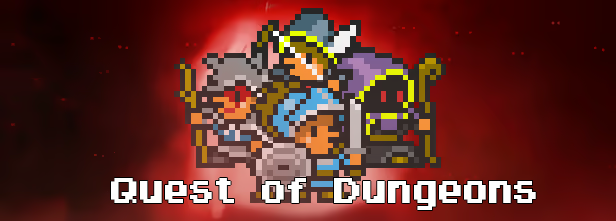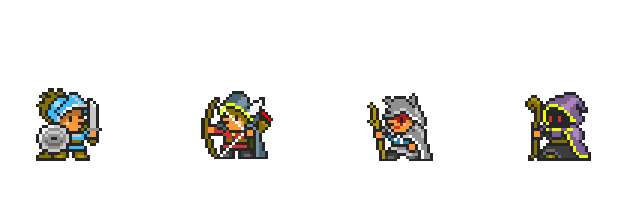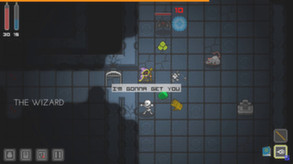
Quest of Dungeons is a turn based dungeon crawler game featuring a good old 16-bit retro artistic look. By playing as either a Warrior, Wizard, Assassin or Shaman you have to traverse dungeons, defeat enemies and loot everything you can in order to survive.
Modeled estimate, not a reported figure. How we estimate →
About


Stats
All-time low is the lowest price we've recorded for this game since we started tracking it.
Languages: English, French, German, Spanish - Spain, Portuguese - Portugal, Italian, Japanese, Russian
Engagement
Hours played at review time, across 40 reviews with recorded playtime.
Reviews
Themes across 40 recent reviews and how positive each mention is. A keyword signal, not full sentiment analysis.
positive critical· bar length = how often the theme comes up
Reviews
indie
Quest of Dungeons — это roguelike-игра, в которой игрок исследует подземелья шаг за шагом. Злой Тёмный Лорд украл весь свет, и теперь ваша задача — проникнуть в его зловещее убежище и победить его.
Relaxing dungeon crawler that is turned based and requires a little bit of strategy and luck.
Quest of Dungeons is a deliberately old-school roguelike dungeon crawler developed and published by David Amador that embraces simplicity, randomness, and tactical thinking over spectacle or narrative excess. From the moment you begin your descent, it is clear that the game is designed as a tribute to classic turn-based dungeon crawlers, distilling their core ideas into a compact, approachable experience that still demands careful decision-making. Rather than overwhelming players with systems layered on top of systems, Quest of Dungeons focuses on a tight gameplay loop built around exploration, survival, and incremental character growth, making each run feel like a self-contained adventure shaped by both player choices and procedural unpredictability. The premise is intentionally lighthearted and straightforward, setting the tone for the entire experience. A Dark Lord has stolen all the light in the world and locked it away inside a magical lantern, and it’s up to a lone adventurer to venture into the depths of a dangerous dungeon to retrieve it. The story exists mostly as framing, offering just enough motivation to push you forward without distracting from the mechanical heart of the game. This minimal narrative approach works well, as the true storytelling emerges organically through close calls, unlucky encounters, and moments where smart planning allows you to escape seemingly impossible situations. At the start of each run, players choose from several character classes, each of which subtly reshapes how the dungeon is approached. The Warrior favors durability and direct combat, the Wizard relies on careful mana management and spell usage, the Assassin thrives on agility and precision, and the Shaman offers a more flexible, hybrid style built around magic and utility. These class distinctions add meaningful replay value, as the same dungeon layout can feel dramatically different depending on your chosen hero. Because every dungeon is procedurally generated, layouts, enemy placements, loot drops, and shop locations change each time, ensuring that no two runs are identical and that memorization alone is never enough to guarantee success. Gameplay unfolds on a grid-based, turn-driven system where every action matters. Movement, attacks, item usage, and spell casting all consume a turn, giving enemies the opportunity to respond. This creates a constant sense of tension, as rushing forward without scouting or misusing a resource can quickly spiral into disaster. Combat itself is simple but effective, emphasizing positioning, threat assessment, and knowing when to engage or retreat. Health potions, scrolls, equipment upgrades, and skill tomes become precious resources, and learning when to use them is often the difference between a successful run and an abrupt end. Death is permanent, as expected in a roguelike, but failure rarely feels unfair; instead, it reinforces the learning process and encourages experimentation with different strategies. Progression in Quest of Dungeons strikes a satisfying balance between immediacy and long-term mastery. Characters gain levels, improve stats, and unlock new abilities during a run, creating a steady sense of empowerment that contrasts with the constant threat of losing everything. Equipment and spells can dramatically alter how encounters play out, sometimes turning previously dangerous enemies into manageable obstacles. However, the game never allows power to spiral out of control, and even well-equipped characters can fall victim to poor positioning or overconfidence. This keeps the tension intact from start to finish, reinforcing the idea that survival depends more on smart play than raw numbers. Visually, the game leans heavily into a retro pixel-art aesthetic that evokes classic 16-bit era RPGs. The presentation is clean and readable, prioritizing clarity over detail, which is crucial in a game where recognizing enemies, traps, and items at a glance can save your life. Animations are simple but functional, and the overall visual style complements the game’s mechanical focus. The audio design follows a similar philosophy, with unobtrusive music and sound effects that enhance atmosphere without becoming distracting. While the audiovisual elements are modest by modern standards, they feel cohesive and purposeful, reinforcing the nostalgic tone without feeling lazy or unfinished. Player reception to Quest of Dungeons has generally been positive, particularly among fans of classic roguelikes and turn-based dungeon crawlers. Many appreciate how accessible it is compared to more complex entries in the genre, making it an easy recommendation for newcomers while still offering enough depth to keep experienced players engaged. Criticisms tend to focus on the limited variety of environments and enemy types, which can become noticeable during extended play, as well as the intentionally minimal story. However, these shortcomings are often outweighed by the game’s consistency, fairness, and strong grasp of what makes roguelike gameplay compelling. Ultimately, Quest of Dungeons succeeds by knowing exactly what it wants to be and refusing to overreach. It doesn’t try to reinvent the genre or compete with sprawling, system-heavy roguelikes; instead, it delivers a focused, polished experience that captures the joy of exploration, risk, and reward in a compact form. For players who enjoy thoughtful turn-based combat, procedural challenge, and retro aesthetics, it offers a highly replayable journey that rewards patience, planning, and curiosity. Whether played in short sessions or longer dungeon-diving marathons, Quest of Dungeons stands as a strong example of how timeless design principles can still shine in modern indie games. Rating: 7/10
I love Quest of Dungeons. It is a go too for me when i need something to play and just chill. With that said dont sleep on this game it can be dangerous and tough. It is a well put together dungeon crawler rouge like. I have fun on each dive and the cool part is there are 5 different classes/ characters to play with. Each with their own set of skills and style. Do not play a wizard like you would a Warrior wont go well lol. I have played this game on multiple platforms and for the money 100% worth playing.
Nice little rogue like dungeon crawler. The graphics and sound design are great. Whether you get a decent run is basically in the lap of the RNG gods as the maps randomly generate so chance to et a boss room somewhere really awkward. That aside it's easy to go again to get revenge
A true classic. I also had this on my phone. I liked it in both places.
OH YE, I need a game to play during my working time, an easily hidden one, this is it! and fun!
This game is great! Died probably more than I should have but then again sometimes the Quest monsters love to one shot you no matter what lever you are. Great soundtrack, fun game play and worth the price. 7.5/10
💋
Related
Related
Trends
Modeled estimate over time, reconstructed from Steam's monthly review histogram.
Momentum
Pace estimated from the game's recent review growth (our daily snapshots) at its own sales-per-review ratio — a momentum signal, not booked sales.
Audience
Estimated from the language of this game's reviews — a proxy for where players are, not official Steam demographics.
Related
| Million Dungeon | $78.3K | 276 | 70% | $12.99 |
| Killing Time: Resurrected | $78.3K | 362 | 92% | $24.99 |
| Genopanic | $78.3K | 378 | 78% | $8.99 |
| Flint: Treasure of Oblivion | $78.3K | 124 | 55% | $24.99 |
| Ghost of Tokyo | $78.3K | 393 | 71% | $7.79 |
| Dreamcore: Rabbit Hole | $78.3K | 341 | 70% | $5.99 |