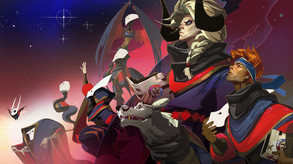
Pyre is a party-based RPG from the creators of Bastion and Transistor. Lead your band of exiles to freedom through a series of mystical competitions in the Campaign, or challenge a friend to a fast-paced ritual showdown in the head-to-head Versus Mode.
Modeled estimate, not a reported figure. How we estimate →
Each in the currency that store quoted — not converted: the gap between two rows is the publisher's pricing, not an exchange rate.
Every market we collect.
About

--the SupergiantsSums Steam only; PlayStation, GOG publish no volume signal, so the true total is higher by an unknown amount.
| Store | Price | Audience | Score | Chart | Est. revenue |
|---|---|---|---|---|---|
SteamYou are here | $19.99 | 9.4Kreviews | 90% | — | $3.9M |
| $19.99 | 2.5Kratings | 94% | — | not modelled | |
Updates
Build ids and update times come straight from Steam's PICS — the same source SteamDB reads. Patch history grows as we record new builds.
Engagement
Reviews
Themes across 816 recent reviews and how positive each mention is. A keyword signal, not full sentiment analysis.
Reviews
in the best ways, this felt like a video game version of my favorite fantasy novel. I can see how pyre built from transistor, and to hades, but everything I love about supergiant is still here: beautifully-rendered art, compelling narrative choices, and innovative gameplay. also, a bunch of little guys, one being mostly an eyeball snake. 10/10 unionize your workplace.
(Played 18 hours on PS, platinumed) While it may appeal to a different and smaller audience than their latter effort "Hades", I argue this is better. Supergiant is talented enough to make you care deeply about whole teams of characters in <15 minutes. On top of the excellent character building, what makes this better than Hades is the team-based tactical decision making that is both fun, challenging, and consequential. Specifically, the game lets you know early that a victory will carve consequences towards the rest of your teammates or your opponents, who may deserve a win more than you. In other words, would your decision-making change if you knew your star player would disappear if you won the game with 7 more games to go this season? And, each game could let your teammates leave purgatory. Ranks as the most underrated game in the last 10 years to me.
Media

Related
Related
Price dynamics, follower growth, revenue and sales trajectories with interactive tooltips
This and every other Pro feature is free until October 20, 2026. A free account is all it takes.
Genres
Stats
All-time low is the lowest price we've recorded for this game since we started tracking it.
Languages: English*, French, German, Spanish - Spain, Russian, Simplified Chinese*languages with full audio support
| $19.99 |
| 237ratings |
| 84% |
| — |
| not modelled |
Matched by title — a reused name can pair the wrong games. * is a critic aggregate. Prices and positions are each store's United States storefront; Epic charts worldwide. Audience and Score too, except Steam's, which is worldwide.
Hours played at review time, across 817 reviews with recorded playtime.
positive critical· bar length = how often the theme comes up
I think this might sneakily be Supergiant's best game to date (including Hades). The characters in this game are incredible, and the choice you have to make between keeping your favorite characters on your team versus giving them their happy ending was always gut-wrenching. The voice acting is superb, and it easily has the best soundtrack of any Supergiant game. I can see folks being put off by the gameplay, though. It's very bizarre. I've heard it called "Wizard Soccer", and I don't think that's unfair. Personally, I enjoyed it, but it can be a hard sell to someone looking at it and saying "I don't know if this is for me"
More a visual novel than a game. Demands replay for presenting choice so well, but Pyre's slow burn provides little drive to actually play twice. Perhaps an expression of life? Worth experiencing.
Fantastic gem of a game, one of a kind. The actual gameplay of the rites is in that perfect easy to learn, hard to master zone. On top of that, the fact that you can lose and the story just continues is amazing. I played on hard mode and when I lost to a team it just made the narrative more interesting. I wish more games tried that because I didn't feel the need to savescum at all. Though I will say is that at times this feels more like a visual novel with a really great minigame. If I could change anything it would emphasize the gameplay more and also shorten a lot of the dialogue. The characters are very well written but I felt at times that I was forcing myself to read through it rather than wanting to. Also they should have allowed for some sort of fast travel or a way to speed up time when wagoning because that's just dead time. But yeah, fantastic game if you don't mind reading and taking your time through it.
i refused to free jodariel because i didn't want her to leave me
definitely the best supergiant games game, don't @ me
Pyre, developed and published by Supergiant Games, stands as one of the most daring and unconventional narrative experiences in modern gaming. Known for their emotionally resonant and stylistically distinct titles like Bastion and Transistor, Supergiant took a risk with Pyre, merging the structure of a visual novel with the mechanics of a fantastical sports competition. The result is an experience that feels unlike anything else—a fusion of story-driven role-playing, tactical action, and moral choice, all wrapped in a richly imagined world of exile and redemption. Pyre is not content to simply tell a story; it asks players to participate in the creation of that story through their choices, triumphs, and failures. The game takes place in a world divided between the Commonwealth, a rigid society that banishes anyone who breaks its laws, and the Downside, a vast, mystical wasteland where exiles are sent to live out their days. You play as the Reader, a literate outcast in a world where reading is forbidden. Rescued by a small band of exiles, you quickly become their guide and strategist, using your ability to interpret the Book of Rites—a sacred text that details the mystical competitions that grant freedom from exile. These contests, known as the Rites, form the heart of the game’s structure and symbolize the hope of redemption. Each victory brings one of your companions closer to liberation, but also closer to departure, as those who win are granted freedom and must leave the group behind. This mechanic transforms what might have been a simple victory condition into an emotional choice—winning means losing someone important. The Rites themselves are a fascinating blend of tactical sport and magical ritual. Two teams of three face off in mystical arenas, each attempting to extinguish the other’s pyre by delivering a celestial orb into it. The rules are simple but layered with nuance. Each character on your team has unique abilities, movement styles, and aura sizes, which affect both offense and defense. Some are fast and agile, capable of darting across the field to score quickly, while others are slower but powerful, able to banish opponents from play with bursts of energy. The challenge comes from learning how to balance these traits, chain passes, and outmaneuver the opposition. The pace of the Rites sits somewhere between a real-time strategy match and a competitive sports game, emphasizing positioning, timing, and coordination. The sense of tension in each match is amplified by the fact that no defeat is final; losing a Rite does not end your journey but instead reshapes it, influencing character relationships and the ultimate direction of the story. Pyre’s decision to let the story continue regardless of success or failure is one of its most inspired design choices. Rather than enforcing perfection, it allows the narrative to adapt dynamically, emphasizing the weight of choice and consequence. Every victory and every loss becomes part of the journey, shaping how your companions perceive themselves and you. It’s a design philosophy that challenges the typical game structure where failure means repetition. In Pyre, failure carries meaning. Losing a match may alter who gains freedom, who remains trapped, and how your group evolves emotionally. These narrative ripples make each playthrough personal and distinctive, encouraging you to accept the story as your own rather than chasing an ideal outcome. Outside the arenas, much of the game unfolds through richly written narrative segments aboard your caravan, the Blackwagon, as your band of exiles travels across the Downside. Here, Pyre resembles an interactive novel, filled with branching dialogue, world-building lore, and moments of quiet reflection. You converse with your companions, learn their histories, and make decisions that affect morale, resources, and relationships. The characters themselves are among Supergiant’s finest creations—each distinct, complex, and layered with humanity despite their fantastical forms. There’s Hedwyn, the optimistic warrior who seeks peace for everyone; Jodariel, the stoic demon whose loyalty masks deep vulnerability; Rukey, the scrappy cur who hides his insecurities behind humor; and countless others who join along the way. As you journey together, bonds form and break, and the group’s dynamic evolves in ways that feel organic and emotionally authentic. When the time comes to choose who earns their freedom, these relationships give the decisions a poignant gravity—every liberation feels like both a triumph and a loss. Visually, Pyre is a masterpiece of color and design. The Downside is depicted as a dreamlike wilderness, filled with desolate deserts, haunted ruins, and glowing celestial fields. The hand-painted art style is lush and vivid, each scene glowing with painterly detail. Supergiant’s artistic direction is unmistakable—fluid animation, bold use of color, and striking character portraits make every frame feel alive. Complementing the visuals is the extraordinary sound design. Darren Korb’s soundtrack is both haunting and uplifting, seamlessly weaving folk, choral, and atmospheric elements that evoke the game’s emotional and spiritual themes. The narration, delivered by Logan Cunningham, adds depth and presence, his gravelly voice acting as both chronicler and conscience throughout your journey. Together, the art and music create an otherworldly atmosphere that lingers long after the game is over. While Pyre’s ambition is undeniable, it’s not without its shortcomings. Some players may find the abundance of text and lore overwhelming, especially early on when the world’s terminology and politics are introduced at length. The pacing can occasionally feel uneven, as stretches of introspective narrative are followed by bursts of frenetic gameplay. Additionally, while the Rites are mechanically unique, they can begin to feel repetitive after dozens of matches, especially if players find themselves favoring certain strategies or team compositions. The lack of an online multiplayer mode also limits the long-term replayability of its competitive component, though a local versus option provides a glimpse of its potential as a standalone sports experience. Still, for most players, these issues are minor compared to the richness of the overall experience. At its core, Pyre is a game about redemption, sacrifice, and the nature of freedom. It asks what it means to lead, to forgive, and to let go. Every decision you make reflects not only your tactical skill but your moral compass. The story’s multiple endings depend on the choices you make, the Rites you win or lose, and the companions you choose to liberate. Few games so elegantly integrate narrative consequence with gameplay mechanics, and fewer still make you feel the emotional weight of those consequences so profoundly. Pyre rewards empathy and introspection as much as strategic thinking, making it as much a moral journey as a mechanical one. In the end, Pyre is more than just a game—it’s a work of art that defies easy categorization. It combines the heart of a novel, the soul of a myth, and the structure of a sport into a single, cohesive experience. Its willingness to subvert expectations and trust the player to accept imperfection is what makes it special. Every match, every dialogue choice, and every sacrifice builds toward a personal story of struggle and redemption that feels entirely your own. Supergiant Games has crafted something rare with Pyre—a game that not only entertains but invites reflection, one that lingers in the mind like an unfinished song, echoing long after the final Rite has been won or lost. Rating: 9/10
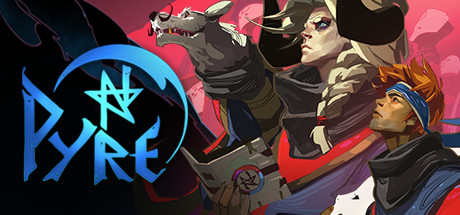
One of my favorite video game stories with great gameplay. The soundtrack is also AMAZING.
It's a shame that this was supposedly Supergiant's least successful game, because I truly believe that they have just progressively made better games every time. I loved Transistor (Bastion was good too), but there's something very special about this game. The way the story and mechanics intermingle is incredibly interesting, and I think the best compliment I can give to the characters is how one of my complaints is not having enough time with them. I can see a larger game where after each rite you get the chance to speak to any/all of your companions about recent events, and how you treat them having larger affects in them both mechanically and narratively. That said, I can understand how that could have made the game needlessly bloated and I commend them for trying to keep more focus. Though I will also complaint that I don't think the player is mentioned enough in the endings. Some characters will mention you, others not even if you spent more time with them, did their personal "quest", etc. so to a certain degree, it can also feel like Supergiant perhaps bit a bit more than they could fully chew. Even then, the game lends itself to being incredibly replayable because of how the story unfold. Although it is wholly linear, it's built of many blocks that can change based on (mostly) your skill as a player (and less so but also the few choices you make). This allows for a game that continues and still ends at the same place even if you lose every single match, with your story obviously reflecting that difference. I think many might have the same struggle I had of wanting to play well because that's obviously how we are conditiones in pretty much every game. Therefore, you may chose to play the game on reduced difficulty to see the "best version" of the ending, and I think you absolutely can do that but if you do I would suggest to do that only as a first playthrough and to then replay on higher difficulty and simply live with the failures. I plan to replay this I'm at the highest difficulty so that which characters I am able to free/save/ascend and how my overarching end game goes is entirely based on my personal skill and the will of the Eight Scribes. I will lastly leave with my one other complaint, that potentially the game wasn't fully optimized for controllers. I played on Steam Deck and it ran great. There is small text to deal with, but you can go through the game without reading it. But when playing at higher difficulty the adversary teams can much more quickly implement a play and you would think that the LR Bumpers would allow you to more easily switch characters on a dime knowing exactly who it would go to, but for some reason hitting RB will sometimes pick the Left character and the LB will pick the right. So you can lose precious seconds from the game not reacting to your button presses the way you intended. All that said, with really only those three complaints from this review being what I disliked, I think this is an incredible game that people who have played Hades and are going back to Supergiant's catalogue should absolutely not miss. Until Hades 2, Supergiant never made any sequels and I am unsure if I would want a sequel to this game or if instead I would love a "remaster" that is further expanded so that the few things that feel missing could be implemented and it could just be further fleshed out.
Players by region
Where this game's players are, estimated from review languages.
Players also reviewed
The games this title's players most often review too — audience affinity.
Related
| Game | Estimated lifetime revenue | Reviews | Review score | Price |
|---|---|---|---|---|
| $3.9M | 9.3K | 97% | $9.99 | |
| $3.9M | 10.9K | 94% | $19.99 | |
| $4M | 3.9K | 81% | $29.99 | |
| $3.9M | 8.2K | 98% | $12.99 | |
| $4M | 15.2K | 95% | $10.99 | |
| $3.9M | 7.4K | 65% | $14.99 |
Related
| Game | Estimated lifetime revenue | Reviews | Review score | Price |
|---|---|---|---|---|
| $25.1K | 68 | 84% | $19.99 | |
| $4.7K | 30 | 90% | $8.99 | |
| $8.1K | 26 | 69% | $19.99 | |
| $1.2K | 6 | 100% | $6.99 | |
| $124 | 3 | 67% | $1.99 | |
| — | 0 | — | — |