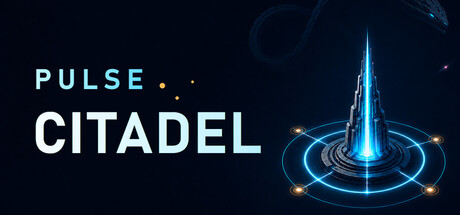
Pulse Citadel is a compact sci-fi defense game where automated combat powers a hand-built research grid. Route Charge into weapons, abilities, speed, and prestige upgrades until the dormant Citadel comes fully online.
Modeled estimate, not a reported figure. How we estimate →
Media
About
Pulse Citadel is a compact sci-fi defense game about bringing a dormant machine fully online.
Choose one visible research node, launch a combat simulation, and turn each destroyed enemy into Charge for the grid. Completed nodes reveal new signals, open new branches, and push the Citadel from a bare core into a layered defense system.
The Citadel fires unlocked weapons by itself. You shape the run by timing active abilities, changing simulation speed, and deciding when to push deeper or end the run.
Unlock Bolt upgrades, Arc Lattice chains, Rail Spike burst shots, and Drone Ring close defense. Add Shockwave, Stasis Pulse, and Overcharge when your route brings those systems online.
The campaign lives on a circuit-style research grid with 75 normal nodes and 12 permanent prestige nodes. Start with Bolt, Stasis, or simulation speed, then branch into weapons, abilities, targeting, shielding, stored Charge, scouting, auto-routing, and outer-grid synchronization.
No in-run shop. No random loot. Your long-term power comes from the routes you light up.
Push through escalating waves, break Siege Carriers, reach Wave 50, and rebuild the grid through prestige. When every permanent outer system is claimed and Core Convergence is complete, launch the final battle and face the final threat.
Single-player desktop defense built around short combat simulations
Automated weapons with active ability timing and speed control
Hand-built research routing with hidden signals and visible progress
Four weapon systems, three active abilities, and routing utility upgrades
Permanent prestige nodes, Steam achievements, and a clear final completion goal
Genres
Stats
Languages: English**languages with full audio support
Related
Related
Momentum
Pace estimated from the game's recent review growth (our daily snapshots) at its own sales-per-review ratio — a momentum signal, not booked sales.