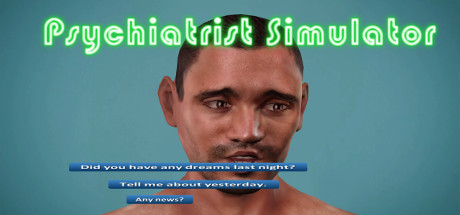
Have you ever wanted to be a psychiatrist? Now you can! Be a shrink for 14 days. Meet 14 patients with unique story of their lives. Diagnosis, treatment, chosen dialogues have impact on history of patients. The choice is yours.
Modeled estimate, not a reported figure. How we estimate →
About
Genres
Stats
All-time low is the lowest price we've recorded for this game since we started tracking it.
Languages: English**languages with full audio support
Engagement
Hours played at review time, across 40 reviews with recorded playtime.
Reviews
Themes across 40 recent reviews and how positive each mention is. A keyword signal, not full sentiment analysis.
positive critical· bar length = how often the theme comes up
Reviews
o jogo é muito dependente de língua mas se não tens problemas com isso o jogo é bom, a nível de gráficos deixou um bocado a desejar com parte da tela desfocada e não dava para ler o que estava escrito, é engraçado para te divertires um pouco, mas só aconselho a comprar em promoção.
This game needs some improvements ... I talked to 3 patients, then the door started to knock, I clicked on the door and I kept seeing faces (I am guessing the potential patients?) Overall a nice concept but not a fan of rushed projects. There's not really paid attention to UI or UX design. I'd recommend playing this if you don't mind an unfinished game. But if you want to play a game that includes some sort of tutorial, this game doesn't have it (yet)?
喜加一的囧游。
Мне кажется что это весьма рофельная игра для компании, чего только стоит долвести всех своих пациентов до ***, но на твиче я испугался смело играть https://youtu.be/-BT8qnghZlo
omg this is terrible xD
Kto dopuścił taki syf na steam? [NIE KUPUJCIE TEGO!] 1) gra odrzuca na menu, w którym nie możesz ustawić głośności itp 2) kamera w "biurze" też działa po swojemu 3) głosy z syntezatora IVONA które nachodzą na siebie jak nie poczekasz na koniec dialogu 4) brak estetyki wyboru dialogu 5) postacie okropnie wymodelowane 6) nie da się wyjść z gry inaczej niż Alt+ F4
my gf likes it but shes crazy
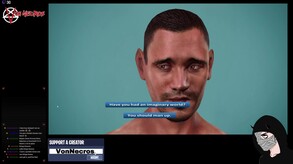
Psychiatrist Simulator, developed and published by Eathrabaria, is an unconventional narrative-driven simulation that places players in the role of a practicing psychiatrist over the course of a two-week in-game period. Rather than focusing on traditional gameplay systems like resource management or skill trees, the experience centers almost entirely on conversation, diagnosis, and the moral weight of decision-making. Across fourteen days, you meet a rotating cast of patients, each presenting their own psychological struggles, personal dilemmas, and unpredictable behaviors. The core premise is compelling: as a mental health professional, your words and treatment choices may influence the direction of someone’s life, for better or worse. The structure of the game unfolds through a sequence of consultation sessions. Each day typically includes multiple appointments, and during each encounter you must respond to patient statements, ask follow-up questions, and decide on treatment options ranging from medication to counseling approaches. Dialogue choices are the primary mechanic, and the tone of your responses—whether empathetic, dismissive, clinical, or probing—shapes how patients react. The game attempts to simulate the complexity of therapeutic relationships by showing emotional shifts in response to your behavior. Some patients become more open and cooperative when treated with care, while others may withdraw or escalate if handled insensitively. One of the most distinctive elements of Psychiatrist Simulator is its tonal unpredictability. While the premise suggests a grounded depiction of therapy sessions, the writing frequently veers into dark humor, surreal scenarios, and exaggerated character traits. Some patients’ stories touch on sensitive themes such as trauma, addiction, or personal crises, while others introduce bizarre or absurd elements that blur the line between psychological drama and satire. This fluctuation in tone can make the experience feel unique and unpredictable, but it can also create moments where the seriousness of certain topics feels undercut by abrupt stylistic shifts. Visually, the game adopts a simple 3D presentation built around modest environments and character models. Consultations take place in a straightforward office setting, with expressive facial animations attempting to convey emotional states. The presentation is functional rather than polished, placing emphasis on dialogue text and decision prompts rather than elaborate cinematics or environmental detail. While the minimalistic design keeps the focus on narrative content, it may leave players wishing for greater visual refinement or more immersive staging. The interface is straightforward, though at times it feels basic compared to more refined narrative simulators. The appeal of Psychiatrist Simulator lies largely in its experimental concept. Few games attempt to simulate the role of a mental health professional in such a direct and dialogue-heavy manner. The idea of shaping patient outcomes through nuanced conversation is inherently intriguing, and moments where your choices visibly influence a character’s trajectory can feel impactful. However, the depth of these branching paths varies. Some decisions create noticeable changes in patient behavior or endings, while others seem to funnel back into similar outcomes regardless of approach. This inconsistency can occasionally diminish the sense of agency that the game aims to provide. Another aspect that divides players is how the game handles its subject matter. By dealing with mental health themes without extensive contextual framing, it sometimes walks a fine line between exploration and oversimplification. Certain scenarios may feel exaggerated or lacking clinical nuance, which can affect immersion for those expecting a more realistic simulation. On the other hand, players who approach the game as a stylized narrative experiment rather than a faithful medical representation may appreciate its willingness to tackle difficult themes in unconventional ways. Pacing is relatively brisk, with the two-week timeframe creating a compact arc rather than a sprawling campaign. The episodic nature of sessions gives the experience a vignette-like quality, where each patient encounter feels like a short story within a larger framework. This structure prevents the game from overstaying its welcome, but it also limits long-term character development. Relationships rarely evolve beyond the span of the designated sessions, making some narratives feel condensed or incomplete. Ultimately, Psychiatrist Simulator stands as an experimental indie project that prioritizes narrative interaction over mechanical complexity. It offers an unusual perspective rarely explored in gaming, challenging players to navigate ethical dilemmas and emotional conversations rather than combat scenarios. While its uneven tone, modest presentation, and inconsistent branching may prevent it from achieving its full conceptual potential, it remains an intriguing attempt to translate the dynamics of therapy into interactive form. For players interested in narrative-driven experiences that explore psychological themes through dialogue and choice, it provides a distinctive—if imperfect—journey into the simulated world of psychiatric practice. Rating: 5/10
I do not recommend this game to anyone who has any mental health issues as it could be very triggering. It's also not a suitable game to play on stream for the same reason. Unfortunately, there['s no way to turn the volume up and down and there doesn't appear to be any kind of instruction.
Симулятор психіатра 10/10 психхворих
Related
Related
Trends
Concurrent players on Steam, sampled daily since tracking started.
Audience
Estimated from the language of this game's reviews — a proxy for where players are, not official Steam demographics.
Related
| NAMCO MUSEUM ARCHIVES Vol 1 | $15.5K | 196 | 79% | $4.99 |
| Petal by Petal | $15.5K | 63 | 90% | $5.99 |
| Deep Space Dash | $15.5K | 364 | 33% | $1.99 |
| AdvertCity | $15.5K | 91 | 53% | $4.99 |
| Scoot Kaboom and the Tomb of Doom | $15.5K | 69 | 93% | $11.99 |
| Jukai Maze | $15.5K | 108 | 89% | $6.99 |