Dive into the world of the energy industry with the Power Grid app, designed by award-winning author Friedemann Friese.
Modeled estimate, not a reported figure. How we estimate →
Prices
The United States storefront in every case, so this compares stores and not countries.
About
Genres
Stats
All-time low is the lowest price we've recorded for this game since we started tracking it.
Sums Steam + Google Play
| Store | Price | Audience | Score | Chart | Est. revenue |
|---|---|---|---|---|---|
SteamYou are here | $9.99 | 65reviews | 54% | — | $19.7K |
| $8.99 | 64ratings | 59% | — | $20.3K |
Matched by title — a reused name can pair the wrong games. * is a critic aggregate. Prices and positions are each store's United States storefront; Epic charts worldwide. Audience and Score too, except Steam's, which is worldwide.
Engagement
Reviews
Themes across 41 recent reviews and how positive each mention is. A keyword signal, not full sentiment analysis.
Reviews
The UI is garbage, they have set up the layout so you can never see all of the information you need at once to play, so you find yourself clicking several menus to open tiny separate windows that all have different elements of the game and are mostly hidden until you reopen them. Overall one of the worst digital adaptations of a board game I have played. This could be all forgivable as the board game its based on is still a fun game, however the game is also buggy and often just stops working without any error message or option other than to close the program. The app does not even have an option for full screen, or really any setting or options at all. There does not appear to have been any updates or fixes released since the game launched, and it appears abandoned. I spent longer that the refund window just trying to get a game to finish/trying to figure out how to play, so it's likely too late for me, but I can still warn others!
Not the greatest game but will def scratch that itch to play power grid. just have to know where to go and when as it is not intuitive at all. but plays well outside of that.
Media

Related
Related
Price dynamics, follower growth, revenue and sales trajectories with interactive tooltips
This and every other Pro feature is free until October 20, 2026. A free account is all it takes.
Related
| Game | Estimated lifetime revenue | Reviews | Review score | Price |
|---|---|---|---|---|
| $19.7K | 82 | 39% | $9.99 | |
| $19.7K | 70 | 86% | $14.99 | |
| $19.7K | 193 | 37% | $2.99 | |
| $19.7K | 58 | 88% | $8.39 | |
| $19.7K | 176 | 95% | $4.99 | |
| $19.7K | 297 | 83% | $2.99 |
Related
| Game | Estimated lifetime revenue | Reviews | Review score | Price |
|---|---|---|---|---|
| $2K | 9 | 44% | $9.99 | |
| $35.7K | 350 | 54% | $4.99 | |
| — | 0 | — | — | |
| — | 0 | — | — | |
| $96K | 188 | 82% | $19.99 | |
| $40.5K | 102 | 58% | $12.99 |
Languages: English*, German**languages with full audio support
Hours played at review time, across 41 reviews with recorded playtime.
positive critical· bar length = how often the theme comes up
Super fun board game. UI here is basic but in my opinion entirely usable for $10. It does feel dated, but if you remember 90s CD-ROM games it's a similar vibe.
El juego de mesa es un clásico y muy divertido sin embargo en digital esta horriblemente optimizado, las mecánicas son lentas y torpes, si no fuera porque primero lo jugué en físico no sé si podría recomendar esta versión digital
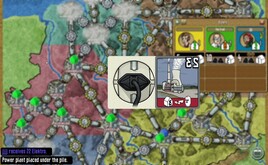
Power Grid on Steam is a digital interpretation of the classic economic board game that prioritizes careful planning, competitive tension, and long-term efficiency over spectacle or instant gratification. From the moment a match begins, the game makes it clear that success is not about flashy moves but about understanding systems, anticipating opponents, and making calculated decisions under constant economic pressure. Players step into the role of power companies expanding electrical networks across a map, competing to supply cities while balancing the costs of infrastructure, fuel, and power plant efficiency. The digital version preserves the deliberate pace and mental weight of the original experience, making each decision feel consequential rather than disposable. At the heart of Power Grid is its layered strategic structure, which unfolds gradually over the course of a match. Auctions for power plants form an early psychological battleground, where overbidding can cripple future growth and underbidding can leave a player technologically stranded. Each plant’s efficiency, fuel type, and capacity interact with the ever-shifting resource market, creating a dynamic economy that reacts directly to player behavior. Buying fuel is never a simple transaction; hoarding resources can drive prices up for everyone, while poor timing can leave a power plant idle and unprofitable. This interconnected system ensures that no action exists in isolation, reinforcing the game’s reputation as a thinking player’s strategy experience. The city expansion aspect adds a strong spatial layer to the economic gameplay. Choosing where to expand your network is as important as what plants you own, since connection costs rise quickly and competition for city slots can lock opponents out of lucrative regions. The map becomes a contested space where indirect conflict thrives, as players block routes, increase expansion costs, or force rivals into inefficient detours. In digital form, these interactions remain intact and continue to generate tension, especially as the game progresses into later phases where margins for error shrink dramatically. The sense of escalation is subtle but persistent, with each round narrowing strategic options and increasing the importance of foresight. While the mechanics are deep and rewarding, the presentation of the Steam version is notably utilitarian. The interface prioritizes functionality over elegance, and while it does convey all necessary information, it can feel dense and unintuitive at first. New players may find themselves wrestling with menus, overlapping windows, and small visual cues that demand close attention. Rather than guiding the player gently into the experience, the game expects patience and a willingness to learn through repetition. For those already familiar with the board game, this is a minor hurdle, but for newcomers, it can make the early hours feel more like study than play. The learning curve is further emphasized by the game’s understated onboarding. Tutorials explain the rules but do not fully convey the strategic depth behind them, leaving players to discover optimal play through trial, error, and observation. This design choice aligns with the game’s roots as a serious board game, but it does limit accessibility. The digital version does little to soften the inherent complexity, instead presenting Power Grid as a system to be mastered rather than a spectacle to be enjoyed casually. As a result, the game rewards persistence and analytical thinking far more than experimentation or impulsive play. Artificial intelligence opponents provide a serviceable challenge, particularly for practicing core strategies, but they lack the unpredictability and subtle psychological pressure of human rivals. Multiplayer remains the most compelling way to experience the game, as auctions, resource manipulation, and territorial competition feel sharper when driven by real player intent. However, organizing multiplayer sessions can require some effort, and the overall online experience feels functional rather than feature-rich. The game’s strength lies more in faithfully reproducing the board game’s systems than in enhancing them with digital-only conveniences. In the end, Power Grid on Steam succeeds as a faithful, uncompromising adaptation of a renowned strategy classic. It offers deep economic gameplay, meaningful interaction, and a strong sense of long-term planning that few games attempt to replicate. At the same time, it demands patience, focus, and a tolerance for a sparse presentation. For players who enjoy complex board games and appreciate strategy built on systems rather than spectacle, this version provides a robust and intellectually satisfying experience. For those seeking a smoother or more immediately engaging digital board game, it may feel austere, but for its intended audience, it delivers exactly what it promises: a demanding, rewarding battle of economic minds. Rating: 5/10
電力会社(ボードゲーム・アナログ版)を買ったので、ルールを把握するためにこれを購入しました。評価の悪い人もいますが、自分はゲーム内容がよく分かったので練習としてとても良かったです。準備や処理を自動でやってくれますし。アナログ版と並行して時々やりたいと思っています。
As experienced physical player, the interface was clunky and confusing. Much worse than playing on BSW despite not speaking German. Then Steam would not refund because they say I'm on a "cloud computer."
Ich muss mich den Vorrednern hier leider anschließen. Ich liebe das Brettspiel! Aber die Umsetzung hier ist unspielbar. Das Tutorial erklärt nur die Oberfläche, die Regeln und den Spielablauf muss man sich von woanders herholen. Selbst mit Rabatt ein absoluter Fehlkauf.
The original board-game itself is legendary, every board-game lover above certain ages should've know by now. But the UI of this port feel like as if we time travel back to 2004, where the original board-game released, and playing a flash version of it. I assume this is a port released 2024? This is not something we would expected modern days. TL;DR The Board-game itself is great, this digital port is meh.
Pesimo
Selling now
See how fast this game is selling right now — estimated copies and revenue per day from recent review growth.
Players by region
Where this game's players are, estimated from review languages.