Planetoid Pioneers, developed and published by Data Realms, is a bold and eccentric physics-based exploration game that defies conventional genre boundaries. It presents itself as part sandbox, part Metroidvania, and part engineering experiment, where chaos, creativity, and curiosity coexist in equal measure. Set on a series of small planetoids floating in space, the game places the player in the role of a stranded astronaut who must explore alien worlds, scavenge materials, and use advanced tools to construct machines and contraptions to survive and escape. What makes Planetoid Pioneers stand out is not its narrative but its sheer dedication to player experimentation. The physics engine, built from the ground up using Data Realms’ proprietary Crush2D technology, is the true star here, driving every interaction and object behavior with an unpredictable yet believable sense of weight, impact, and collapse.
The gameplay thrives on discovery and emergent moments rather than structured objectives. Players explore circular planetoids where gravity bends around each world, allowing traversal in every direction. Nearly every object can be scanned and disassembled into materials or reverse-engineered into blueprints. With these, players can construct new vehicles, weapons, and devices ranging from makeshift jetpacks to bizarre multi-legged walkers cobbled together from spare parts. The game’s building system encourages improvisation—rarely does anything work perfectly, and that’s part of its charm. Watching a self-built rover topple over or a rocket spin wildly out of control becomes both hilarious and educational. The player learns through failure, and each mishap fuels the next experiment. This organic trial-and-error process captures a sense of freedom that few games attempt, let alone master.
While the foundation is technically impressive, Planetoid Pioneers often struggles to provide structure and lasting motivation. The main campaign offers a loose goal of collecting parts to repair your ship, but beyond that, much of the gameplay feels self-directed. The developers intended the experience to be a sandbox of endless possibilities, but this openness can sometimes translate into a lack of purpose. Once the initial novelty of the physics wears off, the player may begin to notice the thinness of the content supporting it. Progression is shallow, and the narrative is little more than a framing device for exploration. The game’s humor and quirky aesthetic fill some of this void, but the sense of discovery eventually gives way to repetition unless the player is deeply invested in building or experimentation. This makes the game both liberating and alienating, depending on the player’s mindset.
From a technical and artistic standpoint, the game exhibits a unique identity. The art style combines comic-inspired character designs with mechanical detail, giving everything a hand-crafted yet tactile feel. The environments are imaginative—fragmented planetoids with different biomes, structures, and alien remnants—but also sparsely populated, leaving large stretches that feel empty once explored. Sound design complements the physics-heavy gameplay with mechanical clanks, sputtering engines, and ambient space noises that reinforce the atmosphere of isolation and absurdity. The music shifts between minimal electronic tones and upbeat sci-fi jingles, emphasizing the game’s offbeat personality. Yet, technical performance can be uneven. Long loading times, occasional stutters, and unpredictable physics reactions sometimes undermine the sense of immersion, reminding the player of the fragile balance between simulation and playability.
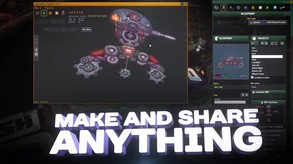
One of the most ambitious aspects of Planetoid Pioneers lies in its dedication to community creation. Data Realms built the game around modding and content sharing, providing powerful tools for players to design their own planetoids, objects, and mechanics. This approach turns the game into a platform rather than a finite experience. With Steam Workshop integration, players can share their inventions or entire custom worlds, expanding the game’s scope far beyond what’s included in the base version. In theory, this ensures endless replayability; in practice, it relies heavily on community engagement to fill the gaps left by the core game’s limited content. For players who enjoy tinkering and pushing creative boundaries, these tools transform Planetoid Pioneers into a sandbox of near-infinite potential. For those seeking a polished and guided adventure, however, it might feel more like an unfinished experiment than a complete journey.
Ultimately, Planetoid Pioneers is a game that celebrates imperfection. It’s a playground for creativity, physics chaos, and mechanical curiosity, designed for players who find joy in the unpredictable and the absurd. The experience can feel disjointed and uneven, but beneath its rough edges lies a fascinating engine and a genuine passion for player-driven exploration. The game doesn’t guide you so much as dare you to figure things out for yourself, rewarding imagination over mastery. It may not deliver the structured satisfaction of a traditional adventure or the narrative depth of a story-driven game, but for those willing to embrace its experimental nature, Planetoid Pioneers offers a singular experience—equal parts science project, slapstick comedy, and cosmic sandbox. It is a flawed yet captivating experiment in interactive physics, one that invites players to revel in discovery, failure, and the chaotic beauty of building something just to see if it works.
Rating: 6/10