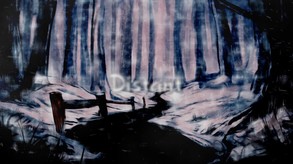
Lost in an intimate snowy town, a palette of individuals are in search of a mysterious artifact said to bring great knowledge and understanding. Lead each character through their quest in this collection of minigames, each with unique personalities and challenges...
Modeled estimate, not a reported figure. How we estimate →
Prices
The United States storefront in every case, so this compares stores and not countries.
Discounts
Every price cut of more than 20% we have observed, in each market that quoted one, with this game's chart position on either side of it. These are episodes, not a model: a sale is one event, and one event cannot tell you what the next one will do.
Reviews, worldwide (the counter carries no country): 0/day in the week to Aug 15 → 0/day in the week after.
For scale, across Steam · Top Sellers · Brazil over the last 30 days: the 25 chart moves that followed a price cut of more than 20% went a median of 10 places towards #1, and the 2,413 moves with no price cut behind them went 2 away. One store, one chart, one country — it is the only place we have enough observations to say even that.
Prices outside the United States have been collected since 6 August 2026 and chart positions since 19 July 2026, so a cut older than that has no market to compare and a market that joined later has no history yet. Nothing here is converted between currencies.
About
Genres
Sums Steam only; PlayStation publishes no volume signal, so the true total is higher by an unknown amount.
| Store | Price | Audience | Score | Chart | Est. revenue |
|---|---|---|---|---|---|
SteamYou are here | $7.99 | 53reviews | 70% | — | $7.8K |
| $7.99 | 235ratings | 78% | — | not modelled |
Matched by title — a reused name can pair the wrong games. * is a critic aggregate. Prices and positions are each store's United States storefront; Epic charts worldwide. Audience and Score too, except Steam's, which is worldwide.
Engagement
Reviews
Themes across 41 recent reviews and how positive each mention is. A keyword signal, not full sentiment analysis.
Reviews
A lélek kérdését nemcsak a margóra pakolták ki a fejlesztők, hiszen a történet is így kapja meg egyediségét rögtön az első órában: miután egy különös rituálét van szerencséd megtapasztalni, látni kezded a halottakat, és mások lelkének múltjában is képes leszel turkálni – akarva vagy akaratlanul. Ez az újdonsült képesség sok előnnyel nem, csak kellemetlen mellékhatásokkal jár egy olyan világban, ahol az emberek nemrég egy valódi istent voltak kénytelenek padlóra kényszeríteni, és ahol egy befejezett háború helyét két másik veszi át, nem nagyon veszik jó néven a lelkekkel való játszadozást. A Pillars of Eternity történetének, világának zsenialitását az adja, hogy a készítők remekül használták ki ezt a kis plusz képességet, hogy megadják a keretet ahhoz, miért is kell faluról falura, városról városra rohangálnod, miközben minden egyes helyen korrupt, belülről elrohadt közösségekkel találkozol, ahol mindenki csak a saját érdekeit próbálja érvényesíteni mások kárára. Hogy az így megismert, velejéig romlott életutakat megpróbálod megjavítani, jó útra téríteni, vagy szimplán csak profitálni akarsz belőlük, az azon múlik majd, hogy milyen identitást adtál választott karakterednek – vagy hogy milyen döntéseket bírsz nyugodt szívvel meghozni. Semmi sem mutatja meg jobban, hogy egy fiktív univerzum jól van-e megalkotva, mint amikor remegő kézzel kattintunk a következő párbeszédre, akár perceken át megfontolva döntéseink súlyát. Ezt pedig a Pillars of Eternity gond nélkül elérte, és csak néhány órára volt hozzá szüksége. A játék hossza ennek többszöröse – így talán már érthető, hogy miért tud mindez ennyire könnyen magába szippantani.
Media

Related
Related
Price dynamics, follower growth, revenue and sales trajectories with interactive tooltips
This and every other Pro feature is free until October 20, 2026. A free account is all it takes.
Related
| Game | Estimated lifetime revenue | Reviews | Review score | Price |
|---|---|---|---|---|
| $7.8K | 53 | 91% | $9.99 | |
| $7.8K | 60 | 83% | $5.99 | |
| $7.8K | 66 | 82% | $6.99 | |
| $7.8K | 73 | 77% | $4.99 | |
| $7.8K | 176 | 61% | $1.99 | |
| $7.8K | 91 | 57% | $3.99 |
Related
| Game | Estimated lifetime revenue | Reviews | Review score | Price |
|---|---|---|---|---|
| $4.2M | 23.6K | 88% | $9.99 | |
| $228.2K | 1.8K | 81% | $6.99 | |
| $43.7K | 614 | 89% | $4.99 | |
| $11.7K | 38 | 42% | $9.99 | |
| $21.2K | 198 | 86% | $6.99 | |
| $10.6K | 43 | 93% | $12.99 |
Stats
All-time low is the lowest price we've recorded for this game since we started tracking it.
Languages: English**languages with full audio support
Hours played at review time, across 41 reviews with recorded playtime.
positive critical· bar length = how often the theme comes up
Good puzzle game that is not too hard but still gives little challenge to keep your brain going. Idea for game is very unigue and deals on psykology so it is very interesting take and even little emotional. Art style is good and music is also good.
Достаточно странная, психоделическая игра. При запуске вообще непонятно, что делать и почему всё так происходит. На вид она атмосферная... но с пониманием происходящего в ней явные проблемы.
⭐⭐⭐⭐⭐
2/5 Not my game Even though the atmosphere (visuals, sound, etc...) is good, I didn't enjoy this experience that much. Not a bad game itself, I just find it a little boring and shallow, I'd prefer to have a stronger story behind. Also the puzzles are not my style, I thought it was a different type of game.
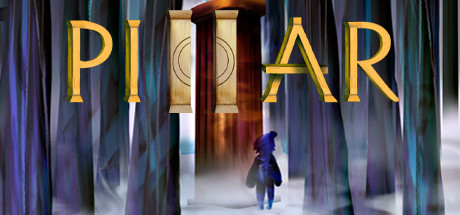
*Pillar*, created by Michael Hicks and Gonçalo Antunes and published by MichaelArts, is a puzzle game that feels less concerned with conventional entertainment and more focused on exploring ideas through interaction. It presents itself as a quiet, almost meditative journey through a small, snow-covered town, but beneath that calm exterior lies a design built around abstraction and metaphor. Instead of guiding players through a clear narrative or escalating difficulty curve, the game asks them to interpret its mechanics as expressions of human personality, making the experience as much about reflection as it is about problem-solving. The structure revolves around a series of short gameplay segments, each tied to a different character who embodies a particular personality trait. These traits are not just thematic labels—they directly shape how each segment plays. In one moment, you might be navigating space cautiously, avoiding contact and managing distance, while in another, you are encouraged to seek out interaction and rely on others to progress. This constant shift in rules keeps the experience unpredictable, forcing players to adapt their thinking with each new scenario. It’s a clever idea, and when it works, it creates moments where gameplay and meaning align in a way that feels deliberate and thoughtful. What makes *Pillar* stand out is its commitment to non-verbal storytelling. There is little to no direct explanation of what is happening or why, leaving players to piece together the connections between characters, mechanics, and themes on their own. This approach gives the game a sense of mystery and invites personal interpretation, but it also comes with a trade-off. Without clear guidance, it can be difficult to understand the intent behind certain puzzles, and progress sometimes feels less like solving a problem and more like experimenting until something works. For players who enjoy ambiguity and abstract design, this can be part of the appeal. For others, it may lead to frustration. The puzzle design itself is uneven. Some sections are genuinely inventive, using simple mechanics in ways that feel fresh and meaningful. These moments highlight the game’s potential, showing how effectively it can communicate ideas through interaction alone. However, not every segment reaches that level. Certain puzzles feel underdeveloped or overly straightforward, lacking the depth needed to make them memorable. This inconsistency affects the pacing, as the game moves between engaging concepts and less compelling ones without a strong sense of progression. Visually, the game leans into a minimalist, stylized aesthetic that complements its introspective tone. The snowy town setting creates a sense of isolation, with muted colors and soft lighting reinforcing the quiet atmosphere. The environments are not detailed in a traditional sense, but they are carefully composed, allowing players to focus on movement and interaction without distraction. This simplicity works in the game’s favor, giving it a cohesive look that supports its themes without overwhelming them. The audio design plays a significant role in shaping the experience. The soundtrack, composed by Michael Hicks, uses ambient tones and subtle musical shifts to mirror the emotional undercurrents of each segment. It doesn’t demand attention, but it quietly enhances the mood, making transitions between different personalities feel more cohesive. In a game where so much is left unsaid, the music becomes an important part of how meaning is conveyed, helping to bridge the gap between abstract mechanics and emotional resonance. Where *Pillar* struggles most is in how it ties its ideas together. While each segment has a clear conceptual identity, the connections between them are not always easy to grasp. The lack of a defined narrative thread can make the experience feel fragmented, as if it is a collection of ideas rather than a unified whole. This isn’t necessarily a flaw for players who enjoy open interpretation, but it does make the game harder to engage with on a traditional level. In the end, *Pillar* is a game that prioritizes expression over clarity and experimentation over consistency. It doesn’t aim to provide a polished or universally accessible experience, and it doesn’t always succeed in balancing its ambitions with its execution. However, it offers something genuinely different—a puzzle game that uses its mechanics to explore aspects of human behavior in a way that few others attempt. For players willing to engage with its abstract design and accept its imperfections, it can be a thought-provoking and memorable experience. For those looking for structured challenges or clear objectives, it may feel too opaque to fully enjoy. Rating: 6/10
полный шлак без сюжета
This epileptic game caused my friend to go into a seizure. After he puke don the floor he started babling some psychologic ♥♥♥♥. It was amazing! Happiness out of Persistence!
Странная игра. Вначале игры ты просто не понимаешь, что делать.. Психоделическая инди игра. И не интересная вообще... Тупо ходишь куда-то всю игру и от кого-то прячешься
Simply broken to where completion is unachievable
Selling now
See how fast this game is selling right now — estimated copies and revenue per day from recent review growth.
Players by region
Where this game's players are, estimated from review languages.