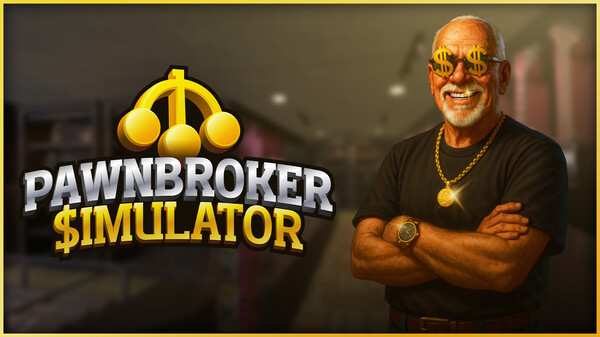
Enter Pawnbroker Simulator, where every deal, appraisal, and choice forges your path to pawn shop greatness. Sharpen your instincts, unlock new talents, craft a storefront that turns heads, offer high-stakes loans, and stay one step ahead of cunning thieves.
Modeled estimate, not a reported figure. How we estimate →
Prices
The United States storefront in every case, so this compares stores and not countries.
Discounts
Every price cut of more than 20% we have observed, in each market that quoted one, with this game's chart position on either side of it. These are episodes, not a model: a sale is one event, and one event cannot tell you what the next one will do.
Reviews, worldwide (the counter carries no country): 1/day in the week to Aug 14 → 1.14/day in the week after.
For scale, across Steam · Top Sellers · Brazil over the last 30 days: the 25 chart moves that followed a price cut of more than 20% went a median of 10 places towards #1, and the 2,413 moves with no price cut behind them went 2 away. One store, one chart, one country — it is the only place we have enough observations to say even that.
Prices outside the United States have been collected since 6 August 2026 and chart positions since 19 July 2026, so a cut older than that has no market to compare and a market that joined later has no history yet. Nothing here is converted between currencies.
About
Dive into the core of the game: examine glittering treasures up close, negotiate deals, accept pawned goods, close sales, and guard your shop with vigilance. Put your eye for value to the test, outsmart shrewd customers, ride the waves of market demand, and protect your haul from thieves lurking by day and prowling by night.
Negotiation is your engine for wealth. Read the room, strike at the perfect moment, and keep your margins fat without letting a deal slip away. Train your eye to spot fakes, uncover treasures among hundreds of unique items, and let your growing expertise lead you to clever pricing and foolproof trades. Bring in specialists for rare finds and build mastery in Fine Art, Arms, Gear, and Collectibles to boost your accuracy and repair prowess.
Each customer is a puzzle with quirks and secrets. Uncover who is trustworthy, who is impatient, who drives a hard bargain, and who hides traits like Hoarder, Reseller, or Aggressor. Build relationships with regulars to access secret deals and golden opportunities. Level up your skills in appraisal, negotiation, prediction, and management, and earn qualifications that open doors to new perks and clever strategies.
Turn your shop into a showstopper with vibrant colors, chic furniture, dazzling décor, and a signboard that demands attention. Personalize every tile, wall, and corner to your vision. Grow your space, craft displays that lure in the right buyers, and juggle storage with limited slots. Then, defend your turf: set up cameras, alarms, locked cases, and reinforced doors, and face down thieves when all else fails. Every day is a fresh challenge, making security a battle of brains.
Feel the pressure as bills pile up and expenses mount. Pay rent, utilities, upkeep, and maintenance for items while balancing loan risks and changing item values in a dynamic economy. Monitor your cash flow, plan upgrades carefully, and protect your reputation to unlock rarer items and more demanding customers. Every decision affects your survival.
250+ items with dynamic market values and condition-based pricing
Interactive, confidence-based appraisal system
Advanced negotiation shaped by personality traits and patience
Full pawn system with loans, interest rates, and reclaim verification
Item restoration mini-game tied to skills and qualifications
Store expansion and tile-by-tile customization
Physical slot-based storage management
Real security gameplay: cameras, alarms, locks, and thief confrontation
A dynamic demand system reacting to economic conditions
Reputation tiers unlock rare items and tougher customers
Sums Steam only; Xbox publishes no volume signal, so the true total is higher by an unknown amount.
| Store | Price | Audience | Score | Chart | Est. revenue |
|---|---|---|---|---|---|
SteamYou are here | $14.99 | 410reviews | 73% | — | $221K |
| Free | 0ratings | 0% | — | not modelled |
Matched by title — a reused name can pair the wrong games. * is a critic aggregate. Prices and positions are each store's United States storefront; Epic charts worldwide. Audience and Score too, except Steam's, which is worldwide.
Engagement
Reviews
Themes across 81 recent reviews and how positive each mention is. A keyword signal, not full sentiment analysis.
Reviews
Pawnbroker Simulator could be fun, but boy oh boy, does the game really show it's weakness when you have to handle every piece that walks through the door. You can't just simply refuse to accept something or the seller gives a bad rating. Customer satisfaction is a real pain in the bum, and it makes the game not fun after a short time. I think in a lot of ways the game should be simplified, being able to automatically deal with customers or set prices and have items added to the shelves without you have to walk it over. The game just ends up being a giant slogfest. I honestly would rather play something else that feels rewarding without having to micromanage everything. For now, I'd keep this game on the back burner. Keep an eye on it, see if there are improvements. But at this state I can't recommend until the devs clean up the game a bit.
This is a very fun game. Is it perfect? No, not at all. It has some balancing issues. But the bones are good and the gameplay can be immersive if you let it. As every simulation game, you start off with a shop from your late father. A family member is guiding you through the first steps, which is the typical tutorial. After that, it is up to you how to manage your business. The game is a shop simulator disguised as a pawnshop. Instead of ordering your stock from a supplier, your customers are your suppliers, and the trash if you run out to search the trash bins around the block for some low tier items. If you're lucky, you'll get a mid tier item which is worth a couple hundred dollars. To get the most out of your shop, you need to upgrade your shop appeal, your shop and item attraction or synergy and your character. Shop appeal goes up by decorating and having better items in your showcases. The synergy or attraction of your items are a bit more difficult to manage. It will give a boost in shop appeal too. The difficulty lies in having the correct items showcased together, which is mostly tied to the categories of the respective items. If you mismatch your showcases, the attraction goes down and with that your appeal too. Cleanliness is also part of the game, you start off with a simple manual cleaning mechanic but this part can luckily be replaced by automated vacuum bots. your character can be upgraded by unlocking upgrade stars, which can be spend in four skills that each give you bonusses for running your shop. The best skills help you with appraisal and pricing your items. You'll get skill points by levelling up. My current level is 50 or 51 and I have one more thing to unlock, which costs 5 skill points. Each item has categories, for which you need to get better knowledge. Increasing your knowledge is automatically done when you investigate items that cross your counter or that you find in the trash. Better knowledge seem to add to better appraisals. The shop can be upgraded two times, which will enlarge your shop area and storage area. There is not much customizing in the area. You can't build walls or change the shopfront. You'll end up with three identical shop fronts with each a door, and three doors to your storage area. Basically, each expansion is a copy of the first shop area. The last upgrade section is based on unlocking licenses. With these licenses you are able to get better items or get other perks that can help you with running your business. Shop interior is important too, the game has a theft mechanic. Thieves will get in our store and take stuff, usually the expensive items. The fun part is to attack the thieves with a slipper to get your item back. This mechanic can be disabled in the options, it can also be countered with blocking off your items from the customers. My shop is divided in half with counters and showcases. Customers can't reach any item but will "look" around and buy items from every showcase. To optimize the pawning mechanic, I have my counter in front of one of the storage doors. I run in and out to store or get pawned items easily. Because items aren't accessible to customers, I also run around getting each item they buy or put each bought item away to keep the attraction high. The unbalanced part of the game lies mostly in the end game. Each customer has traits, and each customer negotiates in the same way. I usually automatically reject certain customers because I know they don't come below the top price of the item(s) if they want to sell them. With buying there seems to be a bit more randomness to how far they want to stretch what they are willing to pay. High ticket items usually loose money when negotiating. I found that at least 50$ with single items is not counted while haggling. In bundles it is more random but it can go up to a 100$. I.e. an item is listed for 24587 dollars, while haggling the max price you can ask the customer could be 24550. It automatically makes you loose money. But to be honest, in my current game this doesn't matter if the daily profit is about 100k. The pawning system is not balanced well. I receive a storage rack full of pawned items for each Monday. The amount of items lies between 50 and 80 packages. Tuesdays usually get about 30 pawned items and Wednesdays to Fridays usually less than 20. This makes the Monday a very busy day. This is where my setup is useful because I can organise the Monday packages on Sunday, making it easy pickings when Monday business hours start. Customers always start haggling around the top price of the item. Most customers will accept offers well below the market prices, at least in my game. I started a couple new games to see how RNG works. In one game I got every customer with bad traits, that lead to them not willing to haggle and making me unable to get new items at reasonable prices. Another game, customers came in with items that are well worth over the amount of money that I had. I am talking about items well above the 20k price tag. I think the RNG could be handled better, to balance the game out more. The RNG for offered items needs work too. In my current game, what the customers offer me consist mostly of items like swords, shields, jewels, ancient knives, masks and statues. Less frequent are treasure maps and pendants. Very rarely I get other items. There are supposed to be firearms too, in my 40+ hours, I've seen 5 rifles past the ones that you get to unlock a license, but all as pawned items. I just don't get many items that exist in the game. In some other games I found that there are many items that I didn't see in my main game. Like tools, pillows, guitars and more. I would like to see more customers. Sometimes the same customer is twice or three times in the shop. The game is great already and it can be even better, especially with some balancing. A bigger store, or even a way to customize your store with walls, would be amazing too. If you love simulation games, this could be for you. I've seen many of the negative reviews too and I understand that the pacing can be a struggle. All I can say is that, for me, it all came down to shop interior and easy access to the storage area. I play without stamina, because I dislike that in a simulation game, so I can run around 24 hours per day. With stamina, it is surely more demanding. The hard part is to get through the first couple phases of the game. Unlocking the correct skills early give you a boost in appraising and pricing your items.
Media

Related
Related
Price dynamics, follower growth, revenue and sales trajectories with interactive tooltips
This and every other Pro feature is free until October 20, 2026. A free account is all it takes.
Genres
Stats
All-time low is the lowest price we've recorded for this game since we started tracking it.
Languages: English*, French, Italian, German, Spanish - Spain, Japanese, Korean, Polish, Portuguese - Brazil, Russian, Simplified Chinese, Turkish*languages with full audio support
Hours played at review time, across 81 reviews with recorded playtime.
positive critical· bar length = how often the theme comes up
You can normally get a feel for a game pretty quickly, and it didn't take long for me to realise this is not the game for me, it feels super repetitive in the first 10-15 minutes which is not a good sign for whats to come - refund requested
更新资质系统你更新好行吗,旧存档以前全有的资质你也不给我覆盖,强制我关店,客人来赎,我还不能开店我违约?脑残开发,不会更新别更新,以前都有的武器资质你和我说要重新弄,那我以前存档就废了?
I’ve enjoyed the game and have already paid off the £200k. It’s not a hard game, but I don’t like how you keep getting the same items. There needs to be a greater variety of items to keep the game interesting. Reason I can't recommend this at the moment as it gets boring fast.
[h3] Like those Pawn Shop (Pawn Stars) reels? [/h3] I sometimes come across those reels or tiktoks clips of people negotiating for collectors items, or ancient artifacts that are worth thousands of dollars, then it hit my mind playing a simulator should be fun. Luckily I found this simulator and it's everything I wanted. Here you manage your shop, negotiate with customer by buying or reselling items. Each client can have different personalities which is cool because it makes some negotiations easier or tougher. You can restore damaged items and increase their value. 10+ hours played and no bugs or glitches experienced so far too which is great.
Going to have to give a thumbs down for this one. The game is just too hectic. People are constantly coming in selling you up to 5 items at a time, and you always have a line of people a mile long waiting to sell you more. You don't have time to repair things. The demo was much more chill where they sold one thing at a time, and repairing wasn't a thing. You could stay open 24/7 and just help people, put their item for sale, rinse and repeat. It was simple, but it worked. With the introduction of repairing items and customers selling 5 items at a time, you just don't have time. The line gets backed up if you try to repair 1 item or put 5 items for sale without even repairing them. Heck, the line backs up anyway. And don't think you'll get down time at night. If you choose to stay open at night, you'll be just as busy. You never have a chance to repair your massive heap of items. This could all be solved if they had it where time paused at the beginning or end of the day so that you could do this stuff before continuing on, but no, why would we want to do something logical like that in a video game? The time could pause at 9 AM (when you're "supposed" to open), 6 PM (when you're "supposed" to close), or 12 AM midnight (when the "end of day" report comes up). This would solve much of the problem. And there's bills to pay too, which add up over time, so if you wanted to close the shop to repair stuff, organize, price stuff, etc., well you'll be missing out on sales. And since you're constantly buying stuff, you might need that money. Also by default you get fines for being open before 9 AM or after 6 PM, but it's extremely easy to get a permit in order to stay open so what's the point? lol If they wanted to just leave it that way as part of the challenge of the game then fine. But since it's not, I feel incentivized to stay open at night to be able to pay my bills. You'll be restricted approximately your first 2 nights, at most, when you can't open but that's it. It's an entire mechanic with no purpose to it at all. Game is too hectic, too stressful, not chill like the demo. A lot has changed since the demo. I do NOT recommend this game!
Pawnbroker Simulator approaches the business-management genre from an unusual angle, placing the player behind the counter of a pawn shop where almost every object represents both an opportunity and a financial risk. Developed by Next Sky Games and published by Ultimate Publishing, Ultimate Games S.A., and PlayWay S.A., the game focuses on building a small operation into a more successful business through careful appraisal, bargaining, loans, inventory management, security, and store improvements. Instead of simply purchasing products from suppliers and selling them at predetermined prices, the experience revolves around determining what customers bring through the door and deciding whether a deal is genuinely worth taking. Appraisal is one of the most important parts of the experience. The game includes more than 250 different items, with prices influenced by condition and a changing market. Examining merchandise therefore becomes more meaningful than simply looking for the highest number on a price tag. Players gradually develop expertise that helps them recognize valuable objects, questionable merchandise, and potential bargains. Knowledge can be improved in categories including Fine Art, Arms, Gear, and Collectibles, while specialists can assist with unusual finds. The confidence-based appraisal system adds uncertainty to transactions, which fits the pawn-shop theme well because an inexperienced player cannot always be completely certain that an apparently valuable object is actually a great investment. Negotiation works alongside appraisal and forms another major part of the economic gameplay. Customers have different personalities, patience levels, and characteristics that affect how transactions unfold. Some may be difficult negotiators, while others can possess traits such as Hoarder, Reseller, or Aggressor. This makes bargaining more interesting than repeatedly choosing the lowest possible offer. Pushing too hard can jeopardize a promising transaction, whereas accepting a customer's demands too quickly can destroy the potential profit margin. Regular customers can also become more valuable as relationships develop, opening opportunities for special deals and giving some continuity to the people who visit the shop. The actual pawn system gives the game an important distinction from ordinary retail simulators. Players can accept pawned property and issue loans with interest rather than treating every object as an immediate purchase. Verification is required when customers return to reclaim their belongings, introducing additional responsibility to the process. Loans also create another layer of financial planning because money committed to one transaction cannot necessarily be used elsewhere immediately. Combined with changing market demand, this means a theoretically profitable object can still become a poor decision if too much capital is tied up at the wrong moment. Financial management consequently plays a substantial role. Rent, utilities, maintenance, item upkeep, improvements, and other costs constantly compete for available cash. Successful management requires more than accumulating expensive merchandise because a shop filled with valuable stock can still struggle if there is insufficient money available to cover operating expenses. Reputation provides another progression system, with higher tiers granting access to rarer merchandise and more demanding customers. Skills covering appraisal, negotiation, prediction, and management can also be developed, while qualifications provide additional advantages. These mechanics establish a satisfying progression from an inexperienced shopkeeper making uncertain decisions to a much more capable business operator. Restoration adds further value to the appraisal and inventory systems. Damaged merchandise is not automatically worthless because players can restore items through a dedicated mini-game connected to their skills and qualifications. This creates situations where an object in poor condition can actually represent an attractive investment. Buying cheaply, restoring effectively, and eventually selling at a better price produces a rewarding business cycle. It also gives condition-based pricing greater importance because damaged goods are not merely weaker versions of pristine ones but potential projects for players willing to invest time and resources. Shop customization and expansion provide a more visual form of progression. Floors, walls, furniture, decorations, displays, signage, and other elements can be personalized, allowing the business to evolve from a basic workplace into something more distinctive. Expansion has practical consequences as well because inventory is handled through limited physical storage slots. Players cannot simply accumulate endless merchandise without considering where everything will go. Displays can be arranged to attract suitable customers, while additional space provides more freedom for storing and presenting valuable goods. This helps connect customization with actual management instead of making decoration entirely cosmetic. Security introduces another welcome source of pressure. A pawn shop naturally contains items attractive to criminals, and the game allows players to invest in cameras, alarms, locks, reinforced doors, and secure display cases. Thieves can create problems during both daytime and nighttime situations, and players may eventually need to confront them when preventative measures fail. The interesting part is that security becomes another financial calculation. Spending heavily on protection reduces the money available for inventory and expansion, but neglecting security risks losing merchandise that may have required considerable investment to obtain or restore. The dynamic economy helps connect these individual systems. Demand can react to economic conditions, meaning today's attractive purchase may not necessarily remain equally profitable later. Combined with condition, restoration, negotiation, expertise, customer behavior, and limited storage, this gives inventory decisions more depth than simply purchasing everything below an obvious market price. Pawnbroker Simulator is at its strongest when several of these mechanics overlap and force compromises. A rare item might offer an excellent return but consume most available cash, require restoration, occupy valuable storage space, and demand improved security before it can safely be displayed. The first-person presentation is also appropriate for the concept because much of the appeal comes from physically operating the store rather than managing it entirely through spreadsheets and menus. Examining objects, interacting with customers, organizing merchandise, modifying the premises, and protecting the business all contribute to the feeling of personally running the shop. The game supports single-player play and includes Steam achievements, Steam Trading Cards, Steam Cloud, and Family Sharing. The developer also discloses that AI tools assisted with specific store asset components before human artists edited, refined, and finalized those assets. Overall, Pawnbroker Simulator offers a distinctive variation on the increasingly crowded business-simulator genre. Appraisal uncertainty, personality-driven bargaining, loans, interest, restoration, fluctuating demand, reputation, limited storage, customization, security, and operating expenses combine into a surprisingly involved representation of running a pawn shop. Its repetitive structure and uneven depth prevent it from becoming an exceptional management simulation, but the interconnected mechanics provide enough decision-making to keep the central business loop engaging. For players who enjoy slowly building wealth through calculated purchases, careful negotiations, and constant reinvestment, it provides a solid and appropriately specialized simulation experience. Rating: 7/10
十分枯燥,顾客只会反复售卖差不多的货,甚至会接连拿出完全相同的东西,玩下来比上班都累
没话讲
Active players
Estimated daily and monthly active players (DAU/MAU) modeled from peak concurrency.
Players by region
Where this game's players are, estimated from review languages.
Players also reviewed
The games this title's players most often review too — audience affinity.
Related
| Game | Estimated lifetime revenue | Reviews | Review score | Price |
|---|---|---|---|---|
| $16K | 77 | 43% | $5.99 | |
| — | 0 | — | — | |
| — | 0 | — | — | |
| $2M | 3K | 86% | $19.99 | |
| $868.8K | 1.7K | 92% | $11.99 | |
| $323.8K | 936 | 77% | $8.99 |
Related
| Game | Estimated lifetime revenue | Reviews | Review score | Price |
|---|---|---|---|---|
| $221K | 851 | 57% | $13.99 | |
| $221K | 846 | 77% | $14.99 | |
| $221.1K | 168 | 80% | $29.99 | |
| $220.9K | 718 | 35% | $9.99 | |
| $220.8K | 1.1K | 87% | $4.99 | |
| $221.1K | 350 | 80% | $24.99 |