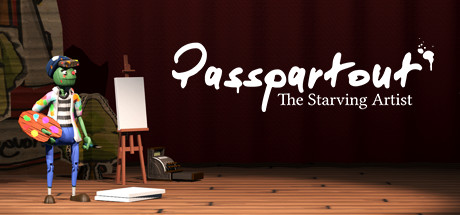
Passpartout: The Starving Artist is a creative life simulation developed and published by Flamebait Games that offers an experience unlike most management or simulation titles. Instead of placing players in charge of businesses, cities, or large-scale projects, it focuses on the personal journey of an aspiring painter attempting to earn a living through original artwork. Set in a charming interpretation of the Parisian art scene, the game blends humor, creativity, and lighthearted satire into a unique adventure where every painting is created by the player. Rather than relying on preset designs or collectibles, the game makes artistic expression its central mechanic, encouraging players to embrace experimentation while navigating the unpredictable world of galleries, critics, and customers.
At the heart of the experience is an intuitive painting system that allows complete creative freedom. Players begin with a blank canvas and a modest collection of brushes and colors, using simple tools to produce anything from abstract compositions to humorous sketches or surprisingly detailed illustrations. There are no strict objectives dictating what should be painted, allowing imagination to take center stage. Once a piece is finished, it can be displayed for sale, where passing customers react according to their own preferences. Some buyers appreciate originality, while others gravitate toward familiar or visually appealing works, making every sale feel uncertain and reinforcing the idea that art is ultimately interpreted differently by everyone.
Financial survival plays an important role throughout the campaign. Selling paintings provides the income needed to cover the artist's daily expenses, including food, rent, and other necessities that keep the creative journey alive. The pressure to continue producing artwork creates an engaging balance between personal expression and practical decision-making. Players must decide whether to chase commercial success by adapting to customer demand or remain faithful to their own artistic vision, even if it means risking slower progress. This constant tension mirrors many real-world creative careers and gives the gameplay an unexpectedly thoughtful foundation beneath its whimsical presentation.
As reputation grows, the artist gains access to increasingly prestigious galleries and wealthier clientele. Advancement introduces more demanding critics whose reviews influence both popularity and future opportunities. Their opinions are often subjective, contradictory, and occasionally amusing, reflecting the unpredictable nature of the professional art world. Instead of providing straightforward performance metrics, the game encourages players to interpret criticism and decide how much influence those opinions should have on their creative direction. This progression system keeps the experience engaging by continually introducing new challenges without abandoning its relaxed atmosphere.
The game's visual identity perfectly complements its premise. Every environment, character, and animation embraces a colorful hand-drawn aesthetic that resembles an illustrated storybook brought to life. The expressive customers and gallery settings create a lively backdrop that reinforces the playful tone, while the smooth presentation keeps the focus on the artwork players create themselves. Accompanying the visuals is a relaxing jazz-inspired soundtrack that captures the spirit of a cozy Parisian café, making the act of painting feel calm and enjoyable even during moments of financial pressure.
Accessibility is one of Passpartout's greatest strengths. The painting tools are intentionally easy to understand, making the game welcoming for players with little or no artistic experience. Skilled artists can invest time producing intricate illustrations, while others may enjoy creating amusing doodles or experimental abstract pieces. Since customer reactions are driven more by the game's simulated market than by technical artistic quality, everyone has the opportunity to succeed in their own way. This design philosophy transforms the game into a creative sandbox where imagination matters more than artistic ability.
Despite its originality, the game has a few shortcomings. The painting interface, while approachable, lacks the advanced features that experienced digital artists might expect, limiting the complexity of larger projects. The gameplay loop can also become repetitive during extended sessions, as creating paintings, selling them, and responding to critics follows a familiar rhythm throughout the campaign. Additionally, customer preferences occasionally feel inconsistent, making certain sales appear based more on chance than careful strategy. These aspects may frustrate players seeking deeper simulation mechanics, although they also reinforce the unpredictable character of the art market the game seeks to portray.
Passpartout ultimately succeeds because it delivers more than a simple painting simulator. It serves as a humorous reflection on creativity, artistic ambition, commercial success, and the challenge of balancing personal passion with financial necessity. The game invites players to question what gives art its value and whether popularity should define creative achievement. Combined with its memorable visual style, relaxing atmosphere, and highly original gameplay, it offers an experience that stands apart from conventional simulation titles. While it may not satisfy those looking for complex management systems or advanced artistic software, it excels as a charming indie adventure that celebrates imagination and individuality.
Rating: 9/10