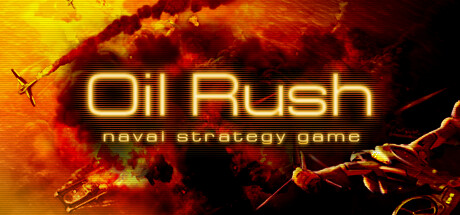
Oil Rush is a real-time strategy game developed and published by Unigine Corp. that explores a unique vision of a post-apocalyptic future where rising oceans have swallowed most of the planet. In this flooded world, humanity survives on scattered platforms, industrial outposts, and fortified naval installations while competing for control of the last remaining oil reserves. By shifting the traditional RTS battlefield from land to sea, the game attempts to offer a fresh strategic experience built around naval warfare, territorial expansion, and resource control.
The setting is one of the game's most memorable qualities. Rather than presenting a conventional war between armies across continents, Oil Rush imagines a world where civilization has adapted to life on the ocean after environmental catastrophe. Massive remnants of cities protrude from the water, abandoned structures dot the horizon, and industrial complexes float across the seas. This visual identity immediately distinguishes the game from many other strategy titles and provides a strong foundation for its atmosphere.
At its core, the gameplay revolves around controlling strategic locations rather than constructing traditional bases. Players capture oil rigs, production platforms, and military installations that generate resources and units automatically. Because control of these locations directly affects economic strength and military power, territorial expansion becomes the central objective of nearly every battle. Success depends on securing key positions, defending valuable assets, and denying resources to opponents.
This focus on territorial warfare creates a different rhythm compared to more conventional RTS games. Instead of spending large portions of a match constructing buildings and managing extensive production chains, players devote more attention to battlefield control and fleet deployment. The streamlined structure makes matches easier to understand while still preserving strategic decision-making. New players can quickly grasp the core objectives, while experienced strategy fans can focus on positioning and long-term planning.
Naval combat forms the backbone of the experience. Fleets consist of various unit types, including attack ships, support vessels, submarines, aircraft, and defensive installations. Each unit fulfills a specific role, encouraging players to create balanced forces capable of responding to different threats. Managing these combined-arms fleets becomes increasingly important as the campaign introduces stronger enemies and more complex scenarios.
The campaign offers a variety of missions that gradually introduce new mechanics and technologies. Players participate in offensive operations, defensive battles, escort missions, and large-scale confrontations that showcase different aspects of the game's strategic systems. While the story primarily serves as a framework for the gameplay, it does a respectable job of providing context for the ongoing struggle between rival factions competing for dominance in a dying world.
One of the more accessible aspects of Oil Rush is its reduced emphasis on micromanagement. Units generally behave intelligently once deployed, allowing players to focus on broader strategic concerns rather than constantly issuing detailed commands. This design choice makes the game approachable for players who may find traditional RTS titles overwhelming. Instead of obsessing over every individual movement, players can concentrate on expansion, positioning, resource control, and tactical deployment.
Resource management remains an important component despite the streamlined design. Oil serves as the primary currency, funding military production, technological upgrades, and special abilities. Maintaining control of resource-generating platforms is essential because losing key installations can quickly shift the balance of power. This constant struggle for economic superiority ensures that territorial control remains meaningful throughout every battle.
Visually, Oil Rush remains impressive even years after its release. The game was built using the UNIGINE engine, and the graphical technology successfully showcases detailed water effects, dynamic lighting, large-scale explosions, and expansive environments. The ocean itself often becomes one of the most striking visual elements, with waves, reflections, and weather effects helping create a convincing battlefield. The flooded landscapes also contribute significantly to the game's atmosphere, making every map feel like part of a larger world struggling to survive after disaster.
The soundtrack and audio design complement the setting effectively. Music often reinforces the feeling of isolation and conflict that defines the post-apocalyptic world. Explosions, weapon fire, and environmental effects help make battles feel substantial, while the overall soundscape supports the game's sense of scale. Together, the audio and visual presentation create a distinctive atmosphere that remains one of the title's strongest assets.
However, the game is not without weaknesses. While the streamlined mechanics improve accessibility, they also reduce some of the depth that veteran RTS players may expect. Battles can occasionally feel repetitive once players become familiar with the available strategies, and the limited level of direct unit control may disappoint those who prefer highly detailed tactical management. Some players have also felt that the strategic systems do not evolve enough over the course of the campaign to fully capitalize on the game's excellent setting.
Another criticism often directed at Oil Rush involves its long-term replay value. Although the campaign provides a solid amount of content and multiplayer options are available, the core gameplay loop can become predictable after extended play sessions. The strong presentation and unique world help maintain interest, but the underlying mechanics do not always offer the same level of complexity found in the genre's most celebrated titles.
Despite these shortcomings, Oil Rush deserves recognition for its willingness to experiment with the RTS formula. The combination of naval warfare, territory-based progression, streamlined management systems, and a visually distinctive post-apocalyptic world creates an experience that feels genuinely different from many of its contemporaries. Its focus on accessibility allows players to enjoy strategic gameplay without becoming overwhelmed by excessive complexity.
For players interested in real-time strategy games that prioritize large-scale naval conflicts and resource-driven expansion, Oil Rush remains an enjoyable and distinctive experience. While it may not reach the depth of genre-defining classics, its memorable setting, impressive visuals, accessible mechanics, and unique approach to strategy make it a worthwhile title for fans seeking something outside the traditional RTS mold.
Rating: 6/10