Mytosis is an incremental evolution simulator developed and published by Egret Studios, LLC that takes a unique approach to the idle game genre. Instead of focusing on building industries, collecting currencies, or expanding empires, the game centers entirely on the development of life itself. Players begin with a primitive organism and gradually guide its growth through genetic advancement, mutations, and evolutionary choices. The result is a surprisingly engaging experience that combines scientific inspiration with the satisfying progression systems that define incremental gaming.
At the heart of the game lies a simple but effective concept. Players generate DNA, which serves as the primary resource for all forms of advancement. Early progression feels modest and deliberate, mirroring the slow beginnings of biological development. As more DNA is accumulated, new opportunities emerge, allowing players to unlock mutations and enhancements that significantly increase efficiency. This steady progression creates a rewarding sense of momentum, where each upgrade contributes to future growth and opens the door to increasingly ambitious evolutionary goals.
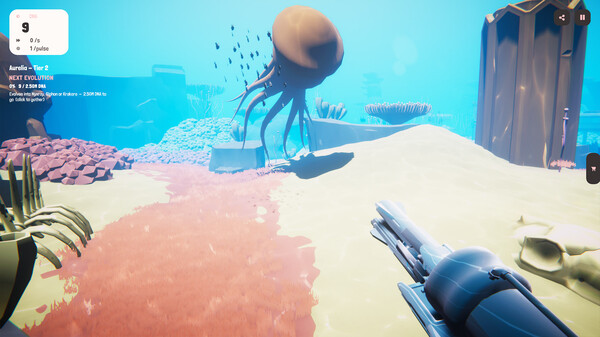
One of the most appealing aspects of Mytosis is the way it transforms abstract progression into visible change. Rather than simply watching numerical values increase, players witness their organism evolve through multiple stages of development. Each transformation represents meaningful advancement and reinforces the feeling that the player is actively shaping a living entity. The evolutionary process feels tangible because growth is reflected not only through statistics but also through the changing appearance and complexity of the organism itself.
The mutation system adds depth to what could otherwise have been a straightforward idle experience. As new genetic modifications become available, players must decide how to allocate resources to maximize future gains. Some mutations improve DNA generation, while others accelerate specific aspects of development. These decisions create opportunities for strategic planning, encouraging players to think about long-term efficiency rather than simply purchasing every available upgrade as soon as possible.
Another noteworthy feature is the branching nature of evolution. Rather than forcing every player toward the same endpoint, the game allows different developmental paths to emerge. Choices made during progression influence the direction of growth and the eventual form the organism may take. This system provides a welcome sense of agency and encourages experimentation with different evolutionary strategies. The possibility of achieving alternative outcomes gives the experience additional replay value and makes each playthrough feel more personal.
The pacing is well-suited to the game's theme. Evolution unfolds gradually, allowing players to appreciate each stage of development without feeling rushed. At the same time, the progression systems are designed to maintain engagement by ensuring that meaningful upgrades remain within reach. The balance between patience and reward is handled effectively, preventing the experience from becoming either excessively slow or unrealistically fast.
Visually, Mytosis embraces a clean and functional design that keeps attention focused on the organisms themselves. The interface avoids unnecessary clutter, making it easy to track progression and manage upgrades. The evolving life forms become the visual centerpiece of the experience, and watching them change over time provides a satisfying reminder of how far the player has progressed. While the presentation is relatively simple, it effectively supports the game's scientific and evolutionary themes.
One of the game's greatest strengths is its thematic consistency. Every mechanic, from DNA generation to mutation selection and evolutionary branching, contributes to the central idea of biological growth. This cohesion helps the experience feel more meaningful than many traditional clicker games, where progression systems can sometimes appear disconnected from the game's overall concept. In Mytosis, every upgrade feels like a natural extension of the evolutionary journey.
The game also benefits from its focused scope. Rather than attempting to become an endlessly expanding idle game with countless interconnected systems, it remains committed to its core concept. This allows the experience to maintain a strong sense of direction and prevents progression from becoming overwhelming. Players can enjoy meaningful advancement without needing to manage excessive layers of complexity.
Mytosis may not offer extensive storytelling or large-scale simulation mechanics, but it succeeds by delivering a fresh perspective on incremental gameplay. Its combination of DNA-based progression, visible organism evolution, strategic mutations, and branching development paths creates an experience that feels both educational and entertaining. For players who enjoy idle games and appreciate creative concepts inspired by science and biology, Mytosis offers a distinctive journey that stands apart from many of its genre counterparts.
Rating: 6/10