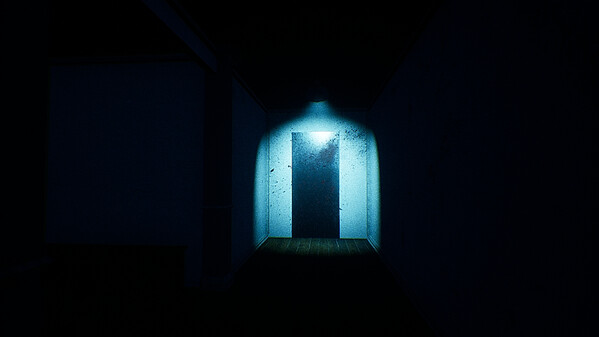
MIRROR MIRROR is a first-person psychological horror game. You repeatedly find yourself in a house where you find presence of unknown entities. Go through unreal experiences in the house and uncover the secrets of your fractured mind. Experience the tension and fear in the repeating space.
Modeled estimate, not a reported figure. How we estimate →
Media

About
Who are you? A question that haunts you as strange events unfold around you. You're trapped in a house that feels eerily familiar, yet it twists and reshapes itself with every cycle. Reality warps, rooms shift, and the boundaries between past and present blur. Your mind fractures with every second spent inside, teetering on the edge of sanity.
Will you uncover the truth, or will you be lost to the endless loops forever?
MIRROR MIRROR is a first-person tension freak horror walking simulator set in a house with a sinister atmosphere. The game play revolves around exploration and uncovering the events and puzzles of the loops. The game emphasizes atmosphere, building tension, creating a sense of fear, and jump scares. The experience lasts approximately 50 to 60 minutes.
You have no memory—only fragments of a past life, echoes of a wife and daughter lost in the loops. Trapped in a house that endlessly repeats, you uncover cryptic messages, distorted radio transmissions, and fleeting glimpses of something... watching.
A Mind on the Edge
As you navigate the shifting environment, psychological pressure and fear mount with every cycle. The house holds secrets, and only by facing its horrors can you unravel the truth.
Endless Repetition, Hidden Secrets
Explore an ever-changing space where each loop brings new discoveries—and new terrors. Search for clues, solve the mystery, and escape before your mind fractures beyond repair.
VHS-Inspired Photorealistic Visuals – Immerse yourself in a grainy, atmospheric world that blurs the line between reality and nightmare.
A Carefully Crafted Narrative – Experience a story-driven journey told through environmental storytelling, cryptic messages, and haunting discoveries.
A Puzzle of Memories – Piece together fragmented clues to uncover the truth behind the ever-changing house.
Multiple Endings – Your choices shape the outcome, leading to different fates and revelations.
Unrelenting Tension – Every turn could bring something new—or something waiting. Stay alert, because nothing is ever as it seems.
Genres
Stats
All-time low is the lowest price we've recorded for this game since we started tracking it.
Languages: English*, French, Italian, German, Spanish - Spain, Japanese, Korean, Portuguese - Brazil, Russian, Simplified Chinese, Turkish*languages with full audio support
Engagement
Hours played at review time, across 40 reviews with recorded playtime.
Reviews
Themes across 40 recent reviews and how positive each mention is. A keyword signal, not full sentiment analysis.
positive critical· bar length = how often the theme comes up
Reviews
게임 자체는 간단하지만 분위기를 잘 잡아서 한번씩 나오는 점프스퀘어도 잘 작용한다 생각합니다.
Das war echt anstrengend das Game zu spielen. Sehr langsam und kaum gute Momente. War froh gewesen als das Game zu Ende war.
MIRROR MIRROR, developed and published by ZeroZeroThirteen, is a short-form psychological horror experience that builds its identity around repetition, subtle environmental changes, and an intentionally minimal approach to gameplay. Rather than relying on complex systems or extended storytelling, it focuses on creating a concentrated atmosphere of unease, placing the player in a confined space that slowly becomes more distorted with each passing loop. It’s the kind of game that aims to linger in the mind through suggestion and mood rather than through overt scares or mechanical depth. The premise is deliberately simple: you find yourself inside a house that feels ordinary at first, but quickly reveals itself to be anything but stable. The game revolves around repeatedly moving through this environment, with each cycle introducing small but meaningful alterations. Objects shift, lighting changes, and new details emerge, gradually building a sense that something is deeply wrong. This looping structure is the foundation of the experience, turning familiarity into tension as players begin to notice inconsistencies and anticipate further disruptions. The more time spent within the space, the more unsettling it becomes, as the environment itself seems to reflect a fractured reality. Gameplay is intentionally limited, focusing on exploration and observation rather than action. There are no combat mechanics, and interactions are straightforward, often involving inspecting objects or progressing through the environment. This simplicity allows the atmosphere to take precedence, ensuring that players remain focused on the subtle changes around them. However, it also means that the experience relies heavily on its ability to maintain interest through environmental storytelling. Without deeper systems to engage with, the game’s success depends entirely on how effectively it can build and sustain tension. Atmosphere is where MIRROR MIRROR is most effective. The visual presentation, with its muted tones and occasional analog-style distortions, creates a sense of unease that persists throughout the experience. Lighting is used carefully to guide attention while also obscuring details, and the confined setting enhances the feeling of isolation. Sound design plays an equally important role, using ambient noise, silence, and sudden audio cues to reinforce the psychological tension. These elements work together to create a space that feels unpredictable, where even small changes can carry significant weight. The narrative is fragmented and largely implied, unfolding through environmental details and scattered clues rather than direct exposition. Themes of memory, identity, and personal trauma are hinted at throughout, but the game leaves much of the interpretation to the player. This approach can be compelling for those who enjoy piecing together meaning from subtle cues, but it may also feel incomplete for players who prefer clearer storytelling. The ambiguity is intentional, but it comes at the cost of emotional clarity. One of the defining characteristics of the game is its brevity. With a relatively short playtime, it delivers its ideas quickly, avoiding the risk of overstaying its welcome. This works well in maintaining a consistent level of tension, but it also limits how far the game can develop its concepts. Just as the environment and narrative begin to feel more complex, the experience moves toward its conclusion, leaving some elements underexplored. Replayability is present through multiple endings, encouraging players to revisit the game and experiment with different choices or interactions. While this adds some value, the core structure remains largely unchanged, and subsequent playthroughs rely more on uncovering additional details than on experiencing fundamentally different content. For some players, this will be enough to justify a return, while others may feel that the initial playthrough captures most of what the game has to offer. Despite its strengths, MIRROR MIRROR occasionally leans on familiar horror techniques, including predictable jump scares that can detract from its more subtle moments. These instances can feel at odds with the otherwise restrained approach, reducing the impact of the psychological elements. Additionally, the limited interactivity and short duration contribute to a sense that the game is more of a focused concept than a fully developed experience. In the end, MIRROR MIRROR is a concise and atmospheric horror title that succeeds in creating a persistent sense of unease through repetition and environmental design. It does not aim to provide a deep or mechanically rich experience, but instead offers a brief, immersive journey into a distorted space shaped by perception and memory. For players who appreciate minimalist horror and are willing to engage with its ambiguity, it delivers a memorable, if fleeting, experience. Rating: 7/10
Good start for the dev. Sound design was pretty good and once the story actually started to come into play it got considerably better. Hopefully the dev focuses more on building the story in their next game and keeping it more on the forefront as thats when I started to get pulled in for this game. The death scene I will admit is very lackluster and brings more to be desired. With all that its still a recommend for me. 7/10 and like I said before a good start for the dev. Keep up the work!
Fantastic game! I really enjoyed it, well worth a pick up and play through! will be playing again to find any other endings or Easter eggs! 10/10 I am not sure why my game time is not showing correctly
boring annoying game .
Mirror Mirror started out with potential. The story started out good. The visuals and ambiance set a great tone. The whispers, laughter, creepy kids talking all gave a you a sense of fear. However, it went downhill. The jump scares got predictable and repetitive, the story got lost. Your character walks way too slow, and you have gotten so accustomed to holding down shift to speed up, when it actually comes time to run your fingers are sore and stiff from holding W while walking so slowly. I gave it 40 minutes but it just continued to be too boring to carry on to find out if the story would come back and you learn what happened.
[b] [/b]
Liked it enough to not refund. Make more.
제 인생은 미러미러를 알기 전과 후로 나뉩니다. 긴말 안하겠습니다.
Related
Related
Trends
Concurrent players on Steam, sampled daily since tracking started.
Audience
Estimated from the language of this game's reviews — a proxy for where players are, not official Steam demographics.
Related
| Schildmaid MX | $16.2K | 52 | 96% | $14.99 |
| Gargoyles Remastered | $16.2K | 52 | 62% | $14.99 |
| Echo | $16.2K | 52 | 67% | $14.99 |
| Last Days of Spring 2 | $16.2K | 61 | 74% | $6.99 |
| Oscura: Lost Light | $16.2K | 122 | 63% | $6.99 |
| MechCorp | $16.2K | 73 | 79% | $8.99 |
Related
| 7 Days to Die | $425.3M | 403.6K | 87% | $44.99 |
| Mount & Blade II: Bannerlord | $309.8M | 294K | 88% | $49.99 |
| The Forest | $254.8M | 678.6K | 96% | $19.99 |
| No Man's Sky | $230.9M | 412.2K | 85% | $23.99 |
| Sons Of The Forest | $201.1M | 315K | 88% | $29.99 |
| Don't Starve Together | $164.7M | 539.5K | 95% | $14.99 |