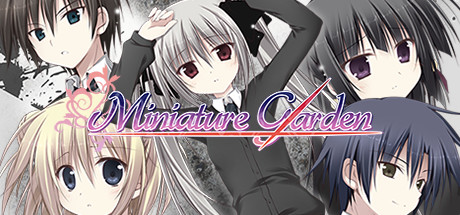
Miniature Garden is a Japanese mystery visual novel with multiple endings and art by Korie Riko (Lump of Sugar).
Modeled estimate, not a reported figure. How we estimate →
Media
About
Stats
All-time low is the lowest price we've recorded for this game since we started tracking it.
Languages: English
Engagement
Hours played at review time, across 40 reviews with recorded playtime.
Reviews
Themes across 40 recent reviews and how positive each mention is. A keyword signal, not full sentiment analysis.
positive critical· bar length = how often the theme comes up
Reviews
p
peak, but 5 out of the 7 endings makes 0 sense, I recommend doing rio's route at the end since it will connect the dots.
也就靠捆妈原画拉一手了,剧本质量极其拉胯
Buena visual novel de misterio con varios finales, vale la pena comprarlo para darle una oportunidad
氛围和立绘
I thought it was pretty decent until Rio's route, it feels rushed after that and there's too much unnecessary details that barely make any sense added in purely for shock value. There's too many plot holes too but overlooking all that it's worth a shot to buy during a discount.
I was torn about recommending a game like this, but have realised I have no choice not to There is something almost uniquely baffling about how poor this game is that is should be studied by all lest we repeat its mistakes The premise, soundtrack, and art are excellent, clearing showing the amount of time and talent that went into this trashfire The characters vary but are generally good, if not well-developed enough The atmosphere is let down by the lack of present danger throughout most of the story, typically taking place towards the end, if at all The 7th ending, fittingly titled The Seven Mysteries, is the only one that scared me at any point, although the climax of it has a line of dialogue so poor, it is also the only one that made me laugh The story in general is awful that I struggle to believe a human made this Generally, a story with multiple endings will use its endings to view a scenario from different perspectives, making a cohesive picture This game does not Many of the endings have little relation to one another, and whilst this may be a translation issue, or there's a wiki somewhere that explains everything, the fact of the matter is that the endings often feel like they close off different scenarios to each other Information is conveyed poorly, typically by exposition dump or overly-revealed document, and does not provide the full answer to anything the reader may want to know This is one of those mysteries where the mystery continues long after the story ends because the AI word generator that assembled this product was unable to comprehend their job was to answer questions, not just pose them To summarise, this game is a trainwreck of a story that feels like it have been fixed with a storyboard in the planning stage, and I am genuinely curious has to how this could have been allowed to exist, especially so much of the game is done properly So, whilst I cannot in good faith recommend this game for its writing quality, I can't NOT recommend it for its lack of quality writing
这剧本是梦到哪儿写到哪是吧
Miniature Garden is a mystery-focused visual novel developed by Muzintou and published internationally by Fruitbat Factory. The game unfolds within a secluded academy known as the “Miniature Garden,” a school surrounded by eerie rumors and unsettling legends that have circulated among students for years. The story begins during preparations for a peculiar school festival that occurs only once every three years, an event rumored to be tied to a series of mysterious deaths. When several students suddenly awaken after losing consciousness during the festival preparations, they discover that the campus has become strangely deserted. With no staff present and the rest of the students nowhere to be found, the remaining group is forced to investigate the mystery while confronting the disturbing folklore that surrounds their school. The narrative centers primarily on the protagonist Yasunari and a small group of classmates who are trapped inside the school grounds. With the gates sealed and no obvious way to leave, the characters begin searching for clues to understand what happened during the blackout and why they are the only ones left behind. As the investigation progresses, the game gradually introduces supernatural elements, psychological tension, and hidden secrets that tie into the school’s strange traditions. What initially appears to be an isolated incident slowly transforms into a complex mystery involving the academy’s history and the unsettling truth behind the festival itself. Like many traditional visual novels, the gameplay focuses primarily on reading dialogue and narrative text while occasionally presenting players with choices that influence the direction of the story. These decisions shape the relationships between characters and determine which narrative route the player will experience. The game includes multiple endings that reveal different aspects of the mystery. Some endings focus on specific characters and their personal stories, while others expose darker possibilities about the events taking place at the academy. Because key pieces of information are spread across different routes, players are encouraged to replay the story and explore alternative choices in order to fully understand the underlying narrative. The cast of characters plays a central role in maintaining the game’s tension. Each of the students trapped within the academy represents a different perspective on the unfolding events. Yasunari often acts as the grounded voice of reason, questioning the supernatural explanations suggested by others. Meanwhile, other characters bring their own theories, fears, and hidden motivations to the group dynamic. Over time, the story reveals personal histories and secrets that deepen the relationships between the characters while also complicating the investigation. These evolving character dynamics help sustain the emotional engagement of the story even when the mystery itself becomes increasingly complex. Visually, Miniature Garden features anime-inspired artwork that emphasizes character expressions and atmosphere. The character sprites are detailed and expressive, allowing emotional shifts to be conveyed effectively during key moments of the narrative. The background environments depict various locations around the academy, including classrooms, hallways, and outdoor areas that become increasingly eerie as the story progresses. Although the visual presentation is relatively traditional for a visual novel, the art style succeeds in reinforcing the mood of isolation and uncertainty that defines the game’s setting. The game’s soundtrack and voice acting further contribute to the atmosphere. Japanese voice performances give personality to each character, helping bring the dialogue-heavy format to life. The music relies heavily on piano and ambient compositions that shift between calm, reflective melodies and more ominous tones as the story grows darker. These audio elements work together to build suspense during key scenes and enhance the emotional weight of important revelations. One of the strongest aspects of Miniature Garden is its ability to maintain intrigue through its layered storytelling. The game consistently introduces new questions that encourage players to continue exploring the mystery. Each route reveals additional pieces of information about the academy’s history and the strange events tied to the festival. By gradually revealing these details across multiple playthroughs, the narrative rewards players who are willing to examine the story from different perspectives. However, the structure of the narrative can also create some challenges. Because crucial information is divided across multiple endings, the story may feel fragmented during an initial playthrough. Some players may find the pacing uneven, with certain plot developments appearing suddenly without sufficient buildup. These structural issues can make the overall mystery harder to follow until several routes have been completed and the larger picture becomes clearer. Despite these shortcomings, Miniature Garden still manages to deliver a compelling experience for fans of mystery-driven visual novels. The combination of supernatural intrigue, character-focused storytelling, and multiple branching endings creates a narrative that encourages curiosity and careful attention to detail. Players who enjoy unraveling complicated stories and piecing together hidden truths across multiple playthroughs will likely find the experience rewarding. Ultimately, Miniature Garden stands as a solid entry in the mystery visual novel genre. Its atmospheric setting, engaging character interactions, and branching narrative structure provide an intriguing story that gradually reveals its secrets. While the pacing and fragmented storytelling may occasionally hinder the experience, the game still succeeds in delivering a suspenseful and memorable mystery for players who enjoy exploring layered narratives. Rating: 7/10
sumika is the best ᗜˬᗜ
Related
Related
Trends
Modeled estimate over time, reconstructed from Steam's monthly review histogram.
Momentum
Pace estimated from the game's recent review growth (our daily snapshots) at its own sales-per-review ratio — a momentum signal, not booked sales.
Audience
Estimated from the language of this game's reviews — a proxy for where players are, not official Steam demographics.
Related
| My Life as a Maiden | $32K | 95 | 86% | $9.99 |
| Slimeward | $32K | 310 | 90% | $2.99 |
| Wide Ocean Big Jacket | $32K | 285 | 96% | $7.99 |
| Besmirch | $32K | 78 | 99% | $9.99 |
| League Of Enthusiastic Losers | $32K | 190 | 84% | $11.99 |
| YEAH! YOU WANT "THOSE GAMES," RIGHT? SO HERE YOU GO! NOW, LET'S SEE YOU CLEAR THEM! 2 | $32K | 197 | 70% | $9.99 |