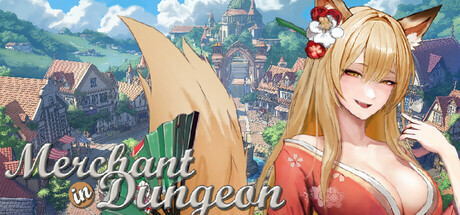
Merchant in Dungeon is about managing shops.Hercules enters Dark Gate Town solo, aiming to repay his father's debt. Starting with a store, he grows capital, hires, expands shops, and manages relationships with diverse female NPCs. Dominating the business scene? Quite a challenge!
Modeled estimate, not a reported figure. How we estimate →
Media

About
Merchant In Dungeon is now online, thank you for your support. There are still many problems in the game, but we will carefully record them and plan to fix them in time.
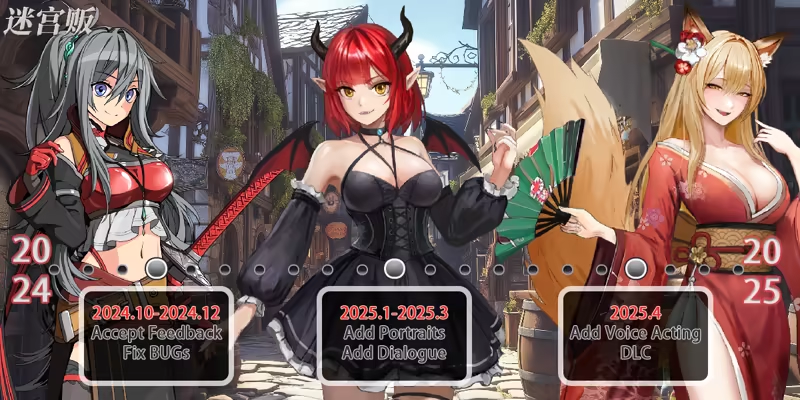
Merchant In Dungeon, crafted by HexGameStudio, the creators behind Dungeon of Dragon Knight marks their fresh venture into diverse dungeon exploration games within the Dungeon of Dragon Knight universe.
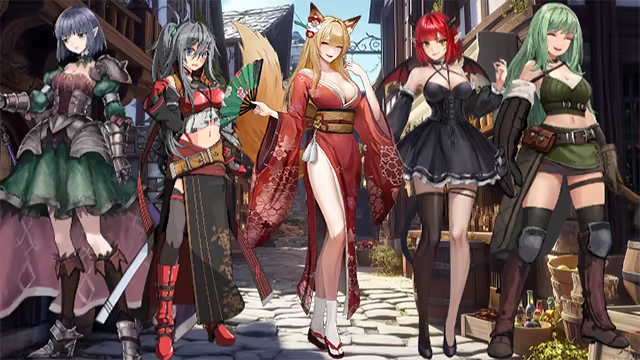
In this game, players take on the role of Hercules, starting from scratch by managing a department store to repay debts. You're hands-on, overseeing every aspect from purchasing goods, making sales, to hiring and training staff. Explore mazes, complete tasks to gain new resources and recipes—yet mastering the store is just the beginning. Utilize funds or loans to acquire over 60 diverse shops, invest, train staff, and boost sales to become an economic powerhouse controlling the entire town's economy.
Full-Fledged Store Management:Players need to personally oversee every aspect of store operations, from inventory management to sales strategies, even including staff training and task allocation, requiring careful planning and management.
Diverse Development Paths:Players can focus on elevating the management level of a single store, pursue multi-store chain operations, or explore other investment directions.
Robust Economic System:Player decisions will impact the profitability of the stores, including aspects like product selection, pricing, and inventory management.
Character Development and NPC Interaction:Players can nurture employee skills and specialties to make them more effective in the business process. Increasing rapport through interaction with NPCs can unlock additional resources or opportunities.
Random Events and Challenges:Various random events occur in the game, such as sudden price increases or staff resignations, demanding flexible responses from players.
Game maximum resolution 3840*2160
Genres
Stats
All-time low is the lowest price we've recorded for this game since we started tracking it.
Languages: English, Traditional Chinese, Simplified Chinese, Japanese, French, Russian, Korean
Engagement
Hours played at review time, across 40 reviews with recorded playtime.
Reviews
Themes across 40 recent reviews and how positive each mention is. A keyword signal, not full sentiment analysis.
positive critical· bar length = how often the theme comes up
Reviews
I've finished the game. Have to say it's decent but there are many aspects that needs improvements. Gaining and making money is very easy in this game if you keep fulfilling customer request and find 'correct' items for selling at your store. However the ending is kinda disappointing, it's a bit bland and raising intimacy with each character here is very easy if you know the tricks...It's not very challenging tbh but if you enjoy 'casual' and easy game play with not much of rich story. I recommend this.
Merchant in Dungeon ist ein netter Zeitvertreib für zwischendurch, wenn man einfach mal abschalten und etwas entspannen will. Man sollte nicht zu viel von dem Spiel erwarten was Spieltiefe oder Schwierigkeitsgrade angeht. Sind praktisch nicht vorhanden. Das Spiel erinnert von den Bildern sehr stark an Mangas. Insbesondere die Mädels, mit denen man konfrontiert wird. Die Grafiken sind sehr schön gemacht. Man kann Geschäfte aufbauen - in den verschiedensten Sparten - und Material bei zwei Werkstätten bestellen oder in diversen Dungeons einsammeln. Die Dungeons schalten sich der Reihe nach frei, jedes mit einem höheren Level als der Vorgänger. Gleichzeitig muss man einen Kredit zurück zahlen, aber die Bedingungen sind so entspannt, dass man damit wirklich kein Problem hat. Das alles erlernt sich sehr schnell, selbst für einen blutigen Anfänger und eine richtige Herausforderung - ganz minimal vielleicht am Anfang - ist nicht vorhanden. Wie gesagt, einfach ein Spiel zum zwischendurch mal abschalten. Es wird nach einer gewissen Zeit zugegeben ein wenig repititiv, aber zumindest ich kann damit leben. Es ist nicht allzu teuer, sollte es aber auch nicht sein. An dieser Stelle also auch alles gut. Es hatte ein paar kleine Bugs, die den Spielfluß aber nicht übermäßig gestört haben, insofern auch hier nichts problematisches. Nichts für Adrenalinjunkies bzw. Leute die Nervenkitzel und/oder Herausforderungen suchen. Wer aber mal ab und an vor schönen Grafiken mit niedlichen Manga-Mädels flirten und einfach entspannen will, dem kann ich Merchant in Dungeon nur empfehlen.
价格不算太贵,而且你说的他真改啊
[h1] 奴隶转生奴隶主的故事 [/h1] [h2] 游戏背景 [/h2] 省流:男主他爹欠了2000w跑路,傻乎乎的男主回来继承债务,替父还债(是我的话早跑路了),在继承债务后玩家受到了狐妖琉璃的帮助,在还债的这些日子里与其他各色美少女相知相识。 [h2] 游戏内容 [/h2] 进入游戏后,我们就要开始还债了,万幸的是魔王小姐允许我们分期,一开始有很多客户的订单,玩家可以去找人生产.[u] 为什么只能最少生产五个,有的人要两个我不是亏了 [/u],生产也需要时间,最先只有一条生产线,我们只能出去探险。 选择出城探险,探险有点像肉鸽3选一,有宝物,空地,随机事件等等(这个是真离谱,一直遇到陷阱) 战斗的话可以选择手动、自动、直接查看成果。前期的手动战斗,可以捕捉怪物替你打工(我佛了,我玩到后面才发现,捕捉怪物在这里,要么是制作组没提醒,要么我没仔细看) 玩家开始会获得一个店铺,雇佣黑奴帮我们打工赚钱,从探险中获得的素材也可以拿去商店卖,也可以直接满足女主们的订单。有钱了可以购买新的店铺赚钱,记得先把好装备给店员,店员越强越能帮你打工,给商店升级和员工升级也能帮助你更快的赚钱。总之,赚钱就完了。 [h2] 吐槽 [/h2] 订单价格不合理,你可以随意的拉,有时候拉到原价的150%也能卖出去,有时候又拉了两下变成只能最高120%卖出去了,估计是个bug 不知道是我忘了看提示,还是真没提示,玩到后买才知道手动才能抓怪,离谱。 玩长了就会发现腻了,希望能多更新内容吧。有没有兴趣做一下特殊内容 [h2] 总结 [/h2] 总而言之,作为经营模拟游戏还不错,也不算太难,2000万看着多,其实努努力就能还清,女角色也很漂亮,希望能出点特殊内容就更好了 [quote]欢迎前来关注「 [url=https://store.steampowered.com/curator/45353266/] 𝗞𝗼𝗶𝗺𝗶𝗮𝗼🍁」 [/url] [u][b] 采撷旅途之叶,铭刻生命之诗[/b][/u][/quote]
什么都沾点,什么都没做好
Merchant in Dungeon is a thoughtful and surprisingly layered indie management RPG that blends fantasy worldbuilding with economic strategy in a way that feels both methodical and personal. Developed and published by HexGameStudio, the game places players in the role of a struggling merchant named Hercules, whose life is defined by a crushing debt inherited from his father. Rather than framing this premise as a simple narrative hook, the game uses it as a long-term motivation that drives every system and decision, grounding its simulation mechanics in a clear and relatable goal: build a profitable business empire before time and pressure catch up with you. The core gameplay loop revolves around running and expanding a network of shops in a fantasy town closely tied to dungeon exploration and adventuring culture. Players begin modestly, managing a single store and a limited inventory, but gradually gain access to dozens of different shop types that specialize in various goods. Each store requires careful attention to pricing, stock levels, employee performance, and customer demand, and profits are rarely guaranteed without deliberate planning. The game rewards players who take the time to understand market behavior, experiment with different pricing strategies, and adapt to changes rather than relying on brute-force expansion. A major strength of Merchant in Dungeon lies in how it layers complexity over time. As the number of owned shops increases, so does the challenge of managing them efficiently. Employees can be hired, trained, and assigned based on their individual strengths, turning staff management into an important strategic consideration rather than a background task. Choosing whether to invest in upgrading a store, expanding into a new business, or improving personnel creates meaningful trade-offs, and the constant push-and-pull between short-term profit and long-term stability gives the simulation a steady sense of tension. The game also integrates light RPG and social elements that soften its otherwise numbers-driven structure. NPC interactions, particularly with recurring characters in town, add personality and flavor to the experience, making the setting feel inhabited rather than purely functional. Relationship systems and character events do not dominate the gameplay, but they provide narrative texture and occasional bonuses that make the town feel like more than a static backdrop for spreadsheets. This balance helps Merchant in Dungeon avoid feeling sterile, even during extended management-focused sessions. Random events play a key role in keeping the economy dynamic. Market fluctuations, unexpected staff issues, and sudden changes in demand force players to stay alert and flexible. While these events can sometimes feel abrupt or unevenly balanced, they reinforce the idea that success is never entirely predictable. The most successful runs tend to come from players who build buffers into their strategy, diversify their businesses, and prepare for uncertainty rather than optimizing a single path. Visually, the game adopts a clean 2D presentation with anime-inspired character art and functional interfaces. The focus is clearly on readability and clarity rather than spectacle, and while the visuals are modest, they serve the gameplay well. Menus are dense but understandable, and once the systems click, managing multiple shops becomes intuitive rather than overwhelming. The aesthetic reinforces the game’s identity as a simulation-first experience with just enough charm to keep it inviting. One of the most common criticisms of Merchant in Dungeon is its sense of finality. Once the central debt is paid off, the game offers limited incentives to continue growing the business empire, which can feel abrupt given how much time is spent mastering its systems. Some mechanics, particularly relationship progression and late-game content, feel as though they could have been expanded further to support longer-term play. These shortcomings do not undermine the experience entirely, but they do leave the impression that the game ends just as it reaches its full mechanical potential. Overall, Merchant in Dungeon stands out as a niche but rewarding simulation for players who enjoy economic strategy, gradual progression, and systems-driven gameplay. Its blend of shop management, staff development, and light RPG elements creates a satisfying loop that emphasizes planning and adaptability over constant action. While it may not offer endless content or a deeply dramatic narrative, it delivers a focused and engaging experience that rewards patience and strategic thinking, making it a compelling choice for fans of management games looking for a fantasy-flavored twist. Rating: 7/10
cj就试玩了,大姐姐吸引了我,留下我肝到睡觉的居然是上班的感觉!!!!!可是听见钱入账好开心啊嘿嘿嘿嘿嘿体会到了这个玩法的快感
666
除了結局超無聊外~~其他都不錯
[table][td][url=https://store.steampowered.com/curator/30253125]甄游组鉴赏家(点击订阅) [/url] [url=https://store.steampowered.com/curator/34433893]玩家聊天Q群124925250[/url][/td][/table] 这游戏标题名字有点蹭的味道,人物立绘也有点蹭的味道,不过游戏本身还是挺好玩的,通过不断地探索迷宫获取资源然后回到城里合成物品来贩卖,逐渐的积累财富让事业蒸蒸日上,玩起来很容易让人沉迷。 游戏的角色立绘非常日式,可爱且性感,包括魔物们也是如此,视觉感官非常棒,女性角色们还可以培养好感度,虽然没有让人额外期待的部分就是了。 流程方面比较轻松,迷宫的探索时长很合适,赚钱的过程正反馈比较好,适合休闲玩家。
Related
Related
Trends
Concurrent players on Steam, sampled daily since tracking started.
Audience
Estimated from the language of this game's reviews — a proxy for where players are, not official Steam demographics.
Related
| 2048 | $37.6K | 191 | 87% | $7.99 |
| KunKunNest | $37.6K | 409 | 95% | $2.67 |
| Black Forest | $37.6K | 409 | 74% | $4.49 |
| Flat Kingdom Paper's Cut Edition | $37.6K | 198 | 72% | $7.99 |
| Madballs in Babo:Invasion | $37.6K | 298 | 84% | $4.99 |
| Wattam | $37.6K | 596 | 85% | $4.99 |
Related
| DAVE THE DIVER | $90.8M | 139.6K | 97% | $19.99 |
| The Scroll of Taiwu : Beyond The Dome | $51M | 56K | 66% | $29.99 |
| My Time at Sandrock | $29.4M | 28.8K | 88% | $39.99 |
| Creativerse | $24.3M | 30.7K | 78% | $24.99 |
| Forager | $23.8M | 43.8K | 90% | $19.99 |
| Coral Island | $20.8M | 27.2K | 89% | $29.99 |