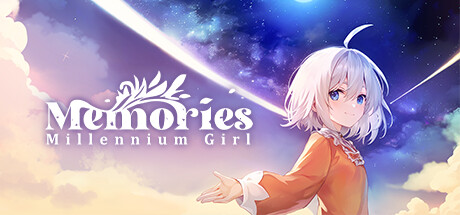
Welcome to the heartwarming world of Memories: Millennium Girl! Join your sister's journey through 8 unforgettable years, forming bonds with 25 adorable NPCs. With 50+ unique endings awaiting your choices, create a cute and captivating tale filled with connections, joy, and cherished memories
Modeled estimate, not a reported figure. How we estimate →
Media

About


Genres
Stats
All-time low is the lowest price we've recorded for this game since we started tracking it.
Languages: English, Korean, Japanese, Simplified Chinese
Engagement
Hours played at review time, across 41 reviews with recorded playtime.
Reviews
Themes across 41 recent reviews and how positive each mention is. A keyword signal, not full sentiment analysis.
positive critical· bar length = how often the theme comes up
Reviews
Oh boy. I love princess maker likes, but this is just not fun to play. The text speed alone is so slow, you cannot enjoy following the story. Also it runs very poorly, even tough the graphics are very cute.
先不讨论游戏性的问题,EA出了这么久bug还是一堆,和妹妹对话的时候有时候会卡住,第一年的武斗大会会卡住,这些姑且读档避开就能解决了,但是我结局的时候结婚也卡???我连结局都看不了一晚上白玩了呗?什么时候修复什么时候改分。
会話パートにおいては文章のスキップ、加速などが存在しません(Entra連打等で多少は早く進める事が可能な場面もあります) その為、既に読み終えて次に行きたい場面であっても文章が流れるのを待つ必要があり、テンポの悪い動画のような体験を文章中心のノベルゲーのような画面において体験させられるという劣悪な体験を強制させられます。
ベルベナ祭で武芸の花を進めると必ずどこかで進行不能になる。 6回程試してみたがいずれも必ず途中で何を押しても進まなくなってしまうバグが発生する。
베르베나 축제 무투대회에서 상대방 등장 안하고 그대로 게임이 진행안되는 버그가 있습니다. 12살에서 게임이 진행이 안돼요. 버그픽스 빠르게 진행안하면 이거 환불사유야..
프린세스메이커류의 게임인데.. 완전 개판임. 엔딩도 오류 나서 alt+f4 밖에 할 수 있는 것이 없음 ㅋㅋㅋ 그리고 프메로 비유하자면 수확제 시스템이 있는데 그것도 오류 나서 alt+f4임 ㅋㅋㅋㅋ 진짜 살면서 이렇게 개판인 경우는 몇 없었는데 ㅋㅋ 게다가 그래픽도, 주인공 포즈도 개구림. 이런 게임 잘 없어서 일단 하겠다만 주변엔 절대 추천 안함 6~7시간 하고 겨우 엔딩 보려고 했더니 버그? ㅋㅋㅋ 게다가 며칠 전에도 사람들이 안된다고 했는데 축제, 엔딩 불가가 아직도 안고쳐졌다고? 환불 신청 했는데 안받기만 해봐라 진짜 노양심..
플레이 타임 4시간 1회차 백마법사 시켜주고 떠날때 무언가 많이 아쉬움이 여한이 남는다 확실히 돈벌이 면에서 엉청난 노가다가 필요하지 내 초반스텝 잘못잡아서 체력이 비록 낮고 마법사 스텟은 엉청났단말이지 그래서 백마법사가 된것이였고 남친 못만들어서 아쉽고 카카오 프린세스 메이커를 옛날에 한 이후로 이 게임을 알기까지 다소 오랜 시간이 걸렸던거지 누군가는 그렇게 좋게 평가를 하지않을게 분명해 최소 3.5 별이 들어가지만 나는 옛날 감성을 생각해서 별 4.5+ 을 주도록 할게요 1회차 끝냈으니 이제 2회차는 어떻게 할까 생각좀 해봐야겠어 모두들 여동생을 아낍시다 ~ !!
8月に行われる祭りイベントで、武芸と芸術と料理のコンテストがありますが、武芸コンテストについてコンテスト前に一度止まり、画面右上のスキップボタンでなんとか進んでも、表彰画面だか結果画面だかでまた止まり、それ以上先に進めません。 芸術コンテストはまだやってませんが、料理は問題なく進めました(ただしおそらく料理のイラストが出るであろう画面は真っ白です) キャラクターはかわいいし、他のNPCとの会話やイベントなども豊富なので、その点については良いです。祭りイベントは必ず参加ではないので、それをしなければ問題なく遊べるとは思いますが、ゲーム全体を通してわりと楽しみの一つだと思うので、かなり残念な部分だと思います。 このバグが解消されればおすすめできる作品だとは思います。
나쁘지 않음
Memories: Millennium Girl, developed and published by V Sisters, is a life simulation game that blends narrative choice-making with emotional progression, focusing on the bond between siblings and the passage of time. It places the player in a nurturing role, tasked with guiding a younger sister through eight pivotal years of her youth. What begins as a simple series of choices about daily routines and relationships gradually becomes a tapestry of interconnected outcomes, revealing how even the smallest decisions can shape a person’s growth, ambitions, and worldview. It’s a reflective, quietly emotional experience that seeks to capture the feeling of watching someone you love grow up—complete with all the uncertainty, affection, and regret that entails. While not groundbreaking in its mechanics, Memories: Millennium Girl delivers its story with sincerity, and that emotional core gives it a distinctive place among narrative-driven indie titles. The gameplay is built around an accessible life management framework. Each in-game year is divided into periods where you choose how your sister spends her time: studying, working, socializing, or resting. Each decision affects her skills, relationships, and overall development, influencing which events and story paths become available as the years progress. The mechanics themselves are simple—there are no complex statistics or real-time systems—but the appeal lies in watching how these choices shape her personality and future. Along the way, the player meets a cast of roughly twenty-five characters, each with unique storylines and interactions that branch depending on your choices. Some relationships blossom into mentorships or friendships, others fade or turn bittersweet, reflecting the unpredictable nature of growing up. The promise of over fifty unique endings ensures that no two playthroughs are exactly the same, encouraging experimentation and replay to uncover all the potential outcomes. Visually, the game adopts a soft anime-inspired art style that suits its emotional tone. Character designs are expressive yet understated, with subtle details that evolve as the story progresses, symbolizing the passage of time. The environments, though minimalistic, create a warm, nostalgic atmosphere—like pages from a diary come to life. The interface is clean and functional, prioritizing clarity over flashiness, and the soundtrack complements the experience with gentle piano themes and ambient melodies that shift with the seasons. The overall aesthetic conveys a sense of calm and intimacy that aligns perfectly with the narrative’s focus on family and emotional connection. Though modest in production, there’s an honesty in the presentation that feels deliberate. The lack of extravagance allows the player to focus entirely on the characters and the personal moments that define the experience. Narratively, Memories: Millennium Girl finds its strength in its emotional sincerity. The story doesn’t rely on dramatic twists or high-stakes tension but instead unfolds through everyday choices and heartfelt interactions. You are not a hero on a quest—you are a sibling watching someone you care about come of age. The themes it explores—love, independence, regret, and the bittersweet nature of time—resonate universally. Watching your sister develop new interests, face heartbreak, or succeed on her own terms creates an emotional arc that feels personal and earned. The branching narrative system reinforces this intimacy; your role as caretaker and guide never grants total control, and outcomes often reflect the reality that you cannot shape someone’s destiny entirely. Some paths lead to triumph, others to disappointment, but all of them feel authentic. It’s a story about the limits of influence, and how growing up—both for her and for you—means learning to let go. That said, the game’s simplicity can also be its limitation. While the concept is touching, the actual gameplay loop can feel repetitive after a few in-game years. The decision-making, though meaningful narratively, lacks mechanical variety. The player spends much of the game cycling through the same handful of activities, and while the outcomes differ, the process itself can become predictable. Some players might also find the pacing too slow, particularly in the midgame when events unfold gradually. The branching narrative, though impressive in scope, sometimes sacrifices depth for quantity, with certain endings feeling abrupt or underdeveloped compared to others. Technical issues, such as minor interface bugs or inconsistencies in translation, have also been noted, though they rarely break the experience. These shortcomings don’t overshadow the game’s heart, but they do reveal its indie limitations—ambitious in concept, constrained in execution. Despite its flaws, Memories: Millennium Girl succeeds in delivering an emotionally engaging experience that rewards patience and empathy. It’s not a game for players seeking challenge or spectacle; it’s a quiet reflection on growth and connection. Its strongest moments aren’t the dramatic revelations but the small, tender exchanges—a simple “thank you” after years of effort, a moment of pride when your sister finds her own path. Those emotional payoffs give the game a genuine warmth that few titles achieve. The multiple endings and broad character roster encourage curiosity and replay, allowing players to experiment with different choices to see how their influence shapes the outcome. It captures the cyclical nature of life in miniature form, where every ending feels less like a conclusion and more like a new beginning. In essence, Memories: Millennium Girl is a story about guidance, love, and the inevitability of change. It doesn’t dazzle with mechanics or graphics, but it resonates on a human level, inviting the player to slow down and reflect on the relationships that define us. The experience it offers is deeply personal: an emotional simulation that mirrors the complexity of nurturing someone you care for, only to eventually watch them step into their own world. Its sincerity and thematic focus make it a memorable entry in the life simulation genre, one that values feeling over flash. While it may not appeal to everyone, those who approach it with patience and an open heart will find something rare—a game that quietly reminds you that growth, in all its forms, is both beautiful and bittersweet. Rating: 6/10
Related
Related
Trends
Modeled estimate over time, reconstructed from Steam's monthly review histogram.
Audience
Estimated from the language of this game's reviews — a proxy for where players are, not official Steam demographics.
Related
| Detective Grimoire | $54.2K | 2.4K | 96% | $1.39 |
| Ortharion project | $54.2K | 154 | 64% | $19.99 |
| Battle Chess | $54.2K | 110 | 80% | $19.99 |
| Civitatem | $54.1K | 134 | 63% | $12.99 |
| Wars Across The World | $54.1K | 220 | 83% | $9.99 |
| Dread Meridian | $54.1K | 65 | 71% | $19.99 |
Related
| 7 Days to Die | $425.3M | 403.6K | 87% | $44.99 |
| Euro Truck Simulator 2 | $421.6M | 932.3K | 97% | $19.99 |
| Mount & Blade II: Bannerlord | $309.8M | 294K | 88% | $49.99 |
| Stardew Valley | $258.9M | 881.6K | 99% | $14.99 |
| The Forest | $254.8M | 678.6K | 96% | $19.99 |
| Project Zomboid | $239.1M | 461K | 94% | $19.99 |