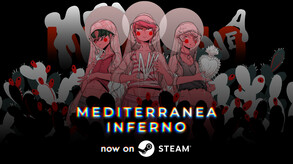
Explore the inner demons of three childhood friends on a summer retreat. Unearth secrets, fears and obsessions as you help them reconnect and rediscover themselves. A mature and treacherous visual novel from the creator of Milky Way Prince – The Vampire Star.
Modeled estimate, not a reported figure. How we estimate →
About
Genres
Stats
All-time low is the lowest price we've recorded for this game since we started tracking it.
Languages: English, French, Italian, German, Spanish - Spain, Japanese, Simplified Chinese
Engagement
Hours played at review time, across 42 reviews with recorded playtime.
Reviews
Themes across 42 recent reviews and how positive each mention is. A keyword signal, not full sentiment analysis.
positive critical· bar length = how often the theme comes up
Reviews
[b]At a Glance[/b] [b]Recommendation:[/b] Recommended with caveats [b]Best For:[/b] Players looking for an artistic, unsettling visual novel about gay friendship, desire, grief, and post-pandemic disillusionment. [b]Not For:[/b] Players seeking a comforting M/M romance, clean happy ending, or escapist wish fulfillment. [b]Playtime:[/b] About 5 hours to reach the final ending and earn all achievements; multiple runs are required to see all content. [b]MLM Tags:[/b] MLM, M4M, Visual Novel, Gay-Centered, Drama, Horror, Heavy Themes 💬 [b]Supportive Caveat[/b] [i]Mediterranea Inferno[/i] is a game about gay men, but it is not primarily a romance. It is a psychological horror story steeped in post-pandemic anxiety, Italian social commentary, grief, resentment, and self-destruction. The game's content warnings are important and worth reading on the store page before playing. If you're looking for a comforting M/M love story, this is not the game for you. If you're interested in an artistic, unsettling exploration of friendship, desire, and existential despair, there is a great deal here to appreciate. [b]🎮 Gameplay & Genre[/b] [i]Mediterranea Inferno[/i] is a choice-driven visual novel where you guide three former friends through a summer vacation in Southern Italy after years of isolation during the COVID lockdowns. Each day you choose activities, conversations, and encounters that gradually reveal their fears, obsessions, and emotional wounds. Mechanically, it is straightforward but effective. Most of your time is spent reading, making choices, and uncovering new scenes across multiple playthroughs. Reaching the final ending requires collecting cards and exploring different paths, so expect some repetition as you work through the game’s full structure. Unfortunately, the lack of a proper skip or fast-forward feature can become frustrating when replaying scenes to reach new Mirages and unlock additional content. [b]🔥 M/M Content[/b] All three protagonists are gay men, and their sexuality is central to the story, but this is not a romance-focused experience and it is not trying to deliver traditional M/M fantasy fulfillment. Desire, attraction, jealousy, obsession, and unrequited feelings all matter here, though they are filtered through resentment, insecurity, and emotional damage rather than warmth or romantic payoff. That said, the game does not exploit its gay characters or use them as disposable misery objects. Their sexuality is part of their interior lives, their friendships, their wounds, and their longing. There is no explicit sexual content, though some scenes depict stylized male nudity without visible genitals. The visual focus is heavily on young, thin, conventionally attractive twinks, so players looking for body diversity will not find much here. [b]🎨 Visuals & Style[/b] The visual presentation is strikingly unique. Character designs resemble modern fashion illustrations or editorial sketches, with elongated figures, minimalist features, and bold use of color and symbolism. The game frequently abandons realism in favor of surreal imagery that communicates emotional states, desires, and fears. Catholic imagery also runs throughout the game, drawing on saints, iconography, ritual, guilt, suffering, and redemption. There is a distinctly erotic undercurrent to much of the artwork as well, with significant emphasis on the male form, but more as an extension of desire, envy, image, and longing than as straightforward sexual reward. The result is often beautiful, frequently disturbing, and consistently memorable. [b]🗣️ Tone & Writing[/b] This is where [i]Mediterranea Inferno[/i] succeeds or fails depending almost entirely on what you want from it. The writing is dense with symbolism, social commentary, and emotional ugliness. These characters are not admirable people: one is consumed by image and validation, one chases pleasure and distraction, and one is fixated on family and obligation. They lash out, nurse old resentments, and repeatedly make destructive choices. The game is also deeply rooted in a specific cultural moment and place. It is very specifically concerned with Italy, the shadow of COVID, generational resentment, and the feeling that younger people have inherited a profoundly broken world from older generations more interested in comfort than responsibility. The final ending offers a tenuous kind of hope, especially in its turn toward collective action and mutual responsibility, but this is still not a story designed to comfort the player. It wants to unsettle you. [b]👍 Best Thing[/b] Its artistic vision. [i]Mediterranea Inferno[/i] commits fully to its themes, aesthetics, and emotional discomfort. It pushes what a gay visual novel can be without flattening its characters into romance tropes or cheap tragedy. [b]👎 Worst Thing[/b] The emotional experience can become exhausting. The characters spend so much time trapped in cycles of bitterness, self-destruction, and misery that reaching the game’s more hopeful conclusions can feel like a long and sometimes punishing journey. The violence that emerges throughout the story can also be genuinely unsettling, adding to the game's oppressive atmosphere. [b]⭐ Final Verdict[/b] I ultimately enjoyed [i]Mediterranea Inferno[/i], but not for the reasons I usually enjoy M/M visual novels. This is not a gay romance fantasy. It is an artistic psychological horror story about three gay men struggling with grief, desire, friendship, identity, and the aftermath of isolation. For players looking for comfort, romance, or wish fulfillment, this is the wrong game. For players interested in ambitious, well-made gay-centered storytelling that pushes the boundaries of the space, it is worth experiencing. It is unsettling, stylish, and miserable in ways that feel intentional rather than exploitative. Just don't go into it expecting a happy summer vacation. The game certainly doesn't. [url=https://store.steampowered.com/curator/45790038/]I also curate a Steam page reviewing M/M games if you're looking for more titles in this space.[/url]
doomed yaoi: termina
So-so visuals paired with “No, oh God, no-o-o-o-o” writing don’t make for a good visual novel. There were parts of the story where I couldn’t visually tell one character from another. There were also moments when I thought a fourth character had shown up just because they slightly changed the color of someone’s hair. But when the only differences between characters are hairstyles and hair colors, it’s not surprising that this kind of confusion happens. I don’t think those characters are supposed to be likable, but their story is just as bad as they are. You can tell what’s going to happen within the first couple of minutes, then spend the rest of the time watching the novel chew it up and spit it into your mouth. And while the choices don’t matter much, you still have to replay the game to get full completion. During replays, it won’t allow any speed-up for animations, dragging things out way longer than necessary. And if that wasn’t enough, some of your saves might just get corrupted, forcing you to replay far more than you expected. Another issue with the save system is that it doesn’t save at the exact moment you choose to save, but instead at the start of the day or after one of the Mirages.
I haven't finished this game because it felt like a bundle of all possible clichés around queerness, mental health, substance abuse... There are a lot of great themes but they all feel so stereotypical, and frankly at times kind of offensive. The 3 main characters are walking archetypes, both of the cliché gay men calling themselves "guuurls" and "sluts", but also regarding their own stories. You've basically got the addict with self esteem issues, the sex-obsessed dude in search of companionship, and the queer young man who keeps saying he needs to "find himself" and "find out who he is". I stopped after about an hour of playing because frankly I didn't see the point of it. Because the characters are so shallow it's difficult to be invested in their storyline, and the gameplay is too slow to make up for it. As a queer man, this feels like a poor attempt at tackling subjects that require much more nuance, and that's why it felt almost offensive at times. When I see a LGBTQ+ tag in 2026 I expect complex characters, not a 3x copy-paste cliché of the effeminate twink with affective/substance/identity issues. Perhaps the story and characters get better with time but I don't want to have to play a game for a while before the characters get actually interesting and well written. However while I really didn't like the gameplay and characters, I have to say everything visual is incredible. The visual effects give the game this sort of eerie, almost trippy feel without making you sick with too many strobes. It's definitely the best quality of this game, at times you could almost feel the heat of the Italian countryside it takes place in. The game doesn't rely on flashy effects but more on textures, great colour schemes and interesting points of view - the moods, the settings, everything visual was impeccable. I'm not a huge fan of the art style for the character but the rest was so good I honestly didn't mind it at all.
Premise This review reflects my personal experience with the game. While I aim to write thoughtfully and as fairly as possible, my reviews are subjective in nature and should not be used as objective metrics to assess/critique a game. I also curate a steam group which focusses on reviewing BL/Bara/MxM VNs. Feel free to join if you would like to see more reviews! :) [url=https://store.steampowered.com/curator/46061383-Gay-Games-Vault] Gay Games Vault[/url] [code] SECTION | SCORE --------------------|------- Writing & Story | ★★★★★ Representation | ★★★★★ Gameplay | ★★☆☆☆ Art & Direction | ★★★★★ Recommendation | ★★★★☆ [/code] Writing & Story — ★★★★★ I finished Mediterranea Inferno wondering how three people could know each other so well and understand each other so poorly. At first glance, the game appears to be about three queer friends reuniting after the COVID lockdowns. That description is accurate, but it barely scratches the surface of what the narrative is trying to accomplish. The pandemic is present throughout the story, yet I never felt it was the true subject. Rather, it acts as a catalyst, forcing the characters to confront wounds that were already there. What fascinated me most is how lonely these characters are. They have known each other for years, shared experiences, memories, insecurities and desires... yet, they constantly fail to see what is happening beneath the surface. One character longs for something more, another feels isolated despite being surrounded by friends and a third spends so much energy projecting an image that he struggles to confront his own vulnerabilities. They love each other in different ways, yet repeatedly misunderstand one another, a contradiction that sits at the heart of the game. It is entirely possible to be surrounded by people who care about you and still feel profoundly alone and the writing showcases this with elegance. Many of the most important moments are hidden beneath subtext, glances, implications and allusions and that approach will not work for everyone. There were several moments where I found myself questioning whether I was interpreting a scene correctly. At times, the symbolism becomes so layered that it risks obscuring the emotional point it is trying to make. Yet the further I progressed, the more I realised that being left with that sense of uncertainty was intentional. These characters do not fully understand themselves, so why should the player immediately understand them either? Despite the game being quite short (approximately 4 hours), the themes are dealt with a unique level of depth and elegance, particularly the idea of tragedy born from intolerance. Growing up queer leaves scars and each of us will react to these scars differently: some people turn inward, a few seek validation, while others escape into fantasy, obsession, religion or self-destruction. The game never excuses the harm people inflict on one another, but it repeatedly suggests that pain often originates from pain itself. Hate breeds hate and I think few games have explored that idea with such compassion (whilst rejecting it). Representation — ★★★★★ The queer representation in Mediterranea Inferno feels remarkably authentic because it refuses to reduce its characters to their sexuality. Romance exists. Desire exists. Attraction exists. Yet, none of those things define these characters. Each of the three main characters navigates the world and sees it through their own experiences, but rarely discuss openly. Their queerness influences their lives, but it does not consume their identities. They remain messy, contradictory, flawed people first and foremost. What emerges, then, is a portrait of queer adulthood that feels refreshingly human. These characters are not idealised: they make selfish decisions, they misunderstand each other., they ignore obvious signs and fail to communicate things that seem painfully obvious from the outside. Gameplay — ★★☆☆☆ Gameplay is the area where Mediterranea Inferno feels weakest and that is not because it is poorly designed, but because player agency often feels secondary to the narrative and artistic experience. You choose activities that influence character relationships and unlock different scenes, but I rarely felt as though I was significantly altering the direction of events. Multiple endings exist, yet many of them overlap in tone and outcome. More than once, I found myself wondering whether I had genuinely changed the story or simply arrived at a slightly different variation of the same destination. Without venturing into spoiler territory, I will simply say that players interested in seeing the full picture should pay close attention to collectibles and exploration. Certain revelations reframe much of what comes before them and add another layer of tragedy to the story. Art & Direction — ★★★★★ This is where Mediterranea Inferno becomes extraordinary. The game is one of the most visually distinctive visual novels I have played. Every screen feels meticulously crafted; character animations are abundant, transitions are fluid and the visual direction constantly balances beauty with discomfort. The Mediterranean setting is rich with cultural references, religious imagery, local traditions and iconography that ground the story in a very specific place and culture, where all these elements collide with the Mirages. The Mirages, instead, feel like fever dreams: they are symbolic and often difficult to interpret. More than once, they reminded me of the Witch Labyrinths from Puella Magi Madoka Magica, the same feeling of stepping into a subconscious space where logic gives way to symbolism, emotion and hidden fears. Whether this was an inspiration or not, I cannot say. However, what I can say is that the contrast between religious imagery, Mediterranean culture and psychological horror creates an atmosphere unlike anything else I have encountered in a visual novel. The artistic direction is so strong that there were moments where I found myself simply absorbing the imagery rather than advancing the dialogue. Do I recommend it? — ★★★★☆ Yes, but not to everyone. Mediterranea Inferno is not interested in entertaining the player in the traditional sense. It is interested in making them think, interpret, reflect and occasionally feel uncomfortable; It asks players to engage with symbolism, subtext and emotional nuance and rarely explains itself, often trusting the audience to connect the pieces on their own. Some people might find that frustrating. Most importantly, I was thinking about how much suffering might have been avoided if these characters had been shown a little more understanding, a little more acceptance and a little more kindness. For all its surrealism, Mediterranea Inferno ultimately delivers a very human message: [b]treat people with love[/b]. You never know what battles they are fighting alone.
edgy, somewhat twisted, avant-garde experience that is letting us look in some existential problems of provocative youth (recommended to all educated and open-minded players)
Це... суцільна вакханалія. Причому впереміш із неадекватною кількістю дичини, блакитності, релігії та вирвиоких кольорів. Я давно не відчував такої відрази до гри. Навіть виникали думки: "Як це, бляха, взагалі не заборонили?". Бачу, що багатьом у Steam таке подобається, але мені від цього стало реально зле. Вже після першого дня почав тупо скіпати діалоги. Проте маю визнати, що гра часто дуже гарно намальована, а музика місцями качає.
[h1][b]「太陽とドラッグ、そして癒えない喪失。―南イタリアの眩い光が暴き出す、Z世代の精神的焦燥(インフェルノ)」[/b][/h1] [h1]ストーリー[/h1] 舞台は南イタリアの陽光降り注ぐリゾート地、プーリア。 パンデミックによる数年間の厳しいロックダウンを経て、かつての親友であったクラウディオ、アンドレア、ミーダの3人の青年(20代前半)が久しぶりの再会を果たす。 彼らは美しい太陽の下、プール付きのヴィラで酒とドラッグに溺れ、クラブで踊り狂い、失われた青春の時間を取り戻そうとする。しかし、享楽的なバカンスが進むにつれ、彼らが抱える心の闇、互いへの執着、そして癒えないトラウマが、不気味な幻覚となって浮かび上がっていく。 [h1]概要[/h1] イタリアの気鋭クリエイター、Santa Ragioneが手掛けたサイケデリックなビジュアルノベル。 極彩色で描かれるポップでアートなグラフィックとは裏腹に、内容は極めてヘヴィで内省的だ。 プレイヤーは3人の青年たちの行動や、彼らが抱く「蜃気楼(幻覚や欲望)」を選択していくことで、彼らの心の奥底にある真の感情や過去の秘密を解き明かしていく。 [h1]感想[/h1] [b]鮮烈なビジュアルの裏に隠された、作り手たちの「逃げ場のない息苦しさ」[/b] 本作は一見すると、ゲイの青年たちが南イタリアでドラッグとセックスに溺れる退廃的なアートゲームに見える。 しかし、プレイを進めるうちに、このゲームの真のテーマが「パンデミックという未曾有の隔離生活が、若者たちの精神にどれほどの爪痕を残したか」という点にあることに気づかされる。 彼らが渇望しているのは、単なる享楽ではない。 シャットダウンにて数年間閉じ込められ、「何者かになるはずだった」一番輝かしい時間を理不尽に奪われたことへの、行き場のない怒りと焦燥感だ。 眩しい太陽も、クラブの爆音も、彼らの内面にある虚無感を埋めることはできない。本作で描かれる悪夢のような幻覚(ミラージュ)の数々は、隔離生活でSNSの虚構と自己承認欲求だけが肥大化してしまった現代のZ世代、そして何より、このゲームを作ったクリエイター自身の「深層心理に刻まれたトラウマ」そのもののように感じられる。 ポップな色彩でコーティングされてはいるが、その底には逃げ場のない地獄(インフェルノ)が口を開けており、プレイ後の余韻は非常に重く、そして美しい。でも、二度とプレイしたいとは思わない。 [h1]評価[/h1] 【GOOD】 ・イタリアの夏を思わせる極彩色のグラフィックと、ハイセンスなサウンドトラックが織りなす圧倒的なアートワーク。 ・パンデミック後の若者たちの喪失感や、SNS時代の自己顕示欲、セクシャリティの悩みを容赦なく抉り出す、鋭く文学的なシナリオ。 ・3人の青年それぞれの視点から物語を追うことで、徐々に真実が多角的に見えてくる巧みな構成。 【BAD】 ・[b]ドラッグや過激な性描写、精神的苦痛。[/b] かなりセンシティブでトリガーとなり得る表現が連続するため、プレイする人(精神状態)を強く選ぶ作品であることは間違いない。 ・選択肢によって分岐するノベルゲームの宿命だが、一部のルートへの到達条件が分かりづらく、周回プレイがやや作業的に感じられる場面がある。
I really enjoyed it! It's a bit sad story about the pandemic generation. Spoilers ahead: [spoiler] - I really enjoyed how, different to other games of the genre, it becomes very deep and emotional while still portraying real life problems from real life people. It really hits deeper when you see that the way in which characters are represented is quite realistic and not a metaphorical fantasy. There are abstract drawings and the Mirage sequences are all supposed to be just dreams, but that's ok. - On the other hand, all the endings involve some sort of killing that really throws me off. Like they had to resort to that same sort of fantasy to make it more dramatic. In my eyes, it was not needed at all. There are even hints about [ADDITIONAL SPOILER] Claudio killing his grand father, which makes it all too "whimsical" for me. The problems these guys have are powerful enough without that layer of fantasy violence. [/spoiler]
---{ Graphics }--- ☑ You forget what reality is ☐ Beautiful ☐ Good ☐ Decent ☐ Bad ☐ Don‘t look too long at it ☐ MS-DOS ---{ Gameplay }--- ☑ Very good ☐ Good ☐ It's just gameplay ☐ Mehh ☐ Watch paint dry instead ☐ Just don't ---{ Audio }--- ☐ Eargasm ☑ Very good ☐ Good ☐ Not too bad ☐ Bad ☐ I'm now deaf ---{ Audience }--- ☐ Kids ☐ Teens ☑ Adults ☐ Grandma ---{ PC Requirements }--- ☐ Check if you can run paint ☑ Potato ☐ Decent ☐ Fast ☐ Rich boi ☐ Ask NASA if they have a spare computer ---{ Game Size }--- ☐ Floppy Disk ☑ Old Fashioned ☐ Workable ☐ Big ☐ Will eat 15% of your 1TB hard drive ☐ You will want an entire hard drive to hold it ☐ You will need to invest in a black hole to hold all the data ---{ Difficulty }--- ☐ Just press 'W' ☑ Easy ☐ Easy to learn / Hard to master ☐ Significant brain usage ☐ Difficult ☐ Dark Souls ---{ Grind }--- ☐ Nothing to grind ☑ Only if u care about leaderboards/ranks ☐ Isn't necessary to progress ☐ Average grind level ☐ Too much grind ☐ You'll need a second life for grinding ---{ Story }--- ☐ No Story ☐ Some lore ☑ Average ☐ Good ☐ Lovely ☐ It'll replace your life ---{ Game Time }--- ☐ Long enough for a cup of coffee ☐ Short ☑ Average ☐ Long ☐ To infinity and beyond ---{ Price }--- ☐ It's free! ☑ Worth the price ☐ If it's on sale ☐ If u have some spare money left ☐ Not recommended ☐ You could also just burn your money ---{ Bugs }--- ☑ Never heard of ☐ Minor bugs ☐ Can get annoying ☐ ARK: Survival Evolved ☐ The game itself is a big terrarium for bugs ---{ ? / 10 }--- ☐ 1 ☐ 2 ☐ 3 ☐ 4 ☐ 5 ☐ 6 ☐ 7 ☐ 8 ☐ 9 ☑ 10 ---{ Author }--- ☑ https://vojtastruhar.github.io/steam-review-template
Related
Related
Trends
Modeled estimate over time, reconstructed from Steam's monthly review histogram.
Audience
Estimated from the language of this game's reviews — a proxy for where players are, not official Steam demographics.
Related
| NO, THANK YOU!!! | $122.2K | 193 | 88% | $39.99 |
| UuultraC | $122.2K | 239 | 98% | $34.99 |
| Phantom Breaker: Omnia | $122.3K | 314 | 77% | $19.99 |
| illWill | $122.3K | 314 | 91% | $19.99 |
| The Beekeeper's Picnic - A Sherlockian Adventure | $122.2K | 489 | 97% | $13.99 |
| Lyndaria: Lust Adventure | $122.2K | 251 | 80% | $14.99 |