[H1]HONEST TRAILERS PARODY:[/H1]
From the galaxy-brain developers who took a classic board game, stripped away 100% of its mechanical depth, and stuffed the void with pure anime nonsense, comes the ultimate test of human patience.
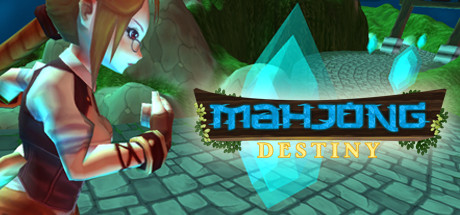
MAHJONG DESTINY
Prepare to embark on a sweeping visual novel/puzzle hybrid based on... checks notes... genuine 19th-century Irish poetry. Thomas Moore’s literary legacy has finally received the adaptation it always deserved: an anime tile-matching game where a maiden travels the land in a low-cut outfit to find her lost love.
Look, you have to respect the sheer sincerity behind this project. But earnest intention doesn't equal good execution—asking this dev team to make a compelling Mahjong game is like asking Barney the Dinosaur to direct a psychological horror film. The heart is there, but the end result is an absolute, deeply baffling trainwreck.
Because nothing screams "classic Romantic-era European literature" quite like an overhead camera locked firmly onto excessive, unhinged BEEEEEEWEBS. We’re talking a chest engine so overly sensitive, a slight breeze on the tile board triggers a seismic event. Albert Einstein spent his whole life studying relativity, only for this game to completely break fluid dynamics just because you clicked two bamboo tiles! It’s like watching an entire beach episode unfold in slow motion on top of a wooden table!
Special Guest Commentary: Part 1
Philomena Cunk:
"My mate Paul said Mahjong was invented in ancient China to pass the time before television, or the invention of fun. But Mahjong Destiny modernises this historical struggle by removing the tiles that sit on top of each other, which means you don't even have to use your brain. It raises the ultimate philosophical question: if a game plays itself on a screen, and nobody is awake to watch it, is the creepy PS1 wizard monk still watching you? ...Yes. Yes he is."
Tommy Wiseau:
"Ha ha ha! What a story, Mark! I don't get these criticisms, people are crazy! The graphics are great, the physics are very emotional! It's a true romantic story! Ah, man... you are tearing me apart, Mahjong! I write a poem for you, ready? Listen:
Oh, bamboo tile on the ground so flat,
I did not click her, it's not true, I did NOT!
Oh, hi Monk. You are my best friend.
Your jiggle physics make my heart melt...
See? Very poetic! Anybody who hates this game doesn't understand true love or 19th-century Irish art, ha ha ha!"
The Gameplay: Peak Isekai Boredom
Prepare yourself for a gameplay loop so passive, it makes watching paint dry feel like an eSports tournament.
Mahjong Without the Brain Cells: Forget stack depth or spatial planning. The developers solved the complex puzzle of Mahjong by unrolling every tile onto a single, completely flat surface like a sad kitchen rug. It’s not Mahjong—it’s a visual eye exam for toddlers.
The Infinite Filler Arc: Experience level after level of mind-numbing simplicity before the game even unlocks basic stuck-tile mechanics. It treats standard board-game rules like a late-stage shonen transformation, making you wait 50 episodes of filler just to get a little bit of friction!
Pointless Digital Trash: Collect glowing gems along your journey that serve literally zero mechanical purpose. No shop, no upgrades, and no inventory system. Just empty visual clutter taking up screen space!
Sub-Microscopic Graphics: Enjoy tiles rendered so impossibly tiny, you’ll need a magnified HUD overlay and the Eyes of the Shinigami just to tell a chrysanthemum apart from a stray pixel!
Special Guest Commentary: Part 2
Philomena Cunk:
"When you look at these shiny gems you collect, you expect to spend them on a nice hat or a small house. But they don't do anything. It's brilliant, really, because it accurately reflects the futility of human existence. You spend your life collecting shiny things, and in the end, you just match two identical pieces of bamboo and die. It’s like The Matrix, but instead of Keanu Reeves dodgin' bullets, it's a tsundere lady with unstable, bouncing beeeeeewbs staring at a flat grid."
Tommy Wiseau:
"Do not talk about the gems like that, Philomena! The gems are symbolic! They represent my passion! Look at the Monk, he moves like a snake, very smooth, four frames per second, it's artistic! Why are you so sensitive? Everybody loves the Monk! He is watching because he cares, like a Senpai in the shadows! Keep your comments in your pocket!"
Featuring: The Creepy PS1 Filler Villain
Just when you thought the tonal dissonance couldn't get any weirder, enter your constant, unwanted companion: The Monk.
Looking like he was rendered on an original PlayStation dev-kit in 1996 using roughly five polygons and a dream, this guy is Skinny PS1 Hagrid’s deeply unsettling anime cousin. He doesn't drop lore. He doesn't offer wisdom. He just... stalks you. Jerking across the screen in glorious 4-FPS slideshow animation, staring into your soul while you match your sixty-fourth pair of identical flower tiles. He is the ultimate filler character—standing in the background, judging your life choices and refusing to leave. Notice me, Senpai? No thanks, please stay away.
Special Guest Commentary: Part 3
Philomena Cunk:
"I asked my producer why the monk looks like he was sculpted out of mashed potato by someone who’s only ever had a monk described to them over a bad phone line. He said it was 'retro aesthetic.' But I think he’s just lost. He’s been standing there since 1997 waiting for Tomb Raider to load, and now he’s trapped in a game where nothing happens, forever."
Tommy Wiseau:
"He is NOT lost! He is looking for true love! Just like the maiden! The whole game is about love, poetry, and clicking! If everybody loved each other, the world would be a better place, and we wouldn't need layers on the Mahjong tiles! Flat is beautiful, Baka! You don't know anything, you're just a chicken! Cheep, cheep, cheep, cheep, cheep!"
The "Positives" (Because We Have To Be Fair)
The Music is Peak Coziness: The tranquil background music is legitimately great, putting you into a state of deep, meditative relaxation.
Vibrant Tile Art: When you aren't actively destroying your eyesight trying to read them, the tile designs are actually pretty, colorful, and detailed.
Zero Stress, Zero Danger: If you want a game with absolutely no loss conditions, no timers, and no threat of failure, this will successfully keep your heart rate lower than a hibernating bear.
RATED P FOR:
Poetry crushed beneath bouncing beeeeeewbs,
Where flat layouts strip away the test,
While a low-poly monk in four frames per second,
Watches you click till your brain stops reckonin'.
The Verdict
So put on your protagonist-with-glasses pose, lower your brain functionality to 1%, and dive into a masterpiece loved exclusively by three people on an old forum—and Tommy Wiseau—who unironically call it "a criminally underrated, post-modern art piece that normies just don't understand."
STARRING:
Thomas Moore (Currently spinning in his grave at Mach 5)
Barney the Dinosaur's Auteur Vision
Skinny PS1 Stalker Monk (Tommy's Best Friend / Shadow Senpai)
Post-Credits Commentary
Philomena Cunk:
"So in conclusion, Mahjong Destiny isn't really bad or good, it just sort of exists on screen—a peaceful, flat void where your brain can comfortably power down and rest forever."
Tommy Wiseau:
"Yes! Exactly, Philomena! You understand! The flat void is a symbol for the human condition! It is gentle! It is artistic! I agree with you 100%, you are my best friend!"
Trailer Guy:
"...Wait, what? Are... are you two actually agreeing right now? How does her completely neutral ramblings make total sense to you?!
"I quit. I'm going back to narrating Dark Souls."
MAHJONG DESTINY
(Tagline: "Sugoi in theory, absolutely snoozefest in practise.)