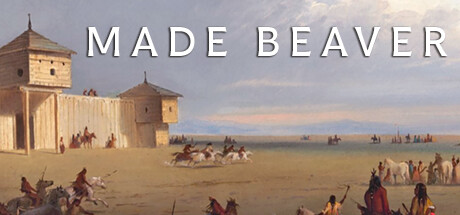
Build a fur trading empire across North America—navigate commerce, diplomacy, and survival in this deep historical simulation.
Modeled estimate, not a reported figure. How we estimate →
Media
About
Build a fur trading empire in the rich, historical world of 18th-century North America. Start with a single, modest cabin and strategically expand your influence to amass a fortune. Your ambition is the only limit on the wild frontier.
CHOOSE YOUR NATION
Lead your enterprise as Canada, France, Great Britain, Netherlands, Russia, Spain, Sweden, or the United States—each with unique strengths, historical advantages, and strategic challenges. Or, for a truly balanced experience, play as the neutral nation of Beaverland.
FORGE ALLIANCES
The land is home to hundreds of tribal nations. Your reputation is your most valuable asset, defined through key decisions. Supplying a tribe with weapons will strengthen your standing, while dealing in alcohol or arming their enemies will damage it. A high reputation increases the volume of goods a tribe will offer, while a poor reputation can see you shut out of their territory entirely, or even go to war.
A LIVING ECOSYSTEM
Trade in a world with a dynamic ecosystem based on historical migration patterns. Your choices have lasting consequences, forcing you to expand and adapt to an ever-changing landscape.
A UNIQUE TRADING EXPERIENCE
Made Beaver is a unique blend of deep economic strategy and rich historical simulation. While your goal is profit, your path is paved with history. Crafted by a solo developer committed to historical accuracy, every detail—from trade routes and prices, to furs, tribes, and settlements—is designed to create an authentic and challenging experience that you won't find in any other trading game.
Ready to carve your name into history? Launch your trading empire today and become the master of the fur trade!
Genres
Stats
All-time low is the lowest price we've recorded for this game since we started tracking it.
Languages: English
Reviews
Built a “fur empire” but mostly clicked BUY, BUY, BUY. 😐 Tribes? Diplomacy? Survival? More like: press button, watch numbers go up. Historical accuracy? Maybe. Gameplay depth? Left it back in the 18th century. Follow my curator page for more trading, tedium, and “fun” button clicks! 💰✨ [b]https://store.steampowered.com/curator/42602807-Osiris-Reviews/[/b]
I enjoy it, The good: I like the concept, I enjoy the era and I enjoy the attempt at realism being made. Is it 100% realistic? Probably not. It does however make an effort and a serious one at that. While there are other trading games on steam this is something new and novelty is nice after all a trading game is a trading game. I like that there is a 2 currency system; credit too and from the Indians, and cash with Europeans/Freemen. It adds a nice touch. The meh: Its a little too random. I mean obviously you are trading with the indians for trapped fur, not all hunting seasons are going to be alike. However as of 22/09/22 it feels just a little too random and a perhaps a little too punishing? The nations, You can pick between several diffrent nations to play as/ represent, this give you bonuses / disfavourable traits. While i understand the idea, it does ruin some of the realism aspect, The bad: You can stack up pretty huge debt with nobody actually appearing to care, Okay maybe this is realistic, After all what is the tribe of 100 people going to do against your mega F-off stone fortress? Probably not too much, With Europeans however Im unsure how realistic I find it, However I guess this is similar to the credit system? All in all: Not going to blow your mind, But if you like trading games (or Early American/Frontier history) give it a go you might just enjoy it.
Related
Related
Trends
Modeled estimate over time.
Simple to get into, but a nice amount of economic depth and meticulously planned maps. One of the most relaxing tycoon games I've played.
It's ok. Needs more work. Feels like a spreadsheet put to some graphics. I don't get the feeling of exploration in the first few turns and there seems to be an abundance of a lot of goods for trading - not sure if that is good or bad. It's definitely a niche type game - overall I like these type of under the radar games, it shows a greater level of creativity than the same old dribble from EA. But as I said, it still needs further development.
Made Beaver, developed and published by Chiron Games Inc., is a historical trade and management simulation that centers on the fur trade economy of 18th-century North America. Rather than presenting a broad empire-building experience filled with warfare or exploration, it narrows its focus to commerce, logistics, and the slow expansion of a trading network. This deliberate focus gives the game a distinct identity, but it also defines both its strengths and its limitations. The gameplay revolves almost entirely around buying, transporting, and selling goods across a network of settlements and trading posts. Players begin with a modest foothold and gradually build a commercial operation by identifying profitable routes, managing inventory, and ensuring that supply chains remain efficient. Much of the experience takes place within menus and trade interfaces, where players monitor prices, allocate resources, and plan shipments. The challenge lies in balancing these systems—ensuring that goods arrive where they are needed, when they are needed, without overextending available resources. What sets Made Beaver apart is its commitment to its historical setting. The game reflects the realities of early trade networks, where travel is slow, communication is limited, and every decision carries long-term consequences. Expanding operations requires patience, as establishing new routes and maintaining existing ones takes time and careful planning. This creates a sense of gradual progression, where success feels earned through consistent management rather than rapid growth. For players interested in historical economic systems, this focus can be engaging, offering a perspective that is rarely explored in modern games. However, the narrow scope of the gameplay also becomes its most significant drawback. Because so much of the experience is concentrated on trade mechanics, there is little variety in how players interact with the world. Activities rarely extend beyond managing numbers and routes, and the absence of more dynamic systems—such as deeper diplomacy, exploration, or event-driven challenges—makes the experience feel static over time. The world itself functions more as a framework for the economy than as a living environment with its own evolving dynamics. Pacing is another area where the design may divide players. The game’s slow, methodical progression aligns with its historical theme, but it can also lead to stretches where the player is waiting for systems to resolve rather than actively engaging with them. Long travel times and extended trade cycles are integral to the experience, yet they can reduce the sense of immediacy and make the gameplay feel drawn out. This approach will appeal to players who enjoy deliberate, long-term planning, but it may feel tedious for those seeking more immediate interaction. The interface plays a central role in managing the game’s systems, and while it provides the necessary tools, it is not always as intuitive as it could be. Keeping track of multiple trade routes, shipments, and inventories requires constant attention, and the lack of streamlined feedback can make the process more cumbersome than engaging. Technical issues, including occasional bugs or inconsistencies in logistics, further complicate the experience, sometimes disrupting the flow of progression and reinforcing the sense of roughness in the overall design. Visually, Made Beaver is functional but understated. The presentation prioritizes clarity over detail, with environments and interfaces designed to support the management systems rather than immerse the player in a richly realized world. While this approach ensures that information remains accessible, it also limits the game’s ability to convey atmosphere or bring its historical setting to life. Audio design follows a similarly minimal approach, providing basic support without adding much to the overall experience. Despite its shortcomings, the game does succeed in delivering a focused simulation for a specific audience. Players who enjoy detailed economic systems and are willing to engage with a slower pace will find satisfaction in optimizing trade routes and gradually expanding their operations. There is a certain appeal in watching a small trading post grow into a larger network, even if the process is repetitive. Ultimately, Made Beaver is a specialized title that prioritizes authenticity and system management over variety and accessibility. It offers a unique thematic focus and a clear gameplay loop, but its limited scope, slow pacing, and lack of refinement prevent it from appealing to a wider audience. It stands as a competent but narrow simulation, best suited for those who appreciate methodical, economy-driven gameplay. Rating: 6/10
Momentum
Pace estimated from the game's recent review growth (our daily snapshots) at its own sales-per-review ratio — a momentum signal, not booked sales.