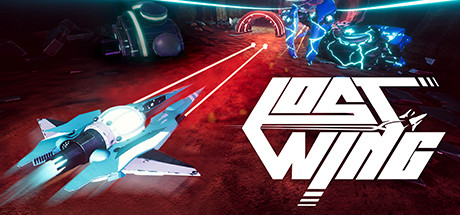
Lost Wing, developed by BoxFrog Games and published by 2Awesome Studio, is an adrenaline-charged blend of speed, precision, and chaos wrapped in a luminous neon shell. It is a modern reimagining of the arcade spirit, one that thrives on reflexes and repetition rather than narrative or exploration. From the moment the first track begins, the game throws the player into a futuristic corridor of color and velocity, daring them to react faster, think sharper, and survive longer. It captures that quintessential arcade feeling—one mistake and it’s over—but also builds upon it with layered mechanics and an evolving structure that keeps players returning for just one more run.
At its core, Lost Wing operates on an elegantly simple premise. You pilot a sleek, futuristic craft through a series of ever-changing corridors filled with obstacles, enemy fire, and environmental hazards. The goal is survival, but success is measured through precision, style, and speed. Your ship moves automatically forward, leaving you to handle steering, shooting, and dodging with split-second timing. The controls are tight and immediate, allowing for micro-adjustments at high speed, which gives every movement a sense of urgency. The corridors themselves shift and mutate, sometimes narrowing without warning or filling with geometric traps that demand perfect rhythm. The result is a gameplay loop that feels both hypnotic and punishing, designed to test how far your instincts can take you before failure sets in.
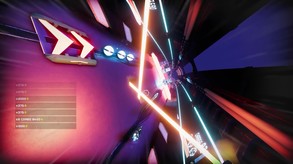
Visually, Lost Wing is a feast for the senses. Its world is built out of sharp neon lines, pulsating lights, and shimmering surfaces, creating an atmosphere that feels equal parts digital dreamscape and futuristic deathtrap. The game borrows from cyberpunk aesthetics but filters them through the clean geometry of classic arcade design. The environments may be abstract, but the use of lighting and contrast gives them character. Obstacles glow in intense hues, projectiles leave streaks of light in their wake, and the ship itself feels like a fragment of energy darting through an electric maze. It’s all accentuated by a pounding electronic soundtrack that syncs rhythmically with the action. The music, while not especially varied, complements the kinetic energy of the gameplay and reinforces the sensation of being trapped in a continuous forward surge. When the pace reaches its peak, the visuals and audio meld into a synesthetic rush that perfectly captures the game’s arcade roots.
Mechanically, Lost Wing introduces several systems that add nuance to its high-speed formula. Your ship is armed with a limited number of shots, forcing you to think strategically about when to fire and when to dodge. Destroying certain obstacles replenishes your resources, while others reward boosting—a feature that allows you to accelerate for extra points and energy recovery. This creates a delicate balance between aggression and restraint. Players must manage energy reserves carefully, knowing that wasteful shooting could leave them defenseless when the track tightens or enemies swarm. There is also a slow-motion mechanic that can be activated for brief moments of clarity, helping navigate through clusters of obstacles or survive desperate situations. These systems keep the gameplay from being purely reactionary; it becomes a dance of calculation and instinct, where every command carries weight.
The difficulty curve in Lost Wing is steep and unapologetic. Early runs feel manageable, but as you progress, the track speeds up to the point where human reaction time becomes the ultimate challenge. Obstacles appear faster, and the game begins to manipulate perspective and gravity, flipping or rotating the camera to disorient you. These inversion segments can be exhilarating or infuriating depending on your tolerance for chaos, but they undeniably add to the game’s identity. When things go wrong, they go wrong fast—colliding with an obstacle may shear off one of your ship’s wings, making it harder to control, or destroy you outright. Yet, the punishment feels fair because success depends on mastery, not luck. Each death is a lesson, and each retry brings visible improvement. It’s a structure designed for those who enjoy repetition and gradual perfection rather than handholding or leniency.
Outside of its moment-to-moment action, Lost Wing features a modest progression system that extends its replay value. Players earn points and currency based on performance, which unlocks new ships, visual customizations, and stages. Each ship has slight variations in handling or visual flair, and the levels, while procedurally generated, offer different themes and environmental hazards. This sense of progression keeps the experience from becoming static, even if the grind can feel slow at times. Unlocking content requires consistent play and high scores, and some players may find the pace of rewards too deliberate. However, for those drawn to mastery-driven gameplay, this system provides meaningful goals to pursue beyond simple survival. It also reinforces the game’s competitive aspect, as global leaderboards invite players to chase perfection and prove their skill on a universal scale.
Despite its polish and intensity, Lost Wing is not without flaws. The difficulty can be unforgiving to the point of alienation for newcomers, and the lack of strong visual differentiation between obstacles sometimes leads to unfair collisions, especially at extreme speeds. The interface and menus feel clunky, occasionally breaking the otherwise sleek presentation, and the initial onboarding does little to explain deeper mechanics, leaving players to discover them through trial and error. The soundtrack, while energetic, repeats often and could have benefited from greater variety to match the visual dynamism. Yet these imperfections do little to undermine the game’s overall appeal; they are the kinds of rough edges common to small-studio projects driven more by vision than by budget.
What ultimately defines Lost Wing is its purity of purpose. It is not a story-driven experience or a meditative puzzle; it is a pulse-pounding test of reflexes and focus. Every second demands total attention, every success feels earned, and every failure invites one more attempt. The hypnotic loop of movement, light, and sound creates an almost trance-like state when you fall into rhythm. There’s a meditative satisfaction in learning a track’s patterns, in mastering the split-second decisions that separate survival from destruction. For players who crave that classic arcade thrill—the pursuit of mastery, the tension of risk, the reward of perfect execution—Lost Wing delivers it with style and confidence.
In the end, Lost Wing is a love letter to the arcade lineage, a distillation of speed and skill into its purest form. It asks little from the player beyond focus and persistence, but it gives back a rush of accomplishment that few modern games can replicate. It is unforgiving, electrifying, and beautifully simple—a glowing corridor that dares you to conquer it. For those who live for the challenge, it is not merely a test of reflexes but a celebration of them.
Rating: 7/10