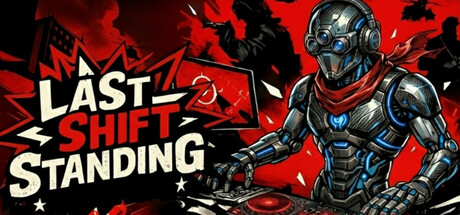
A fast, tactical roguelite: missions explode across the city with ticking timers. Assign heroes, build wild power combos, manage injuries, and keep the city alive through the whole shift.
Modeled estimate, not a reported figure. How we estimate →
Media

About
LAST SHIFT STANDING is a fast, tactical roguelite. Missions light up across the city with ticking timers — open a call, check the requirements, and dispatch the right heroes before time runs out. Complete missions to earn coins, buy powers, and upgrade your squad. If the city falls, you come back stronger next run.
Make the call. upgrade the squad. Hold the city together.
Missions spawn with response timers — act fast or lose the chance.
Each mission has stat requirements — match the lineup to the call.
Dispatch carefully: a sent hero can’t answer other calls until returning and ready.
Earn coins from completed missions.
Spend coins to buy new powers for heroes and upgrade existing powers.
When the city falls, use your progress to start the next run stronger.
Not every mission is worth taking. Skipping a bad call can protect your heroes — but it hits the city harder than a clean failure. Take the risk, or accept the cost.
Injuries weaken heroes and force downtime.
A second injury before recovery can knock a hero Unconscious.
How long can you be the last shift standing?
Stats
All-time low is the lowest price we've recorded for this game since we started tracking it.
Languages: English
Reviews
Last Shift Standing is an inventive roguelite strategy game developed and published by Solo Tactic Games that places players in command of a team of heroes tasked with keeping a city functioning through an increasingly chaotic series of emergencies. Instead of focusing on direct combat or traditional exploration, the game revolves around dispatching specialists to handle crises, making it a refreshing take on the roguelite formula. Its premise immediately stands out because success is determined less by reflexes and more by intelligent planning, risk assessment, and the ability to adapt to constantly changing situations. The central gameplay loop is built around responding to emergency calls that appear throughout the city. Each mission comes with its own requirements and limited availability, forcing players to make quick but thoughtful decisions. Heroes possess different strengths, and choosing the right individual for a specific task becomes essential. Since deployed heroes are unavailable until they return, every assignment affects future opportunities. This creates a steady sense of tension as players must decide whether to commit valuable personnel to immediate problems or save them for potentially more dangerous situations later in the shift. A major strength of the game is the way it turns resource management into the primary challenge. The city is constantly under pressure, and it is impossible to address every issue that appears. Players must learn which situations deserve attention and which can be ignored, understanding that every choice has consequences. The resulting gameplay feels strategic and rewarding because there is rarely a perfect answer. Instead, players are continually balancing the needs of the city against the well-being of their team, creating meaningful decisions from beginning to end. Progression is handled through a roguelite framework that encourages experimentation. Completing missions earns resources that can be invested into permanent upgrades and new abilities. Over time, players unlock additional tools that make future runs more manageable while also opening up different strategic possibilities. The upgrade system ensures that each failed attempt still contributes to long-term advancement. Even when a shift ends in disaster, players gain valuable experience and resources that help them approach the next run with a stronger foundation and a better understanding of the game's systems. Another interesting mechanic is the injury system, which adds lasting consequences to risky decisions. Heroes who suffer injuries become less effective and require recovery before returning to peak condition. Repeated injuries can remove them from action entirely, leaving gaps in the roster during critical moments. This feature prevents players from relying on the same characters without consideration and encourages careful management of the entire team. The result is a more thoughtful experience where preserving resources can be just as important as achieving success in individual missions. Visually, Last Shift Standing adopts a colorful and approachable presentation that complements its strategic focus. The interface is designed to deliver important information quickly, allowing players to evaluate missions, compare hero capabilities, and make decisions without unnecessary complexity. While the game does not rely on graphical spectacle, its clean presentation supports the gameplay effectively and helps maintain a fast pace during moments when multiple emergencies compete for attention. The game's greatest accomplishment is how it transforms a simple concept into a compelling cycle of pressure and decision-making. Every shift feels like a battle against time, with players constantly adapting to new threats while trying to maximize efficiency. The combination of timed missions, hero management, injuries, upgrades, and permanent progression creates an engaging experience that rewards both strategic thinking and long-term planning. Although players looking for action-heavy gameplay or deep storytelling may find the focus somewhat narrow, those who enjoy management systems and tactical decision-making will likely appreciate the game's unique approach. Last Shift Standing succeeds by offering a distinctive blend of roguelite progression and emergency-response strategy. Its mechanics work together to create meaningful choices, steady tension, and a satisfying sense of improvement across multiple runs. The game may be modest in scope, but its focused design and strong strategic foundation make it a memorable entry in the indie strategy genre. Rating: 6/10
Related
Related
Trends
Concurrent players on Steam, sampled daily since tracking started.
Momentum
Pace estimated from the game's recent review growth (our daily snapshots) at its own sales-per-review ratio — a momentum signal, not booked sales.
Related
| House Flipper | $65.8M | 110.8K | 94% | $24.99 |
| Castle Crashers® | $41.4M | 139.7K | 96% | $14.99 |
| Starbound | $8.9M | 123.1K | 90% | $4.49 |
| Slime Rancher 2 | $45.9M | 49.2K | 95% | $29.99 |
| BattleBlock Theater® | $22.3M | 72.8K | 97% | $14.99 |
Related
| I Am The Prosecutor: No Evidence? No Problem! | $309.6 | 50 | 76% | $0.49 |
| Glasses and Girls | $315.6 | 51 | 82% | $0.99 |
| Dances and Girls | $322 | 52 | 83% | $0.99 |
| Bongo Quest | $322 | 52 | 46% | $0.49 |
| Anime Sunset Ride | $334.4 | 54 | 67% | $0.49 |
| Cosmic Journey PC Live Wallpaper | $336.3 | 52 | 71% | $0.49 |