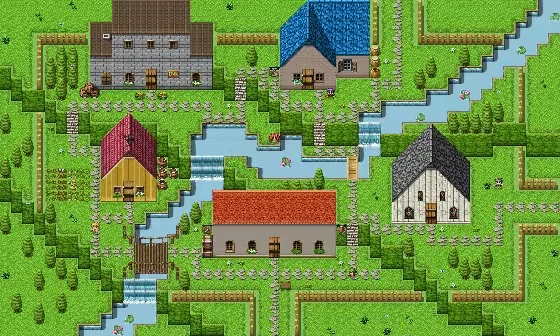
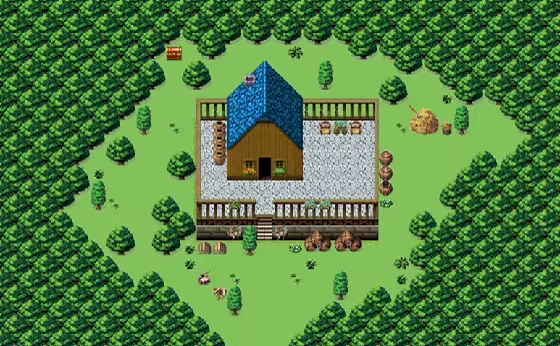
Last Dream incorporates the best features of classic RPGs: replayability and complete immersion into a vast world, rich with detail.
Modeled estimate, not a reported figure. How we estimate →
Media

About


Stats
All-time low is the lowest price we've recorded for this game since we started tracking it.
Engagement
Reviews
Good Rpg maker game
one of the better things to come out of rpgmaker
Looking for a quality retro RPG? Your quest has approached it's end. Your final destination: The Shopping Cart great music, good battle system, YOU GET TO CUSTOMIZE YOUR LEVELS. You get a pool of points that you distribute how you see fit and when you see fit. You also can learn most skills in any order you want. It's a very versatile leveling system. Great nods to the ones of old scattered about in a charming fashion. Last but not least, New game + who doesn't like that?
Related
Related
Trends
Modeled estimate over time, reconstructed from Steam's monthly review histogram.
Languages: English**languages with full audio support
Hours played at review time, across 40 reviews with recorded playtime.
Divertido.
да
A final fantasy 4-6 nostalgia hit to the veins.
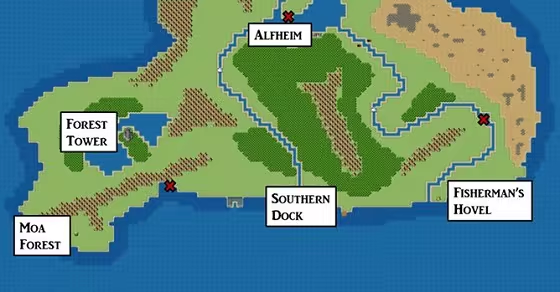
Last Dream is a retro-inspired role-playing game that fully embraces the spirit of classic console RPGs while adding enough modern design improvements to remain enjoyable for modern audiences. Developed by White Giant RPG Studios, the game clearly draws heavy inspiration from legendary titles of the 8-bit and 16-bit era, combining turn-based combat, world exploration, dungeon crawling, and party customization into a lengthy fantasy adventure filled with secrets and optional content. Rather than trying to reinvent the genre, Last Dream focuses on recreating the feeling of older role-playing games where exploration, strategic combat, and gradual character progression formed the heart of the experience. From the beginning, the game establishes a strong sense of nostalgia through its visual style and structure. Pixel-art towns, overworld maps, hidden caves, ancient ruins, and classic turn-based encounters immediately evoke memories of traditional fantasy RPGs from earlier gaming generations. However, the game succeeds because it understands that nostalgia alone is not enough. Beneath the retro presentation is a surprisingly large and carefully designed adventure packed with meaningful exploration, optional side quests, and strategic depth. The story follows a group of heroes who become involved in a conflict tied to ancient powers and dangerous forces threatening the world. At first the narrative appears relatively familiar, using classic fantasy tropes involving kingdoms, mysterious relics, and growing darkness. As the adventure progresses, however, the world gradually expands into a much larger journey filled with hidden histories, dangerous factions, and emotional character moments. The pacing mirrors many older RPGs where seemingly simple beginnings slowly evolve into globe-spanning adventures with increasingly high stakes. Character progression is one of the game’s strongest features. Players can select from multiple classes that significantly affect combat strategy and party composition. Warriors, spellcasters, healers, rogues, and hybrid classes all provide distinct strengths and weaknesses, allowing for a surprising amount of flexibility. Experimenting with different party setups becomes enjoyable because the combat system encourages players to adapt strategies depending on enemies and boss encounters. Unlike many modern RPGs where combat can become mindless, Last Dream often requires careful resource management and thoughtful decision-making. The turn-based combat system remains engaging throughout most of the adventure because enemies and bosses frequently demand tactical planning. Certain encounters require balancing offense and defense carefully, while others force players to exploit elemental weaknesses or status effects. Boss battles are often lengthy and challenging, especially on higher difficulty settings, rewarding preparation and intelligent party management rather than simple grinding alone. The difficulty options also help make the game accessible to different types of players, whether they prefer a relaxed story-focused experience or a more demanding challenge. Exploration is another major strength. The world is filled with optional dungeons, hidden treasures, secret bosses, puzzles, and side quests that reward curiosity. Many locations contain hidden paths or powerful equipment waiting to be discovered by players willing to thoroughly investigate every area. The sense of adventure is enhanced because the game constantly encourages players to wander away from the main story and uncover optional content. Discovering hidden caves or rare treasures genuinely feels rewarding because exploration directly contributes to character growth and progression. Dungeon design is particularly enjoyable because it combines combat with environmental puzzles and navigation challenges. Certain areas require players to solve switches, hidden pathways, or logic-based obstacles in order to progress. These moments provide welcome variety between combat sequences and help make dungeons feel more interactive than simple enemy-filled corridors. Some puzzles can become fairly challenging, especially during later portions of the game, but they generally strengthen the overall sense of adventure. The soundtrack deserves considerable praise as well. Music tracks successfully capture the emotional tone of classic fantasy RPGs, with peaceful village themes, dramatic battle music, and atmospheric dungeon compositions helping each location feel distinct. The soundtrack consistently supports the game’s nostalgic atmosphere without relying too heavily on imitation. Several tracks become especially memorable during emotional story scenes or difficult boss battles where the music amplifies the tension effectively. The game world itself feels surprisingly large and detailed for an indie RPG. Forests, mountains, deserts, ruins, villages, and hidden kingdoms all possess their own visual identity and atmosphere. Towns are populated with NPCs offering side quests, lore, and useful information, helping the world feel more alive and interconnected. The amount of optional content scattered throughout the map gives the game a sense of scale that exceeds what many players might initially expect. Replayability is another strong aspect of Last Dream. Different class combinations, optional quests, hidden items, and alternate strategies encourage multiple playthroughs. Completionists can spend dozens of hours exploring every hidden area and maximizing party builds, while more casual players can still enjoy a substantial main storyline filled with traditional RPG progression and memorable encounters. Despite its many strengths, the game does show some limitations inherited from the classic RPGs it imitates. Grinding can occasionally become necessary, particularly before major boss fights or difficult dungeons. Random encounters may also frustrate players unfamiliar with older RPG design philosophies, especially during longer exploration sessions where battles occur frequently. Pacing can feel uneven at times because of the game’s sheer length and amount of optional content. Certain dungeons continue longer than necessary, and some story sections slow down considerably between major plot developments. Dialogue occasionally becomes overly lengthy as well, though the writing generally remains charming enough to keep the narrative engaging. Even with these flaws, Last Dream succeeds because of the sincerity behind its design. The game clearly comes from developers who deeply appreciate traditional role-playing games and wanted to recreate the feeling of embarking on a massive fantasy adventure filled with danger, discovery, and strategic combat. It captures the essence of classic RPG progression remarkably well while still offering enough modern conveniences to avoid feeling completely outdated. Last Dream ultimately stands as a rewarding and content-rich RPG that understands the appeal of old-school fantasy adventures. Its strategic combat, expansive exploration, memorable soundtrack, and large amount of optional content create an experience that feels both nostalgic and genuinely engaging. While certain mechanics may feel dated to some players, fans of classic turn-based RPGs will likely find a deeply satisfying adventure filled with charm, challenge, and countless secrets to uncover. Rating: 8/10
Lo que llevo jugado me ha parecido excelente, ignorando que a veces los gráficos si se pueden llegar a sentir algo genéricos, lo compensa con su mundo variado, al principio me había atorado un poco pero una vez que pude conseguir el barco me ♥♥♥♥ a explorar todos los lugares que pude y realmente llevaba bastante tiempo sin que un jrpg me enganchara como para revisar todas las ubicaciones y tratar de usar todas las mecánicas, así como poner atención a los diálogos de los npc que ayudan bastante a la construcción de mundo. Sin duda es un gran exponente de los juegos hechos en rpg maker en cuanto a sus mecánicas de juego, se siente bastante pulido y que todas las piezas que lo conforman están ahí por alguna razón real, o se sienten como una verdadera parte de la esencia del juego. Debería ser mas revisitado y jugado por la comunidad hispanohablante de rpg,
Its okay
Momentum
Pace estimated from the game's recent review growth (our daily snapshots) at its own sales-per-review ratio — a momentum signal, not booked sales.
Audience
Estimated from the language of this game's reviews — a proxy for where players are, not official Steam demographics.
Related
| Asgard's Fall — Viking Survivors | $132.3K | 1.3K | 82% | $4.19 |
| Agatha Knife | $132.3K | 655 | 93% | $11.99 |
| VMX | $132.3K | 215 | 91% | $14.99 |
| The Amazing American Circus | $132.3K | 430 | 53% | $14.99 |
| A Gummy's Life | $132.3K | 209 | 81% | $19.99 |
| Endless ATC | $132.4K | 523 | 97% | $7.99 |