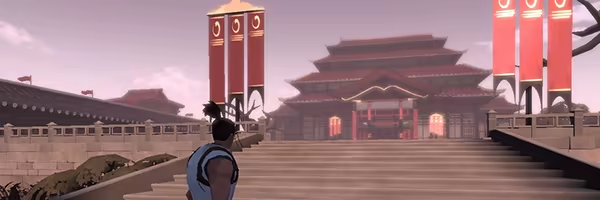
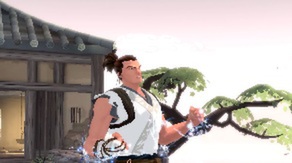
From PRINCE OF PERSIA creator Jordan Mechner, the original side-scrolling karate classic comes to Steam with art by Jeff Matsuda (The Batman) and music by Grammy-winning composer Christopher Tin (CIVILIZATION IV).
Modeled estimate, not a reported figure. How we estimate →
Media

About


Stats
All-time low is the lowest price we've recorded for this game since we started tracking it.
Languages: English, German, French, Italian, Spanish - Spain
Engagement
Hours played at review time, across 41 reviews with recorded playtime.
Reviews
Themes across 41 recent reviews and how positive each mention is. A keyword signal, not full sentiment analysis.
positive critical· bar length = how often the theme comes up
Reviews
[i][b]TL;DR:[/b]Good, short, rhythm-action game worth the price to pay considering the replay value. Innovative use of sound cues. Easy to play, difficult to master. Fully compatible with controllers; Don't know why the devs never added that.[/i] [hr][/hr] While this remake of Karateka is not all too close to the original 8-bit game, it holds up well as a spiritual successor and simultaneously manages to be quite fun and entertaining. The game is pretty simple in itself, but can have a bit of complexity to it, although I would not call it a technical fighting game. It's more of a rhythm game that involves fighting as opposed to a game with Quick Time Events. Make no mistakes about it, the game does require concentration and perfecting it is a difficult task. But it won't really get boring no matter how many times you play it. The tale is quite straightforward. Princess Mariko had been kidnapped by an evil warlord named Akuma and three people set forth to set her free. The first is her lover, the second is a monk, and the final one is a brute. Whoever manages to rescue Mariko will become her suitor. The rest of it just a sequence of one-on-one battle with enemies and bosses, who are just slightly more difficult enemies. Despite the Japanese names, the entire setting is distinctly Chinese, and they seem to be using various schools of Kung Fu, or Chinese Martial Arts to be more accurate, instead of Karate. The suitor that you're playing as not only determines how many lives you have left, but also how difficult the game is. The first suitor, the lover is the weakest among the three, begging you to play with utmost precision and care. He does not deal a lot of damage, meaning that you'll have to enter into more exchanges with your enemies. He also has a very small health bar and does not recover any health at all unless using Mariko's flowers. The monk deals more damage and has a larger health bar in addition to recovering health passively. Finally, the brute does not know how to use any pretty moves, but he has the largest health bar, deals a staggerring amount of damage, and recovers health almost faster than he loses it, making him the easy mode and the lover the hard mode. In order to avoid an NTR ending, you'll need to beat the game as the lover and that's a pretty tall order especially by the end. Furthermore, which suitor you're playing as also determines how many enemies you face as some enemies simply either let you pass after a few exchanges as a Monk, or in the case of the Brute, simply don't show up, probably intimidated by his sheer size. The gameplay itself involves an almost turn-based exchange of blows where you're first expected to block the oncoming attacks and then retaliate with your own. Attacking out of turn won't incur any penalties, but the attacks will simply get blocked and you'll end up spending more time in every fight. Here is where the rhythm part of the game comes in. Every attack combination, as you'll learn through experience, has a specific rhythm to it. This rhythm is made known to you through the use of sound cues right before the enemy throws their strike and you must more or less match the rhythm of the sounds to succesfully block the attacks. This usually works in most cases except for a few, just to shake things up. The bosses, on the other hand, use combinations that you've never seen before and often don't have these sound cues accompanying their attacks, at least until their second phase. Finally, I call the exchanges almost turn-based because in most cases, the flow does indeed force it to be turn based. However, in some cases, some special enemies might block your attacks, jumping in with a blockable counter-attack combination or might pause for an instant to taunt you, opening themselves up to your attack combinations. Attacking is quite as simple as button mashing and it doesn't really matter which attacks you choose anyway since all of them will land all the same and cause the same amount of damage regardless. You also have a special stunning move that lets you deal additional damage that the opponent cannot defend against and you also come across Mariko's flowers every now and then to heal after losing your health in fights. The level design is pretty linear. After all, the only way you can actually move is forward. However, the combat slowly amps up in complexity or intensity as the game progresses. It does a good job of slowly and smoothly increasing the difficulty without it seeming jarring. But every single time that it starts to get monotonous, it'll introduce these special enemies to you who attack off-rhythm and keep you on your toes. Pretty good level-design when that aspect of the game is considered. The graphics are definitely stylised, sort of cel-shaded, but they also bear the halo effect that's a trademark of Unreal Engine 3. After all, the game was made back in 2012. The soundtrack, especially combined with the sound cues is particularly what takes the cake. Not only is the ambience is apt for every "stage" of the game, but the background music accompanying every battle does a wonderful job of setting the pace both literally and figuratively. Aside from all the praise, I couldn't find too many bugs for the game, and perhaps it's a feature and not a bug wherein the block window for the Lover seems to either be a bit too precise or seemingly doesn't alway work, especially towards the end of the game. The same moves made by the same enemy can easily be blocked while playing as the monk or the brute, but somehow, using the same timing and rhythm seems to get the lover beaten up. This is especially prevalent towards the ending of the short game, but if it is a feature, winning as the Lover seems to be either rigged or incredibly difficult, forcing people to keep replaying the game for a certain number of times before the game grants them their coveted achievement. All in all, Karateka might be a short game, and despite its contextual inaccuracies, the gameplay itself is quite fun in a very addictive way. While it is very easy to pick up and even finish, mastering the game is the real challenge, even though it seems nigh impossible for some reason. The graphics are fine, but the sound, the soundtrack as well as the way that the sound cues integrate into the rhythm aspect of the game, is what is truly revolutionary about it. One could almost play the game with eyes closed. In fact, ignoring the visuals and focusing on the sound is the easier way to play it. Definitely worth picking up.
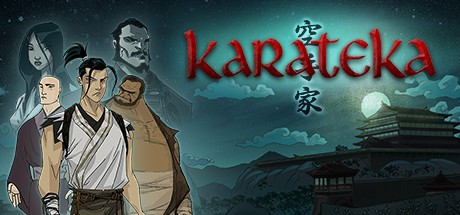
Karateka is a modern reimagining of one of gaming’s most influential early martial arts titles, brought to life by Liquid Entertainment and published by Dotemu. It takes the simple, focused premise of Jordan Mechner’s 1984 classic and reinterprets it with a cinematic touch that pays homage to the original’s spirit while enhancing it with refined animation, sound, and atmosphere. The story remains faithful to its roots—a lone warrior ascends a fortress to rescue Princess Mariko from the grasp of the warlord Akuma—but its execution transforms that simplicity into a rhythmic, almost meditative experience. From the first moment you begin your ascent, Karateka establishes a deliberate pace, relying on timing and observation rather than button-mashing frenzy. It’s not about raw reflexes or flashy combos; it’s about poise, rhythm, and an understanding of movement, just like the martial art it represents. This intentional restraint defines the game’s character, inviting players to engage in its battles as a kind of dance rather than a violent spectacle. Visually, the game is stunning in its minimalism. The world of Karateka is painted in vibrant cel-shaded tones, resembling a moving watercolor scroll of feudal Japan. Every frame feels hand-crafted, with subtle animation that conveys grace rather than excess. The environments—mountain paths, fortress courtyards, and quiet temple interiors—flow seamlessly together, each layered in depth and perspective that recalls traditional Japanese art. Characters move with precision and smoothness, giving each encounter a choreographed quality that emphasizes the beauty of motion. It is not a world overloaded with visual detail, but one where every gesture and stroke feels purposeful. The soundtrack, composed by Christopher Tin, enriches this artistic vision with orchestral melodies and percussive cues that rise and fall with the rhythm of combat. Each duel feels synchronized with the music, turning gameplay into a kind of performance where sight and sound intertwine to form a distinct aesthetic experience. Beneath the artistry lies gameplay that, though simple, is deliberate in its structure. The player faces a series of one-on-one confrontations, each opponent demanding patience and observation rather than aggression. Timing is the key to survival—blocks must be perfectly placed, and counterattacks delivered with precision. The combat system centers around rhythm and anticipation, requiring players to read subtle visual and audio cues. A “chi” meter builds as successful defenses and strikes accumulate, granting the opportunity for a powerful finishing move when filled. Instead of offering complex combos or character upgrades, the game strips its mechanics down to their core, relying on precision and awareness. When you make a mistake, there is no traditional “game over.” Instead, a new warrior takes up the fight—first the True Love, then the Monk, and finally the Brute. Each embodies a different spirit and grants a slightly altered ending, tying gameplay and narrative together through the symbolic idea of perseverance and sacrifice. It is a clever design choice that reinforces the game’s meditative tone and elevates its straightforward structure into something subtly meaningful. Despite its elegance, Karateka’s greatest strength is also its limitation. The game is exceptionally brief; a complete run can take less than thirty minutes once mastered. For some players, this brevity adds focus—it distills the essence of martial arts storytelling into a compact, repeatable experience. For others, it leaves the impression of an experiment that ends too soon. The combat, though engaging at first, lacks depth over time. Once the patterns of enemy behavior are recognized, the flow of each fight becomes predictable. The simplicity, while intentional, can verge on monotony for those seeking variety or challenge. Replay value exists through the different characters and endings, but the differences are more symbolic than mechanical. Still, even these limitations feel like part of the game’s design philosophy: Karateka does not aim to overwhelm but to refine. It is a quiet, focused piece that values expression over expansion. As a whole, Karateka functions less as a modern action game and more as an artistic statement about rhythm, discipline, and homage. It’s a reminder of an era when games were lean, purpose-driven, and evocative through subtlety rather than scale. Liquid Entertainment’s adaptation succeeds because it respects that heritage, wrapping the simplicity of the original concept in the elegance of contemporary presentation. The experience is meditative and poetic, asking for attentiveness rather than aggression, reflection rather than conquest. The hand-painted visuals, fluid animation, and carefully composed soundtrack blend seamlessly into a coherent artistic vision that makes every short moment resonate. While it may lack the longevity or mechanical complexity of other modern titles, Karateka’s charm lies in its purity. It is a game about rhythm, timing, and purpose—qualities that define both martial arts and classic game design—and for those who appreciate that union, it delivers a beautifully composed, quietly satisfying experience that lingers in the mind long after its brief journey ends. Rating: 7/10
It got old, quick. The block button is so annoying. The controls can't be remapped so I was doing everything from my mouse half the time and keyboard the other half. Blocking seemed to just have issues. I died once to a bird because I blocked and hit the wrong button to attack low instead of high and it killed me. But beyond the block, what makes me not recommend this is that we simply can't initiate attacks. I can't just punch, it's nothing but counter attacks. We can ONLY attack after successful blocks, so if the enemy launches a 4-5 hit attack and you miss one (I missed one every time on a guy losing the monk because his final attack ALWAYS hit me through the block) you just don't attack until they attack again and you block perfectly. This is just annoying. If we are standing and staring I should be able to attack, especially since the monk uses midrange and long range punches and kicks. The positives is the graphics were okay, the landscape was great. I'd have LOVED the ability to actually look around, there was clearly a ton of effort put into the design and we simply couldn't see anything but a part of it. We couldn't go backwards and only forwards. The only landscape we can see is the view of running to the next person. I appreciate the effort, but it's hard to recommend this, even at this price point in today's gaming.
A perfectly fine casual experience. I loved Karateka on Atari, and I like this remake. It fixed the "slow" gameplay of the original, but I cried a little when I saw its cartoon 3D art style. I'd probably love it as much as the original if they kept my beloved retro pixels. [h3]System Info[/h3] [table] [tr] [td][b]OS[/b][/td] [td]Linux Manjaro.i3 64bit 25.0.1, kernel 6.14.4[/td] [/tr] [tr] [td][b]CPU[/b][/td] [td]AMD Ryzen 7 7800X3D[/td] [/tr] [tr] [td][b]RAM[/b][/td] [td]IRDM DDR5 32GB (2x16 kit) 6400MHz[/td] [/tr] [tr] [td][b]GPU[/b][/td] [td]AMD RX 7900 XTX, mesa 25.0.5-1[/td] [/tr] [tr] [td][b]Notes[/b][/td] [td]Requires installation of D3DX9: [code] protontricks 217270 d3dx9 [/code] [/td] [/tr] [/table]
It can be mastered easily if you invest some time. Other than that, a well-made small project is worth the effort. Why not give it a try?
I'm reminded of that song from that "comedian," where she sang about how she wanted to be a ninja. Man the internet is a weird place.
Та самая каратека прямо родом из детства. Хотя нет, не та самая. Симулятор парирования с таймингами разной степенью жесткости на пол часа. На на распродаже и не обидно.
Karateka, the remake of the classic DOS game, is a delightful reimagining that brings charm and nostalgia to a new generation of gamers. The graphics are visually appealing, showcasing beautifully crafted art that enhances the overall experience. The accompanying music complements the aesthetics perfectly, creating an immersive atmosphere. The gameplay mechanics are refreshingly simple, focusing on parrying and attacking. This accessibility makes it easy for newcomers to jump in while still providing a satisfying challenge. However, the achievements can be quite tedious, requiring immense precision, which may lead to repetitive play. While some might find this frustrating, it can also serve as a motivation to master the game and improve your skills. One drawback is that the remake somewhat overshadows the technological innovations of the original title. Including the original version would have allowed players to appreciate the evolution of the game and contribute to video game preservation. Overall, Karateka is a pleasant experience for a few runs, especially for those looking to relive a classic. Just don't feel pressured to chase down the more challenging achievements—enjoy the game for what it is!
Plays better than I anticipated
Questo gioco mi piace, anche se forse è troppo ripetitivo.
Related
Related
Trends
Modeled estimate over time, reconstructed from Steam's monthly review histogram.
Momentum
Pace estimated from the game's recent review growth (our daily snapshots) at its own sales-per-review ratio — a momentum signal, not booked sales.
Audience
Estimated from the language of this game's reviews — a proxy for where players are, not official Steam demographics.
Related
| SYNAPTIC DRIVE | $43.2K | 77 | 30% | $29.99 |
| Sisterly Bliss ~Don't Let Mom Find Out~ | $43.2K | 91 | 96% | $24.99 |
| 富甲天下5 | $43.2K | 238 | 57% | $7.99 |
| Lisa's Memory - 丽莎的记忆 | $43.2K | 289 | 84% | $7.99 |
| Duke Grabowski: Mighty Swashbuckler | $43.3K | 243 | 85% | $9.99 |
| Fort Boyard | $43.2K | 84 | 48% | $24.99 |