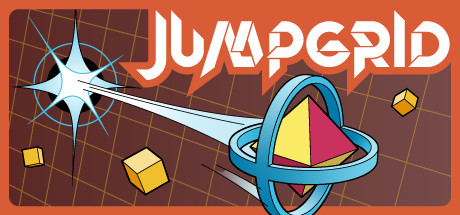
Deftly teleport your way through a cosmic obstacle course in this white-knuckle arcade dodge-em-up!
Modeled estimate, not a reported figure. How we estimate →
Media
About
Stats
All-time low is the lowest price we've recorded for this game since we started tracking it.
Languages: English, French, Italian, German, Spanish - Spain, Dutch, Japanese, Korean, Portuguese - Brazil, Russian, Simplified Chinese
Engagement
Hours played at review time, across 40 reviews with recorded playtime.
Reviews
Themes across 40 recent reviews and how positive each mention is. A keyword signal, not full sentiment analysis.
positive critical· bar length = how often the theme comes up
Reviews
Super Hexagon-like with puzzle elements infused
Fun little diversion that's ripe with speed running potential.
Schnelles und Cooles Spiel zum Entspannen zwischendurch. Musik etwas im Stil der 80er aber besser. Daumen hoch!
It's okay. Ultimately, it's a twitch action game. Collect all the stars (diamonds?) and come back to the goal. The bad news: there are a ton of moving obstacles. The good news: you jump between grid points, so you can avoid those obstacles even if they are between your starting and ending points. Each level is blazing fast, because you're only playing on a 3x3 grid anyway. Finishing a level in 1 or 2 seconds isn't unheard of. Now, the obstacles are also unfair; they are completely deterministic, but sometimes their movements are unintuitive. You'll die a lot. But you'll learn from them, and restarting is frictionless, the game just cuts right to your next attempt. Together with a techno soundtrack, you're always pumped up the whole time. Now, granted, I went into the game because I thought it was more a puzzly, meditative nature, of trying to figure out how to dodge the obstacles. While you do have to figure that part out, you want to execute them very quickly, and typically this means just memorizing your entire approach for each level and then timing all your button presses accordingly. The game has 100 levels (divided into 4 quadrants of 25, also there's a final boss for each quadrant), but they will fall down quickly, nothing poses too much of a puzzly nature. The game instead encourages you to do the run quickly and flawlessly; there's an achievement for doing so in each quadrant. It's not quite what I was looking for. But I think, if you want this kind of game, if you like pushing yourself to speedrun this thing, you'll like it.
Not sure what genre this game belongs in, but it's a challenging, bite-sized bit of entertainment nonetheless. (+) Unique concept that definitely makes the most of its limits and strengths, with every level feeling different and every zone featuring a clever addition to the already unorthodox formula (+) Quick restarts and relatively small levels encourage one to keep trying (+) Basic but bold visuals and an energetic soundtrack add to the fast-paced, arcadey tone (-) Later levels do get longer and start implementing disorientation tactics that can nullify muscle memory and pattern recognition (not necessarily bad, but buyer beware that trial-and-error will probably become necessary) (-) Extremely short game Paid $2.50 — Would pay up to $4.00
One of the few games where you can die before you've realized the level started
gud
增压小游戏
Good fast fun worth buy. Surprisingly no headache or eye strain. Doesn't overstay its welcome! Good job Ian Maclarty!
JUMPGRID, developed by Ian MacLarty and published by Shape Shop, is a minimalist arcade game that strips gameplay down to a single, tightly focused idea and then pushes that idea to its absolute limits. At a glance, it appears almost deceptively simple—a small grid, a glowing player node, and a handful of moving hazards—but within seconds it becomes clear that the experience is built around precision, rhythm, and intense concentration. It is not a game concerned with spectacle or narrative; instead, it thrives on clarity, immediacy, and the constant pursuit of mastery. The core mechanic revolves around teleportation between fixed points on a small grid. Rather than moving freely, players jump from node to node, collecting targets while avoiding hazards that move in predetermined patterns. This restriction fundamentally shapes the way the game is played. Every action must be deliberate, as there is no room for gradual adjustment or recovery once a move is made. Success depends on reading patterns, anticipating movement, and committing to decisions with exact timing. What begins as a simple concept quickly evolves into a demanding exercise in spatial awareness and precision. Level design is the heart of the experience, with each stage introducing a unique arrangement of hazards that follow specific, repeating paths. Early levels serve as a gentle introduction, allowing players to understand the rhythm of movement and the logic behind obstacle patterns. As the game progresses, however, the complexity increases significantly. Hazards begin to overlap, timing windows become narrower, and the margin for error shrinks to almost nothing. The challenge is not random but carefully constructed, requiring players to learn and internalize each level’s structure. Over time, this process transforms gameplay into something almost instinctive, where success comes from a combination of memory and reflex. One of the most effective aspects of JUMPGRID is how it handles failure. Mistakes are frequent and often immediate, but the game’s instant restart system ensures that frustration is kept to a minimum. There are no long delays or penalties—just a quick reset and another attempt. This creates a rapid feedback loop that encourages experimentation and persistence. Players are constantly refining their approach, making small adjustments until everything clicks. The repetition, rather than feeling tedious, becomes engaging, as each attempt brings a clearer understanding of the level. The game’s pacing is relentless, driven by its fast movement and tight timing requirements. There is a strong sense of rhythm to the gameplay, with hazards moving in patterns that can almost feel musical once understood. This rhythm, combined with the need for precise input, creates a flow state where players become fully immersed in the experience. At its best, JUMPGRID feels less like reacting to a game and more like performing a carefully timed sequence of actions, where every movement is part of a larger pattern. Visually, the game adopts a clean and minimalist style that prioritizes readability over detail. Bright colors and simple shapes ensure that every element is easy to distinguish, which is essential given the speed and precision required. The lack of visual clutter allows players to focus entirely on the gameplay, reinforcing the game’s emphasis on clarity. The audio design complements this approach, featuring an electronic soundtrack that enhances the sense of rhythm and intensity. Together, the visuals and sound create an atmosphere that is both focused and immersive. In terms of content, JUMPGRID offers a substantial number of levels, along with additional modes that extend its replayability. These modes build on the same core mechanics but introduce different goals, such as achieving high scores or completing challenges under time constraints. This gives players reasons to return even after completing the main progression, particularly those who enjoy refining their skills and optimizing their performance. The game’s structure naturally lends itself to mastery, making it appealing for players who enjoy pushing themselves to improve. However, the game’s strengths are closely tied to its limitations. Its difficulty is uncompromising, and while it is generally fair, it can be overwhelming for players who are not accustomed to precision-based gameplay. Progress often requires repeated attempts, and some levels demand a level of focus that may feel exhausting over extended sessions. Additionally, the game’s narrow focus means that it offers little variety outside of its core mechanic. There is no narrative, no character progression, and minimal variation in gameplay systems, which may make it feel limited to those seeking a broader experience. Despite this, JUMPGRID succeeds precisely because of its focus. It does not attempt to be anything more than what it is, and in doing so, it achieves a level of refinement that many larger games struggle to reach. Every element of the design supports its central idea, resulting in an experience that feels cohesive and intentional. It is a game that rewards dedication, offering a deep sense of satisfaction to those who are willing to engage with its challenges. In the end, JUMPGRID stands as a strong example of minimalist design executed with precision. It delivers a pure, skill-based experience that is both accessible in concept and demanding in execution. While it may not appeal to players looking for variety or narrative depth, it excels within its niche, offering a tightly crafted and highly engaging arcade experience that remains compelling long after its simplicity is understood. Rating: 8/10
Related
Related
Trends
Concurrent players on Steam, sampled daily since tracking started.
Momentum
Pace estimated from the game's recent review growth (our daily snapshots) at its own sales-per-review ratio — a momentum signal, not booked sales.
Audience
Estimated from the language of this game's reviews — a proxy for where players are, not official Steam demographics.
Related
| Chaos Starter | $1.4K | 51 | 57% | $0.99 |
| A Week | $1.4K | 92 | 91% | $0.99 |
| Drive//Shaft | $1.4K | 70 | 70% | $0.99 |
| FIND KITTENS 8: Happy New Year 🎄🥂🎅 | $1.4K | 88 | 76% | $0.99 |
| Ocean Rush | $1.4K | 107 | 92% | $0.99 |
| The Rainman | $1.4K | 97 | 98% | $0.99 |